

Hung immediately activated emergency aeration and initiated a partial water exchange. Forty-eight hours later, three adjacent shrimp farms without the system suffered mass mortality events with losses exceeding one million dollars, while his losses were contained to under 5%.
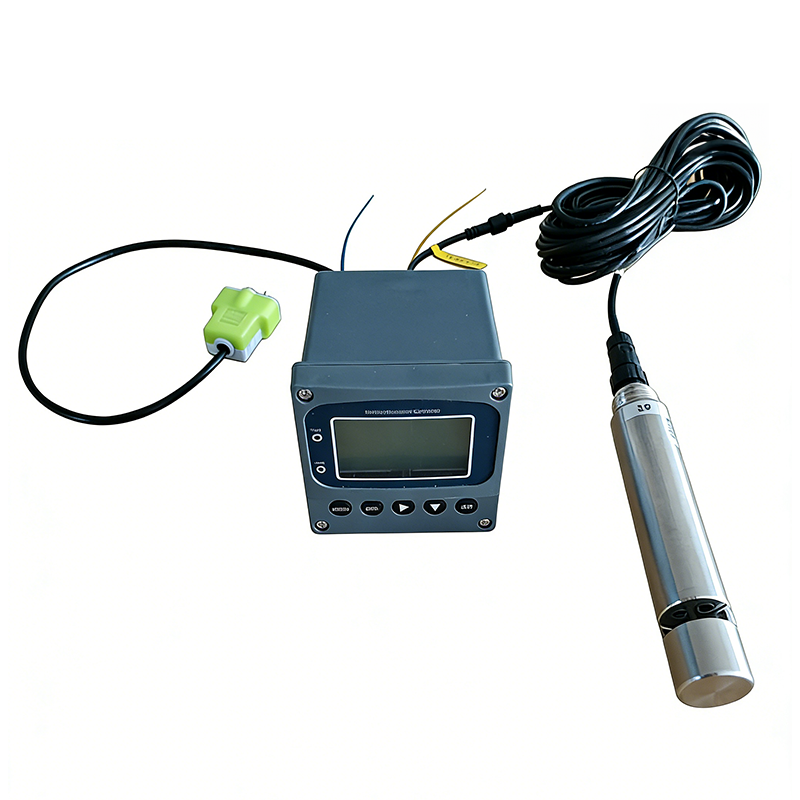
“The traditional sensor showed completely normal dissolved oxygen at that time,” Hung recalled. “
A 2023 white paper by the Asian Aquaculture Society revealed a startling fact: about 85% of major aquaculture disease outbreaks are preceded by abnormalities in water parameters, often missed due to monitoring methods.
“The problem is insufficient monitoring dimensions,” stated Professor Li Minghao, Director of the Centre for Aquatic Biotechnology at the National University of Singapore. “Dissolved oxygen decline is often the result, not the precursor, of water quality deterioration. The true early warning signals are often hidden in the correlated changes of parameters like COD and pH.”
Four Major Monitoring Blind Spots Quietly Devastating Farms
1. The COD Blind Spot: The ‘Silent Killer’ of Organic Pollution
In the Vietnam case, the undetected COD rise indicated accumulating feed waste and excretions. As these organics decompose, they consume oxygen and produce toxins like ammonia and nitrite. Traditional farmers often only notice the problem when fish show poisoning symptoms.
2. The Deceptive Stability of pH
Research from UC Davis shows that minor pH changes (±0.3) can increase ammonia toxicity by 3-5 times. Many farm pH sensors lack precision or timely calibration, leaving fish at risk under “normal readings.”
3. The Seasonal Temperature Trap
For every 1°C temperature increase, fish metabolism rises by 10%, increasing oxygen demand. If farmers don’t adjust feeding rates during spring warming, excess feed leads to sharp COD spikes. 5-in-1 systems automatically calculate temperature compensation factors, providing dynamic warning thresholds.
4. Conductivity: The Sentinel for External Pollution
In a 2023 Guangdong pollution incident, a conductivity sensor first detected wastewater seepage from a nearby factory, giving the farmer an 8-hour emergency window and preventing the death of 200 tons of perch.
Technological Breakthrough: How 5-in-1 Sensors Are Reconstructing Aquaculture Monitoring Logic
From Single Data Points to Ecosystem ‘Vital Signs’
The new generation of 5-in-1 sensors is not mere integration; they use algorithms optimized for aquaculture to achieve intelligent correlation between parameters:
Core Algorithm: Water Risk Index (WRI)
text
WRI = 0.35×COD_Trend_Coefficient + 0.25×DO_Decline_Rate +
0.20×pH_Anomaly_Score + 0.15×Temperature_Deviation +
0.05×Conductivity_Spike_Coefficient
When WRI > 0.7, the system automatically pushes high-risk alerts with specific.
Field test data from the Norwegian aquaculture tech company AquaSense shows this algorithm provides an average early warning lead time of 38 hours for common diseases, with specificity for bacterial diseases (like vibriosis) reaching 89%.
Real-Time Decision Support for Precision Farming
At an intensive shrimp farm in Pattaya, Thailand, the 5-in-1 system enables a three-tier response:
Yellow Alert (WRI 0.5-0.7): Adjust aeration, reduce feeding
Orange Alert (WRI 0.7-0.85): Partial water exchange, add probiotics
Red Alert (WRI > 0.85): Emergency water exchange, initiate treatment
This system helped the farm reduce antibiotic use by 67% and increase shrimp seedling survival by 22% during the 2023-2024 season.
Cost-Benefit Analysis: The ROI of Intelligent Monitoring
ROI Comparison for Farms of Different Scales
Farm Scale Annual Loss (Traditional) 5-in-1 System Investment Annual Loss Reduction Payback Period
Small (<1.5 acres) $12,000 $3,200 $8,500 4.5 months
Medium (1.5-7.5 acres) $85,000 $18,000 $62,000 3.5 months
Large (>7.5 acres) $420,000 $75,000 $310,000 2.9 months
Source: International Smart Aquaculture Alliance 2024 Annual Report
Added Value from Insurance & Certification
Insurance Premium Discounts: Farms using certified systems can receive 15-25% premium discounts.
Certification Acceleration: Meets data-tracking requirements for certifications like GAA’s BAP.
Market Premium: Products from “transparent farming” with continuous water data can command 8-15% higher prices.
Global Application Cases: Success from Salmon to Eel
Precision Control in Norwegian Deep-Sea Salmon Farming
The global salmon giant Mowi deployed 5-in-1 systems across 20 farms in 2023. By monitoring the specific ratio between COD and DO, the system successfully predicted 93% of oxygen crisis events, reducing salmon mortality from an industry average of 3.2% to 1.4%. This alone saves the company approximately $45 million annually in avoided losses.
Breakthrough in Japanese Eel Fry Cultivation
Eel fry are extremely sensitive to environmental changes, with traditional survival rates often below 35%. After introducing the 5-in-1 system, the Nagasaki Prefectural Fisheries Research Institute achieved a survival rate of 61% by precisely maintaining COD within 8-15 mg/L and DO within 6.5-7.2 mg/L—the “golden range”—setting a new industry record.
Quality Upgrade for Chinese Mitten Crab
Trials by the Yangcheng Lake Crab Farmers Association showed that ponds monitored with the 5-in-1 system produced crabs with an 18% larger average size and a 27% higher roe fullness score. In 2023, these “data-farmed” crabs fetched a 32% price premium at auction.
Implementation Pathway: A Three-Step Transition from Traditional to Smart
Phase 1: Problem Diagnosis (1-2 Weeks)
Install 1-2 sets of 5-in-1 sensors in representative ponds.
Establish 7-14 days of water quality baseline data.
Identify key risk parameters and change patterns.
Phase 2: Localized Optimization (1-2 Months)
Adjust feeding strategies and aeration based on data.
Establish key threshold warning mechanisms.
Train technicians in basic data interpretation.
Phase 3: Comprehensive Smart Management (3-6 Months)
Deploy a full-site sensor network.
Integrate with automated control systems (aerators, feeders, pumps).
Implement predictive model-based preventative management.
Industry Future: Trends for 2025-2030
Technology Convergence
AI Prediction Models: Deep learning algorithms will extend warning times beyond 72 hours.
Blockchain Traceability: Immutable water quality data chains enhance product credibility.
Satellite Data Integration: Incorporates macro-environmental data like water temperature and chlorophyll.
Policy Drivers
The EU will include continuous water monitoring in sustainability requirements for aquaculture imports by 2025.
China’s Ministry of Agriculture is developing a subsidy catalog for smart aquaculture equipment.
Several international financial institutions list intelligent monitoring systems as priority projects for green loans.
Market Penetration
5-in-1 sensor costs are expected to drop 15-20% annually.
By 2028, 50% of global farms will deploy multi-parameter monitoring.
Sensor-as-a-Service (SaaS) models will lower the adoption barrier for smallholders.
Expert Perspectives: Aquaculture’s ‘New Digital Age of Navigation’
“We are entering aquaculture’s ‘New Digital Age of Navigation’,” commented George Chamberlain, President of the World Aquaculture Society. “In the past, we navigated waters by experience. Now, 5-in-1 sensors give us precise ‘water quality charts’ and ‘early warning compasses.’ This is not just a technological innovation but a paradigm shift in aquaculture production methods.”
Dr. Alisha Chen, Chief Scientist at Singapore’s TurtleTree Aqua Lab, added: “The competition in the next five years will no longer be about scale but about data precision and response speed. Farmers who can and make precise interventions will win the market and profits.”
Conclusion: The Paradigm Shift from ‘Treating Farming’ to ‘Preventative Farming’
Intelligent monitoring systems, exemplified by the 5-in-1 COD sensor, mark aquaculture’s transition from passive “disease treatment” to active “health prevention.” Every of a water quality anomaly and every successfully avoided farming crisis is reshaping the future of this ancient industry.
When farmers can “understand” the water emits, they are no longer “blind” people battling but “captains” capable of foreseeing changes and navigating precisely. In this era of uncertainty, data-driven precision management is becoming aquaculture’s most reliable tool for risk mitigation and food security.
We can also provide a variety of solutions for
1. Handheld meter for multi-parameter water quality
2. Floating Buoy system for multi-parameter water quality
3. Automatic cleaning brush for multi-parameter water sensor
4. Complete set of servers and software wireless module, supports RS485 GPRS /4g/WIFI/LORA/LORAWAN
For more sensors information,
please contact Honde Technology Co., LTD.
Email: info@hondetech.com
Company website: www.hondetechco.com
Tel: +86-15210548582
Post time: Dec-24-2025