

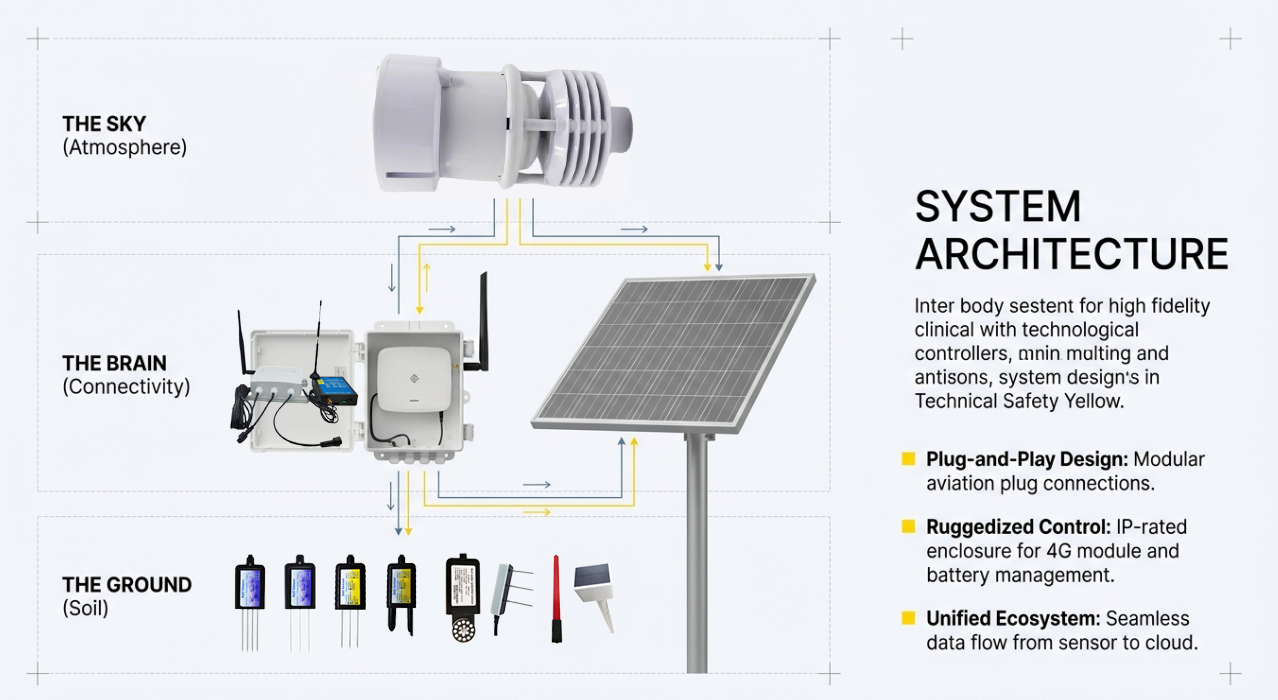
In the modern agricultural landscape, an integrated monitoring system is the foundation of data-driven decision-making. These systems, such as the Honde HD-WSM-A11-01, synchronize an 11-in-1 ultrasonic weather station with 8-in-1 soil sensor arrays to provide a holistic view of the farm environment. By utilizing 4G wireless connectivity and RS485 Modbus protocols, these systems transmit high-fidelity metrics—from atmospheric pressure to soil NPK levels—directly to cloud-based management platforms. Key Takeaway: Integrating precision atmospheric data with multi-parameter soil sensing is the only way to accurately calculate ET0 and optimize irrigation, directly reducing resource waste and operational overhead.
How ET0 and Total Solar Radiation Drive Irrigation Efficiency
For the senior farm manager, the HD-WSM-A11-01 is not merely a collection of sensors; it is a critical resource management engine. By monitoring ET0 (Reference Evapotranspiration) and Total Solar Radiation, operators can transition from inefficient scheduled irrigation to “demand-based” watering.
The Business Value: Leveraging ET0 data allows farm operators to reduce irrigation water and electricity overhead for pumps by up to 30%. This precision ensures that crops receive the exact amount of hydration needed for optimal growth without the financial drain of over-irrigation.
The 11 Parameters of the HD-WSM-A11-01
The HD-WSM-A11-01 utilizes Ultrasonic technology for wind measurements, meaning there are no moving parts to wear out or stall in low-wind conditions. The integrated unit measures:
- Air Temperature: Vital for tracking growing degree days (GDD).
- Air Humidity: Essential for integrated pest management (IPM) modeling.
- Atmospheric Pressure: Used for localized weather trend forecasting.
- Wind Speed (Ultrasonic): Monitors for spray drift conditions.
- Wind Direction (Ultrasonic): Informs chemical application and drone flight paths.
- Rainfall: Quantifies natural water input to adjust irrigation logic.
- Illumination (Klux): Measures light intensity for plant development.
- Total Solar Radiation (W/m²): The primary input for solar energy and ET0 calculations.
- Sunshine Hours: Tracks the duration of direct solar exposure.
- Dew Point: Predicts frost risks and condensation-related fungal growth.
- ET0 (Reference Evapotranspiration): An synthesized value representing total water loss from soil and plant surfaces.
Honde HD-WSM-A11-01 Calibration Accuracy & Performance Data
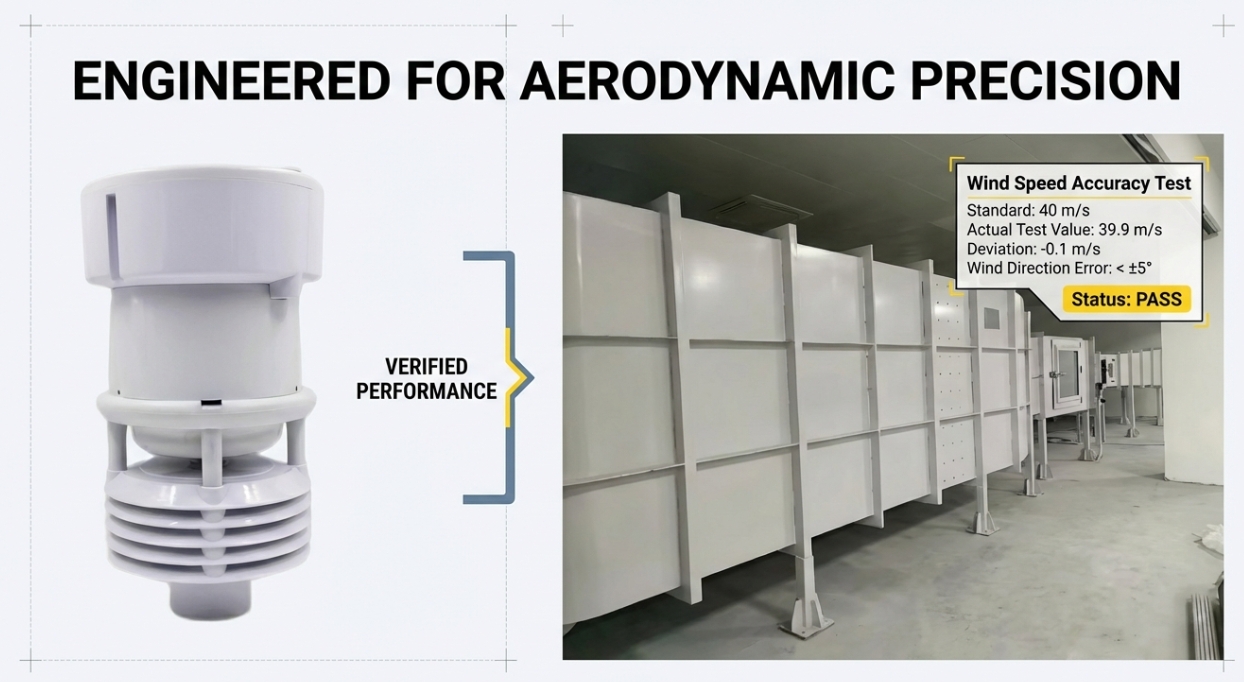
Industrial reliability begins in the laboratory. The data below, extracted from Calibration Certificate No. HD-WS251114 (Sensor No. 2025111401), demonstrates the system’s compliance with international precision standards.
| Parameter | Standard Value | Test Value | Measured Error | Requirement/Pass |
| Air Temperature | 20.00°C | 20.20°C | +0.20°C | ±0.3°C (Pass) |
| Atmospheric Pressure | 900.0 hPa | 899.7 hPa | -0.3 hPa | ±0.3 hPa (Pass) |
| Wind Speed | 15.0 m/s | 14.9 m/s | -0.1 m/s | ±0.3 m/s (Pass) |
| Illumination | 80.0 Klux | 79.3 Klux | -1.0% | ±3.0% (Pass) |
| Total Solar Radiation | 1000 W/m² | 1020 W/m² | +2.0% | ±5.0% (Pass) |
Industrial Hardware Specifications
- 8-in-1 Soil Monitoring (Model RD-S8IN1-02): Beyond standard moisture, this array monitors Temperature, Moisture, EC, Salinity, pH, Nitrogen (N), Phosphorus (P), and Potassium (K).
- 4G Wireless Communication: Features an integrated 4G module that bridges RS485/Modbus data strings to the cloud.
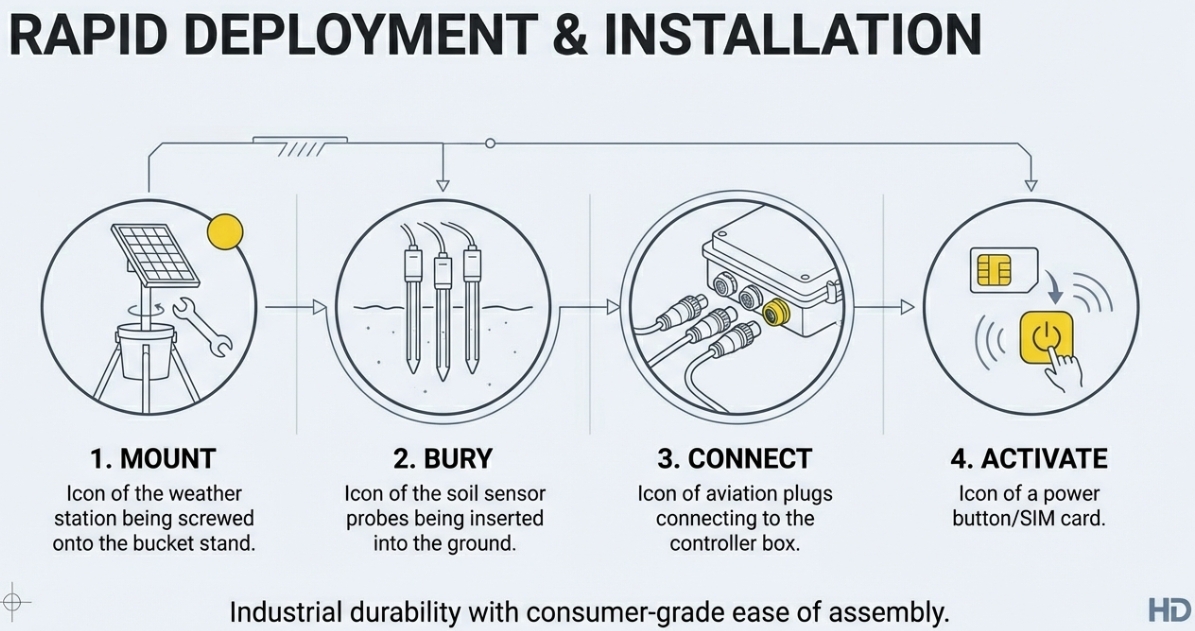
- SIM Connectivity: A user-friendly “yellow button” mechanism allows the SIM card slot to be punched out for rapid 4G card insertion.
- Power Flexibility: Standard 12V DC power adapter included; fully compatible with solar panel arrays for remote, off-grid deployment.
The Engineer’s Experience: Lab Testing and Field Installation
Our engineering team at Honde Technology, located in the Chaoyang District of Beijing, subjects every unit to rigorous environmental stress tests before shipping. Our facility features a dedicated Wind Tunnel Lab for ultrasonic wind calibration and High/Low Temperature Humidity chambers to ensure the hardware remains stable from -40°C to +60°C.
Pro-Tips for Field Deployment:
- The Soil pH Sensor: This is a precision instrument. You must remove the protective cap and bury the sensor directly into the root-zone soil. Ensure there is full contact between the soil and the sensor probes to avoid air gaps that can skew pH and EC readings.
- The Leaf Temperature & Humidity Sensor: Unlike the soil probe, this sensor must never be buried. It is designed to be hung within the crop canopy to monitor the specific microclimate affecting foliage.
- Mounting: The weather station features a bottom bucket mount; simply insert the stand pipe and secure it with the provided screws for a stable, level installation.
Bridging the Connectivity Gap: 4G & Web Integration
The 4G wireless module serves as the critical communication bridge, converting local RS485 Modbus data into actionable cloud-based insights.
- SIM Card Integration: Use the yellow button to release the SIM tray. Once the 4G card is inserted and the APN is configured via the config tool, the system is ready for uplink.
- Data Transmission: The system automatically pushes data to the Honde server.
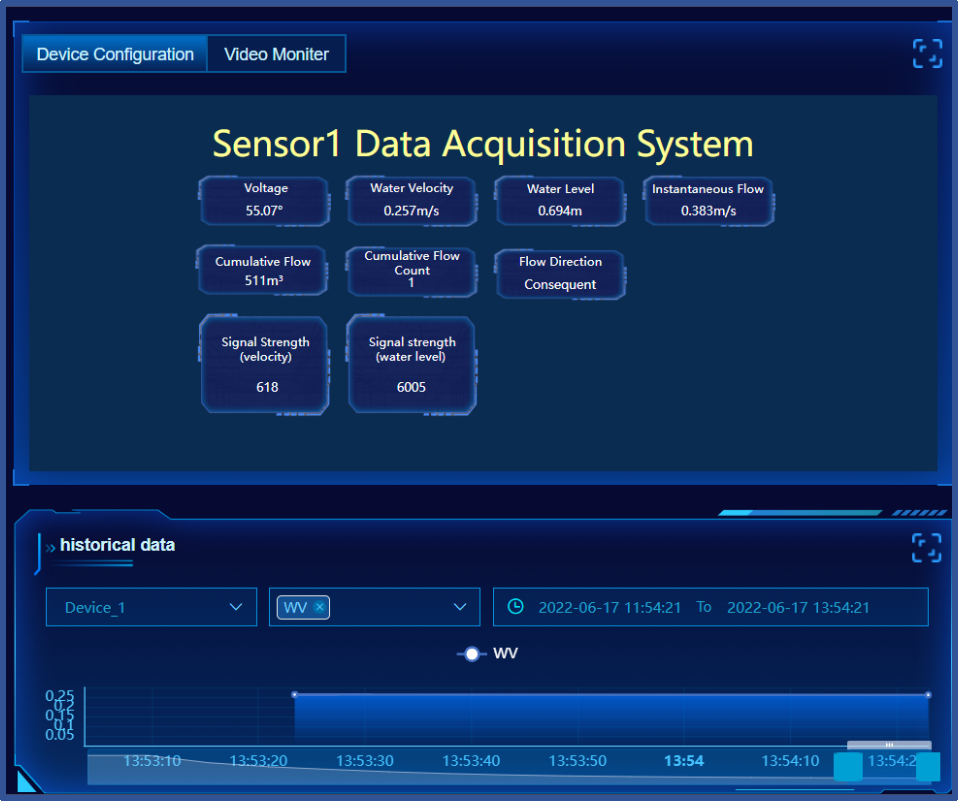
- The Human-Centric Data Report: The raw hexadecimal Modbus strings are transformed by our web platform into intuitive visual graphs. This allows farm managers to view real-time trends for all 11 atmospheric parameters and 8 soil metrics through a single, secure login.
Conclusion & B2B Call-to-Action
Transitioning to a high-precision, 4G-enabled monitoring system is no longer a luxury—it is a requirement for competitive large-scale agricultural operations. By combining the HD-WSM-A11-01 weather station with the RD-S8IN1-02 soil sensor, you gain a 19-parameter overview of your enterprise’s environmental health.
Ready to upgrade your infrastructure?
Explore More Resources:
Post time: Feb-28-2026