

1. Background: When Traditional Flood Control Meets a “Once-in-a-Century” Summer
The summer of 2024 is setting new historical records. From early torrential rains in Asia to abnormal flood peaks in Europe, global hydrological monitoring systems are facing unprecedented pressure. In this context, non-contact hydrological radar 3-in-1 flow sensors are shifting from “optional equipment” to “essential for flood control.” They can measure water level, flow velocity, and discharge in real-time with precision, becoming the “digital outpost” for predicting flood peaks and protecting lives and property.
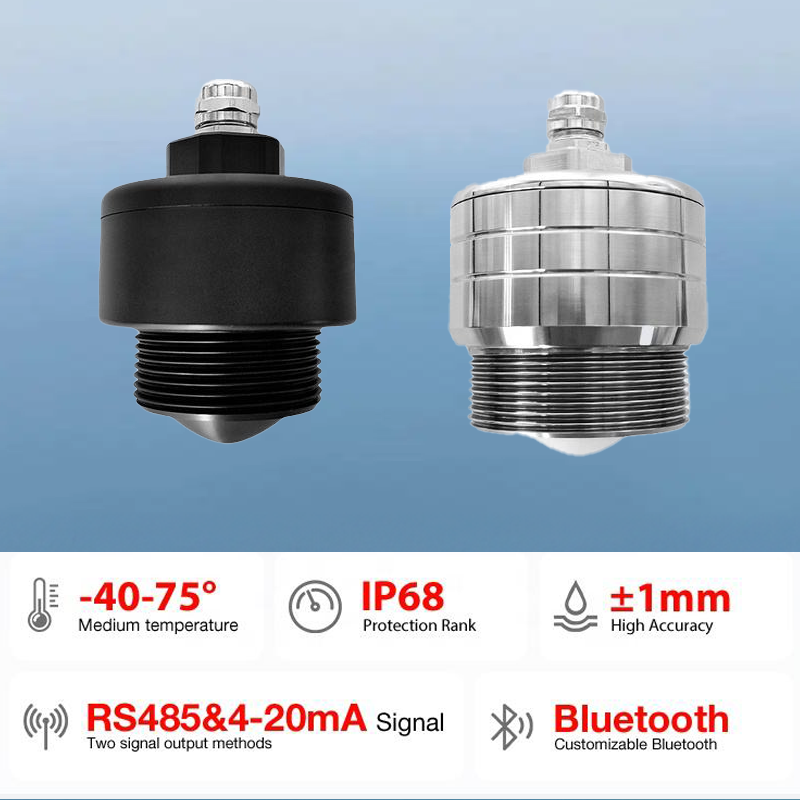
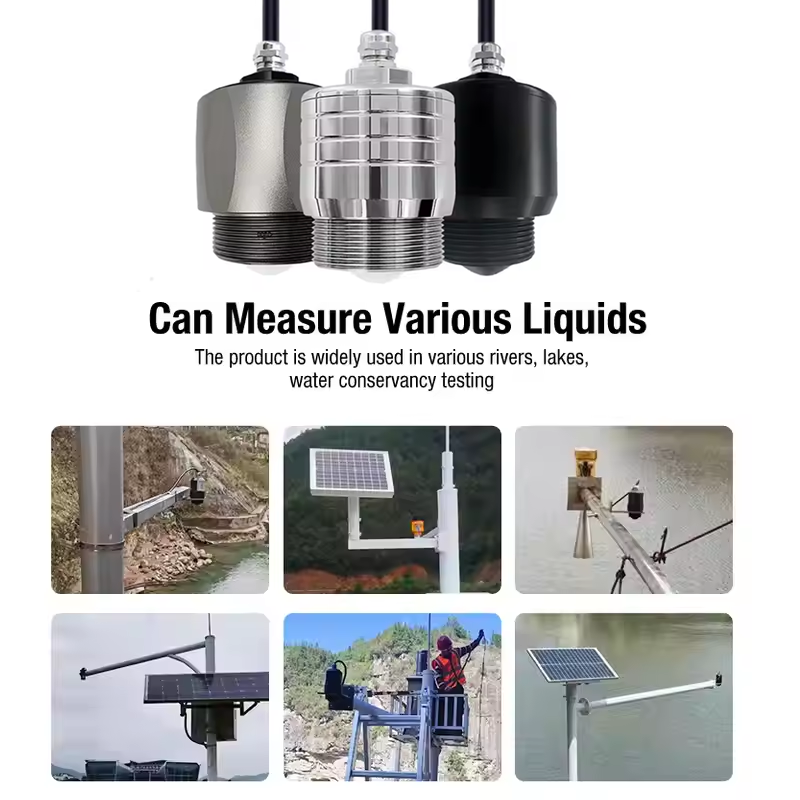
2. Core Value: Why are Radar Sensors a “Game-Changer” for Summer Flood Control?
Enhanced Warning Capability:
- Data-Driven Decision Making: Traditional manual monitoring occurs every 2-4 hours. Radar sensors enable real-time data every 1-5 minutes, extending the warning window from a few hours to up to 72 hours.
- Precise Resource Allocation: Avoiding blanket evacuations, precise river discharge data enables graded, zoned, and timed emergency responses, saving significant social resources.
Confronting Summer Challenges:
- High-Temperature Failure: Traditional contact sensors are prone to data drift under sustained high temperatures.
- Storm Siltation: Muddy floodwaters carrying silt and debris easily clog the intakes of traditional equipment.
- Lightning Damage: Summer thunderstorms are a major threat to electronic devices.
- Power Outages: Harsh weather often leads to grid power failures, causing equipment shutdown.
3. Key Selection Guide: Five Core Dimensions for Summer-Specific Sensors
With a dazzling array of products on the market, how do you choose the most suitable “flood control sentinel” for this particular summer? Focus on these five core dimensions:
1. Environmental Adaptability (Summer Survivability)
- Temperature Range: Must withstand extreme temperatures from -30°C to +70°C, with particular attention to its ability to maintain accuracy above 45°C.
- Protection Rating: IP68 is the minimum requirement to ensure operation during torrential rain and flood immersion.
- Lightning Protection Rating: Must have at least four-level lightning protection to cope with frequent summer thunderstorms.
2. Measurement Performance (Anti-Interference Accuracy)
- Non-Contact is a Prerequisite: Must use radar or microwave technology to fundamentally avoid siltation and scour damage.
- Rainstorm Penetration: Choose radar in the K-band (24GHz) or higher frequencies, whose ability to penetrate heavy rain and water fog far exceeds that of laser or ultrasonic devices.
- Comprehensive Accuracy: Under complex summer flow conditions, water level accuracy should reach ±3mm, flow velocity accuracy ±0.02m/s, and overall discharge accuracy better than ±5%.
3. Endurance & Communication (Reliability in Extreme Weather)
- Dual-Mode Power Supply: A solar panel + high-performance battery/supercapacitor combination is ideal, ensuring uninterrupted operation for up to 30 consecutive rainy days.
- Redundant Communication: Supports multi-mode communication like 4G/5G, BeiDou Satellite, LoRa to ensure data transmission even if one network fails.
- Edge Computing: Built-in processing chip enables local data storage and computation during network outages, with automatic data backfill once the network is restored.
4. Deployment & Maintenance (Rapid Response Capability)
- Quick Installation: Provides quick-install kits requiring no civil engineering or complex debugging, enabling deployment within hours to go live before flood peaks arrive.
- Smart Calibration: Supports remote calibration and AI adaptive learning, reducing the need for on-site maintenance .
- Remote Diagnostics: Comprehensive remote status monitoring and functions.
5. Data & Ecosystem (Decision Support Value)
- Open Interface: Provides standard API interfaces for easy integration with government flood control platforms, smart city systems, or private systems.
- Warning Models: Ideally has built-in or can connect to professional hydrological models to directly output warning levels, not just raw data.
- Service Support: Whether the supplier can provide 7×24 emergency support during the flood season is crucial.
4. Summer Performance Comparison of Mainstream Market Products
| Product Type / Core Focus | Brand A Premium Radar | Brand B Cost-Effective Domestic | Solution C Contact-Based Upgrade |
|---|---|---|---|
| Core Summer Advantage | Excellent rainstorm penetration, military-grade protection | Rapid deployment, controllable cost | Lower price, high traditional recognition |
| Key Technical Spec | >95% accuracy maintained under 80mm/h rainfall | <1% accuracy drift in high temperature | Susceptible to siltation and冲刷 |
| Summer Comm. Guarantee | 4G + BeiDou Satellite dual-channel | 4G primary, LoRa optional | Typically 4G |
| Typical Deployment Time | 1-2 days (requires professional install) | < 4 hours (quick kit) | 1-3 days |
| Extreme Weather Reliability | ★★★★★ | ★★★★☆ | ★★☆☆☆ |
| Total Cost of Ownership | High ($15,000+) | Medium ($5,000 – $10,000) | Low ($3,000 – $5,000) |
| Best Suited Scenario | National key rivers, transboundary rivers | Medium/small rivers, urban waterlogging points, mountain tourist areas | Non-critical points with gentle flow, low silt |
Conclusion: There is no “best,” only “most suitable.” Brand A is suitable for critical points with sufficient budget and absolute reliability requirements. Brand B is the preferred choice for this summer, high cost-effectiveness. Solution C is only recommended for auxiliary monitoring at points.
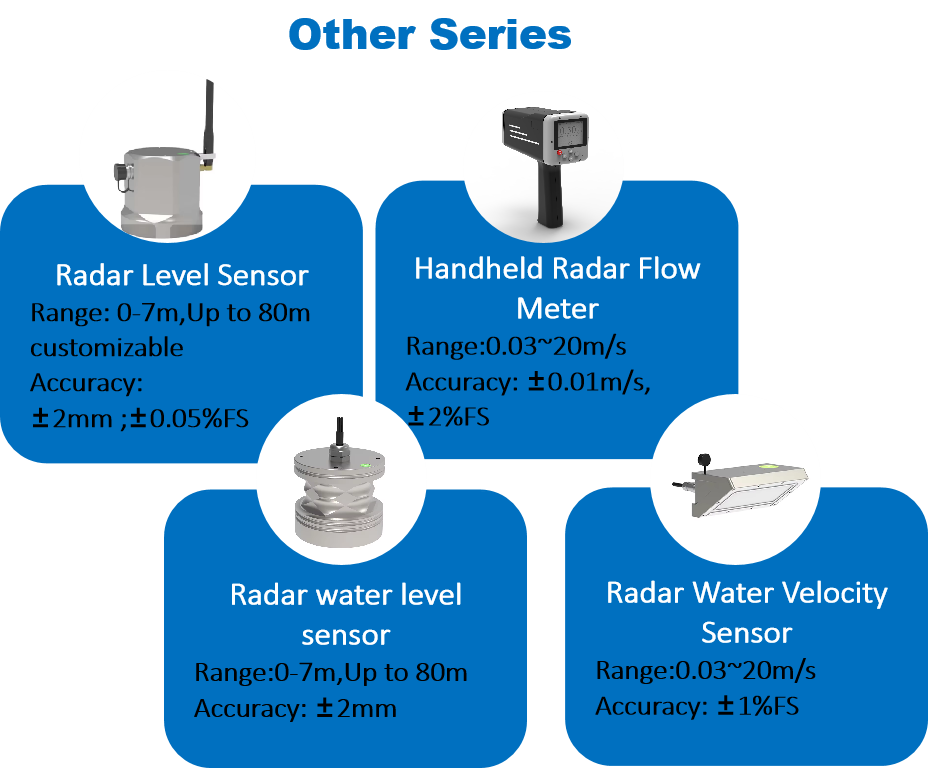
5. Future Trends: From “Monitoring” to “Cognition” in Smart Flood Control
- AI Integration: Sensors will deeply integrate with AI, enabling them not only to “see” data but also to “understand” flow patterns, predicting secondary risks like pier scour and embankment dangers.
- Swarm Intelligence: Multiple sensors will form collaborative networks, eliminating local errors through mutual data calibration, achieving watershed-wide panoramic precision perception.
- Digital Twin: Real-time data will drive “digital river” simulation models, flood evolution in virtual worlds beforehand, achieving true “forecasting” rather than just “warning.”
- Cost Democratization: As technology matures and localization advances, the cost of high-performance radar sensors will continue to decline, making them affordable for grassroots townships and communities.
6. Conclusion and Actionable Advice
Conclusion:
In this era of frequent extreme weather, adopting non-contact hydrological radar sensors is no longer a technological upgrade but a reflection of flood control responsibility. It concerns warning timeliness, rescue efficiency, and public safety.
Actionable Advice:
- Immediately Assess Risk: Identify the 3-5 most vulnerable critical points in your jurisdiction by reviewing historical hazards and this year’s climate predictions.
- Trial Verification: Contact reliable suppliers for a short-term at the highest-risk point to its performance during actual rainfall.
- Focus on Total Cost: Don’t just look at the unit price. Calculate the maintenance, emergency repair, and risk costs from data gaps over 5 years. The overall benefit of radar solutions often far exceeds that of traditional ones.
- Combine Human Expertise & Technology: Sensors cannot completely replace experienced hydrologists. They should be “super tools” for, freeing personnel from repetitive tasks to focus on analysis, and emergency command.
This summer, the greatest risk is “thinking the risk is still far away.” Choosing the right tool means choosing to buy more time for warnings and adding an extra line of defense for safety.
For more Hydrological sensor information,
please contact Honde Technology Co., LTD.
WhatsApp: +86-15210548582
Email: info@hondetech.com
Company website: www.hondetechco.com
Post time: Feb-06-2026