

Today, as energy transition and climate research become increasingly in-depth, precise measurement of solar radiation has become a key link in the study of renewable energy efficiency and climate change. The high-precision solar radiation sensor series, with its outstanding stability and reliability, is providing indispensable data support for multiple key fields worldwide.
Morocco: The “Eye of Light” of Solar Thermal Power Plants
In the vast desert of Varzazate, the world’s largest solar thermal power complex relies on key data provided by solar radiation meters. These sensors continuously track and precisely measure the intensity of direct radiation perpendicular to the surface of sunlight – a core parameter that determines the efficiency of the entire solar thermal power station. Based on real-time DNI data, the operation team precisely controlled the focusing angles of tens of thousands of heliostats to ensure that energy was efficiently concentrated in the heat absorber, thereby increasing the power generation efficiency of the power station by up to 18%.
Norway: The “Energy Recorder” of Polar Research
At the Polar Research Institute in the Svalbard archipelago, researchers are using solar radiation sensors to monitor the energy balance in the polar regions. This special sensor can simultaneously measure the short-wave radiation from the sun and the long-wave radiation released by the Earth, precisely revealing the energy balance of the polar regions. The data collected over three consecutive years have provided valuable first-hand information for studying the amplification effect in the Arctic and the mechanism of glacier melting.
Vietnam: The “Photosynthesis Advisor” for Agricultural Modernization
In the rice-growing areas of the Mekong Delta, agricultural experts have deployed photosynthetically active radiation sensors. This sensor is specifically designed to measure photosynthetically active radiation in the 400-700 nanometer band, helping agronomists accurately assess the light energy utilization efficiency of the rice canopy. Based on these data, farmers can optimize the planting density and adjust the field management, which has led to an increase of approximately 9% in the rice yield of the experimental area.
Chile: The “Meteorological Sentinel” of Astronomical Observation
At the world-class observatory site in the Atacama Desert, the fully automatic solar radiation tracking system works in coordination with the astronomical telescope. The total radiation meter and scattered radiation sensor equipped in this system help astronomers screen the best observation time – on nights when solar radiation is stable and scattered radiation is low, atmospheric turbulence is minimal, and the clearest images of celestial bodies can be obtained.
From the energy convergence in the Moroccan desert to the climate research in the Norwegian polar regions, from the yield optimization of rice fields in Vietnam to the starry sky exploration on the Chilean plateau, solar radiation sensors are transforming intangible sunlight into quantifiable data resources with their precise measurement performance. On the global pursuit of sustainable development, these sophisticated instruments are quietly playing the crucial role of “solar metrologists”, providing reliable data foundations for humanity to gain a deeper understanding of nature and utilize energy more efficiently.
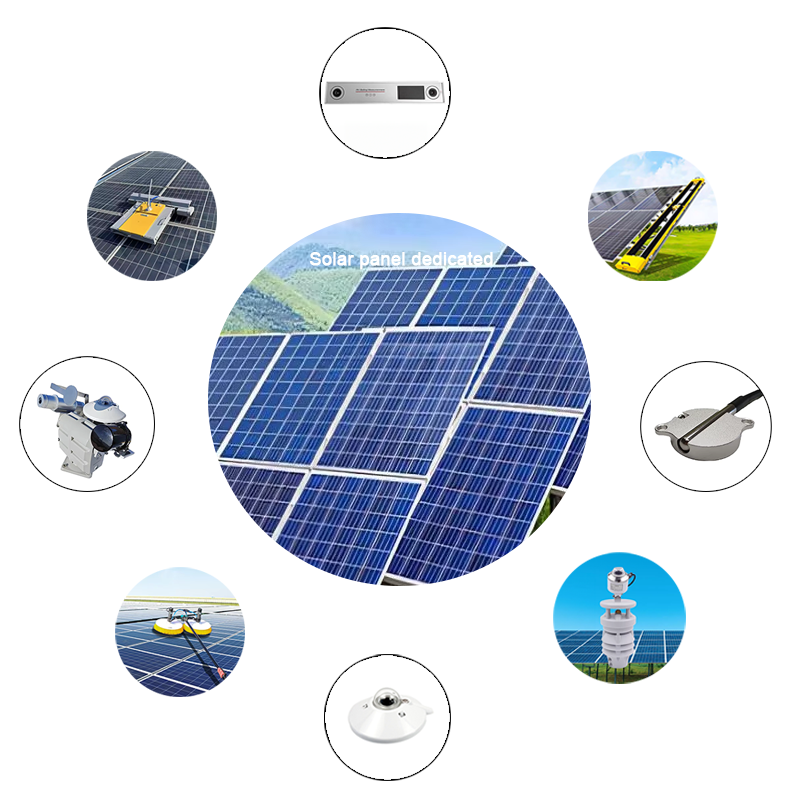
For more special sensors for solar power plants information, please contact Honde Technology Co., LTD.
WhatsApp: +86-15210548582
Email: info@hondetech.com
Company website: www.hondetechco.com
Post time: Nov-04-2025