

They are no longer just simple components in smoke detectors. A new generation of smart gas sensors, characterized by miniaturization, intelligence, and connectivity, is quietly permeating every aspect of our lives and industries, becoming a key sensing foundation for ensuring health, safety, and sustainable development.
1. A Technological Wave Triggered by “Smell”
Recently, driven by hashtags like #SmartHome and #HealthTech, home air quality monitors have become a new favorite. Behind this consumer trend lies a quiet revolution in gas sensing technology. Whether protecting families from carbon monoxide or helping scientists worldwide accurately map methane emissions, gas sensors – once a niche product – are now in the spotlight.
A Lifestyle Revolution – From “Safety Guardian” to “Health Manager”
In the past, home gas sensors served as ceiling-mounted smoke/combustible gas detectors, only alerting in emergencies. Today, they have evolved into 24/7 “health managers.”
Compact formaldehyde, TVOC, and carbon dioxide sensors are being integrated into air purifiers, ventilation systems, and even smartwatches. Leveraging Internet of Things (IoT) technology, they visualize the invisible data of air quality.
When an increase in carbon dioxide concentration is detected (indicating poor ventilation), the system can automatically activate the intake of fresh air. Range hoods can increase their power after sensing harmful gases produced during cooking. This transcends mere safety, becoming a precise management of a healthy lifestyle. Sharing videos and pictures of home air quality on TikTok and Pinterest is becoming a new lifestyle hashtag.
2. Industry and Cities – Weaving an Invisible Web of Safety and Efficiency
At the industrial and urban levels, gas sensors are indispensable nerve endings for #SmartCities and #Industry4.0.
Safety Barrier: In chemical plants and mines, distributed networks of toxic/flammable gas sensors enable leak warnings and precise location, nipping accidents in the bud before they escalate.
Environmental Pioneers: Driven by #ESG (Environmental, Social, and Governance) goals, stationary and mobile methane and volatile organic compound (VOC) sensors have become critical tools for monitoring pipeline leaks and landfill emissions. Like ground-based “sentinel satellites,” they provide crucial first-hand data for verifying carbon emissions, contributing to #SustainableDevelopment.
Smart Municipal Management: Sensors installed in urban utility tunnels and under manhole covers can effectively prevent explosions caused by methane buildup, ensuring public safety.
3. Core Technologies – Miniaturization, Intelligence, and the Future
Miniaturization and Low Cost: Microelectromechanical systems (MEMS) technology has reduced sensor size to the chip level, lowering costs and enabling large-scale deployment, even in consumer electronics.
Intelligence (AI-Driven): Individual sensors often suffer from cross-sensitivity issues. By deploying sensor arrays and integrating artificial intelligence and machine learning algorithms, the system can function like an “electronic nose,” more accurately identifying and quantifying multiple gaseous components in complex environments, significantly improving reliability.
Connectivity and Platformization: Countless sensor nodes are connected via Low-Power Wide-Area Network (LPWAN) technologies such as LoRa and NB-IoT. Data converges to a cloud platform for analysis, prediction, and decision-making, truly achieving a leap from “perception” to “cognition.”
A World with “Breath Sensing”
In the future, gas sensing technology will become more widespread and seamlessly integrated with various applications. It may become part of the “external olfactory system” of autonomous vehicles, used to detect dangerous leaks ahead; or it may be embedded in wearable devices to conduct preliminary health screenings by analyzing exhaled breath. A world comprehensively protected by a “digital olfactory” network, safeguarding environmental safety, personal health, and ecological harmony, is being “sniffed out” by these miniature sensors.
Conclusion: Gas sensors, these once-unsung “invisible guardians,” are stepping into the limelight due to technological advancements and the explosive growth of their application scenarios. They are not only the last line of defense for life but also frontline touchpoints for improving quality of life, driving industrial intelligence, and addressing climate challenges. Focusing on gas sensors means focusing on how to use more sensitive “sensing” to build a safer, healthier, and more sustainable future.
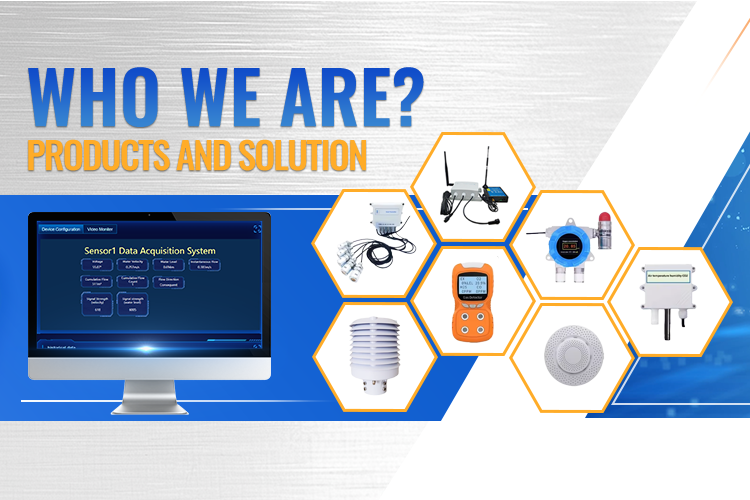
Complete set of servers and software wireless module, supports RS485 GPRS /4g/WIFI/LORA/LORAWAN
For more gas sensor information,
please contact Honde Technology Co., LTD.
Email: info@hondetech.com
Company website: www.hondetechco.com
Tel: +86-15210548582
Post time: Dec-17-2025