

When dissolved oxygen, pH, and ammonia levels are no longer manual readings but data streams driving automatic aeration, precision feeding, and disease alerts, a silent agricultural revolution centered on “water intelligence” is unfolding in fisheries worldwide.
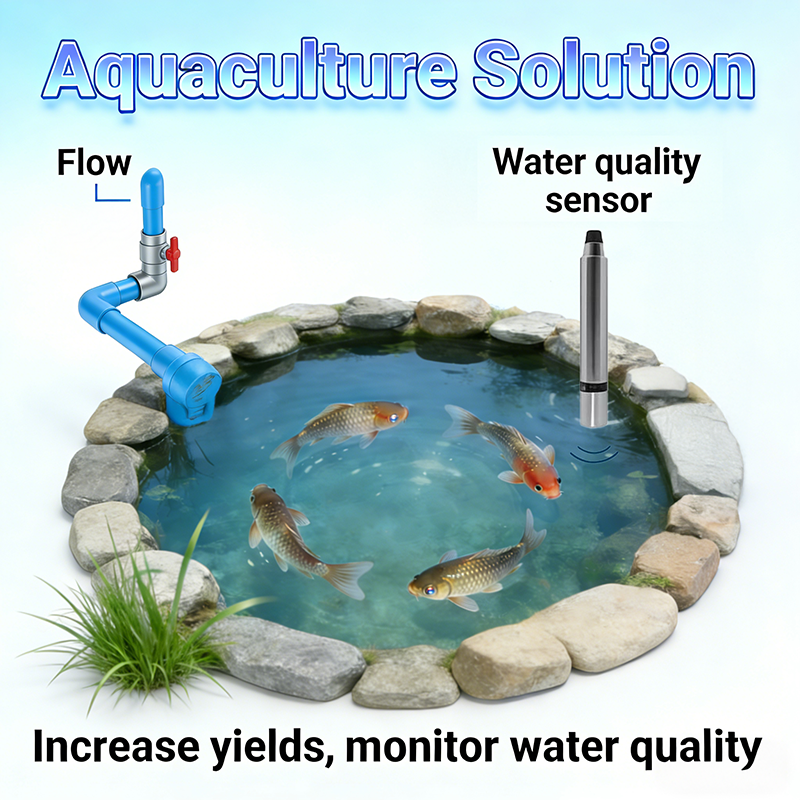
In the fjords of Norway, a micro-sensor array deep within a salmon farming cage tracks the respiratory metabolism of each fish in real time. In Vietnam’s Mekong Delta, shrimp farmer Trần Văn Sơn’s phone vibrates at 3 a.m.—not from a social media notification, but from an alert sent by his pond’s “liver”—the intelligent water quality system: “Dissolved oxygen in Pond B is slowly declining. Recommend activating the backup aerator in 47 minutes to prevent shrimp stress onset in 2.5 hours.”
This is not science fiction. It is the present moment, as intelligent aquaculture water quality equipment systems evolve from single-point monitoring to networked intelligent control. These systems are no longer mere “thermometers” for water quality; they have become the ”digital liver” of the entire aquaculture ecosystem—continuously detoxifying, metabolizing, regulating, and preemptively warning of crises.
The Evolution of Systems: From “Dashboard” to “Autopilot”
First Generation: Single-Point Monitoring (The Dashboard)
- Form: Standalone pH meters, dissolved oxygen probes.
- Logic: “What is happening?” Relies on manual readings and experience.
- Limitation: Data silos, lagged response.
Second Generation: Integrated IoT (The Central Nervous System)
- Form: Multi-parameter sensor nodes + wireless gateways + cloud platforms.
- Logic: “What is happening, and where?” Enables remote real-time alerts.
- Current Status: This is the mainstream configuration for high-end farms today.
Third Generation: Intelligent Closed-Loop Systems (The Autonomous Organ)
- Form: Sensors + AI edge computing gateways + automatic actuators (aerators, feeders, valves, ozone generators).
- Logic: “What is about to happen? How should it be handled automatically?”
- Core: The system can predict risks based on water quality trends and automatically execute optimization commands, closing the loop from perception to action.
Core Technology Stack: The Five Organs of the “Digital Liver”
- Perception Layer (Sensory Neurons)
- Core Parameters: Dissolved Oxygen (DO), Temperature, pH, Ammonia, Nitrite, Turbidity, Salinity.
- Technological Frontier: Biosensors are beginning to detect early concentrations of specific pathogens (e.g., Vibrio). Acoustic sensors assess population health by analyzing fish schooling sound patterns.
- Network & Edge Layer (Neural Pathways & Brainstem)
- Connectivity: Uses Low-Power Wide-Area Networks (e.g., LoRaWAN) to cover vast pond areas, with 5G/satellite backhaul for offshore cages.
- Evolution: AI Edge Gateways process data locally in real-time, maintaining basic control strategies even during network outages, solving the pain points of latency and dependency.
- Platform & Application Layer (Cerebral Cortex)
- Digital Twin: Creates a virtual replica of the culture tank for simulation and feeding strategy optimization.
- AI Models: Algorithms from a California startup, by analyzing the relationship between DO drop rates and feeding volumes, successfully increased feed conversion ratio by 18% and improved prediction accuracy for sediment load to over 85%.
- Actuation Layer (Muscles & Glands)
- Precision Integration: Low DO? The system prioritizes activating bottom-diffusion aerators over surface paddlewheels, increasing aeration efficiency by 30%. Continuously low pH? Valves for automatic sodium bicarbonate dosing open.
- Norwegian Case: Smart feeders dynamically adjusted based on water quality data reduced feed waste in salmon farming from ~5% to under 1%.
- Security & Traceability Layer (Immune System)
- Blockchain Verification: All critical water quality data and operational logs are stored on an immutable ledger, generating a tamper-proof “water quality history” for each batch of seafood, accessible to end consumers via scan.
Economic Validation: The Data-Driven ROI
For a medium-scale 50-acre shrimp farm:
- Traditional Model Pain Points: Relies on veteran experience, high risk of sudden mortality, medicine and feed costs exceed 60%.
- Intelligent System Investment: Approximately ¥200,000 – ¥400,000 (covering sensors, gateways, control devices, and software).
- Quantifiable Benefits (based on 2023 data from a farm in Southern China):
- Reduced Mortality: From an average of 22% to 9%, directly increasing revenue by ~¥350,000.
- Optimized Feed Conversion Ratio (FCR): Improved from 1.5 to 1.3, saving ~¥180,000 in annual feed costs.
- Reduced Medicine Costs: Preventive medicine use decreased by 35%, saving ~¥50,000.
- Improved Labor Efficiency: Saved 30% of manual inspection labor.
- Payback Period: Typically within 1-2 production cycles (approx. 12-18 months).
Challenges & Future: The Next Frontier for Intelligent Systems
- Biofouling: Sensors submerged long-term are prone to surface fouling by algae and shellfish, leading to data drift. Next-gen self-cleaning tech (e.g., ultrasonic cleaning, anti-fouling coatings) is key.
- Algorithm Generalizability: Water quality models vary greatly across species, regions, and farming modes. The future needs more configurable, self-adaptive learning AI models.
- Cost Reduction: Making systems affordable for small-scale farmers depends on further hardware integration and cost reduction.
- Energy Self-Sufficiency: The ultimate solution for offshore cages involves hybrid renewable energy (solar/wind) to achieve energy autonomy for the entire monitoring and control system.
Human Perspective: When Veteran Meets AI
In a sea cucumber farm shed in Rongcheng, Shandong, veteran farmer Lao Zhao, with 30 years of experience, was initially dismissive of “these blinking boxes.” “I scoop up water with my hands and know if the pond is ‘fertile’ or ‘lean’,” he said. That changed when the system warned of a hypoxic crisis in the bottom water 40 minutes in advance on a sultry night, while his experience only caught on as the sea cucumbers began to float. Lao Zhao later became the system’s “human calibrator,” using his experience to train the AI’s thresholds. He reflected, “This thing is like giving me an ‘electronic nose’ and ‘X-ray vision.’ I can now ‘smell’ what’s happening five meters underwater.”
Conclusion: From Resource Consumption to Precision Control
Traditional aquaculture is an industry of humans gambling against an uncertain nature. The proliferation of intelligent water systems is transforming it into a fine-tuned data operation based on certainty. What it manages is not just H₂O molecules, but the information, energy, and life processes dissolved within.
When every cubic meter of culture water becomes measurable, analyzable, and controllable, what we harvest is not just higher yields and more stable profits, but a form of sustainable wisdom for coexisting harmoniously with the aquatic environment. This may be the most rational, and yet most romantic, turn humanity has taken on its path toward protein sovereignty on the blue planet.
Complete set of servers and software wireless module, supports RS485 GPRS /4g/WIFI/LORA/LORAWAN
For more water sensor information,
please contact Honde Technology Co., LTD.
Email: info@hondetech.com
Company website: www.hondetechco.com
Tel: +86-15210548582
Post time: Dec-08-2025