

1. Introduction: The New Standard in Non-Contact Hydrometry
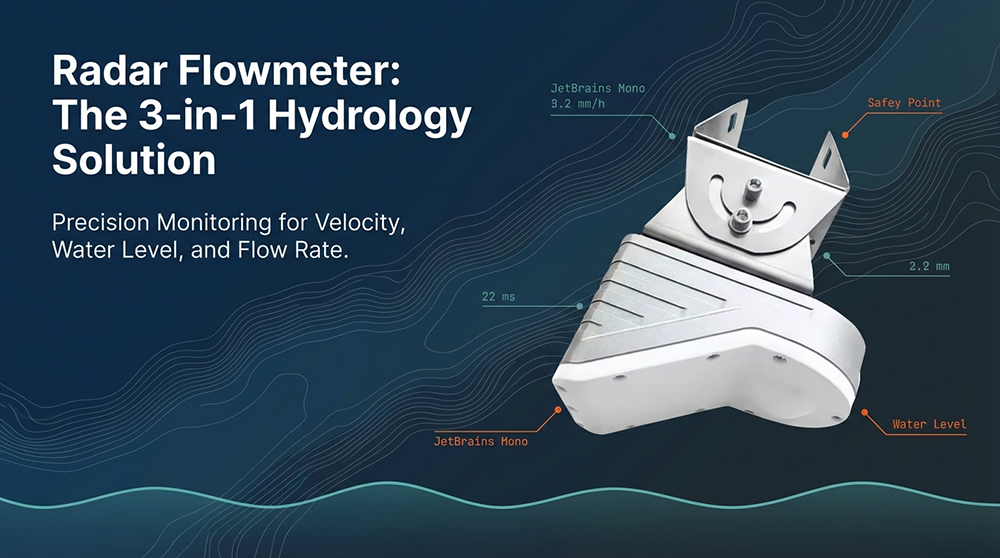
In the face of increasing hydrological volatility across South and Southeast Asia, traditional contact-based monitoring is no longer sufficient. The emergence of the Radar Water Flow Sensor represents a disruptive non-contact hydrometry solution designed for high-stakes water resource management. This integrated 3-in-1 hardware utilizes an integral model to simultaneously capture water velocity, level, and flow rate in real-time. By consolidating these measurements into a single unit, the sensor significantly reduces the Total Cost of Ownership (TCO) and simplifies data logger integration, replacing the need for multiple independent sensors and complex synchronized wiring.
2. Core Features of the 3-in-1 Radar Flowmeter
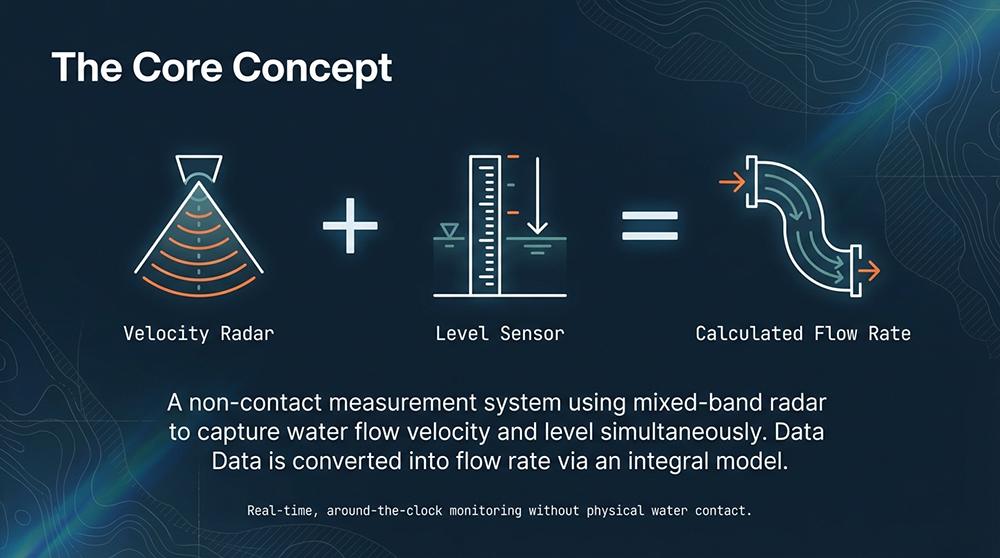
Engineered for field-hardened performance, the Radar Water Flow Sensor synthesizes advanced electronics with rugged physical architecture:
- Mixed-Band Radar Technology: Enables simultaneous output of flow rate and liquid level without interference, utilizing a non-contact methodology that remains unaffected by surface debris or sediment.
- IP68-Rated Resilience: The fully sealed design is built to withstand extreme tropical weather and total immersion in diverse field environments.
- Integrated Protection Suite: Features internal circuitry for anti-reverse connection, lightning protection, and overvoltage protection to ensure long-term uptime.
- Bluetooth 5.2 Debugging: Facilitates rapid on-site maintenance and configuration via mobile devices, eliminating the need for physical cable tethering during calibration.
- Compact Footprint: A high-strength chassis (Aluminum alloy and PBT) provides extreme durability in a small form factor.
3. Why Radar Technology Wins
For hydrology consultants, radar technology offers superior operational advantages over ultrasonic or mechanical alternatives:
- Environmental Resilience: Housed in a robust Aluminum alloy and PBT shell, the sensor is immune to the corrosive effects of polluted water and high-sediment loads. Because it operates entirely above the water surface, mechanical wear and biofouling are eliminated.
- Verified Precision: The hardware achieves a speed measurement accuracy of ±0.01m/s—verified through rigorous radar simulator calibration—and a ranging accuracy of ±1mm.
- Superior Site Adaptability: With an 8cm ranging blind area and specific antenna beam angles (12°x25° for speed; 6° for ranging), the sensor can be precisely tuned to avoid multipath interference from channel walls or mounting structures.
4. Regional Application Case News: India, Indonesia, and the Philippines
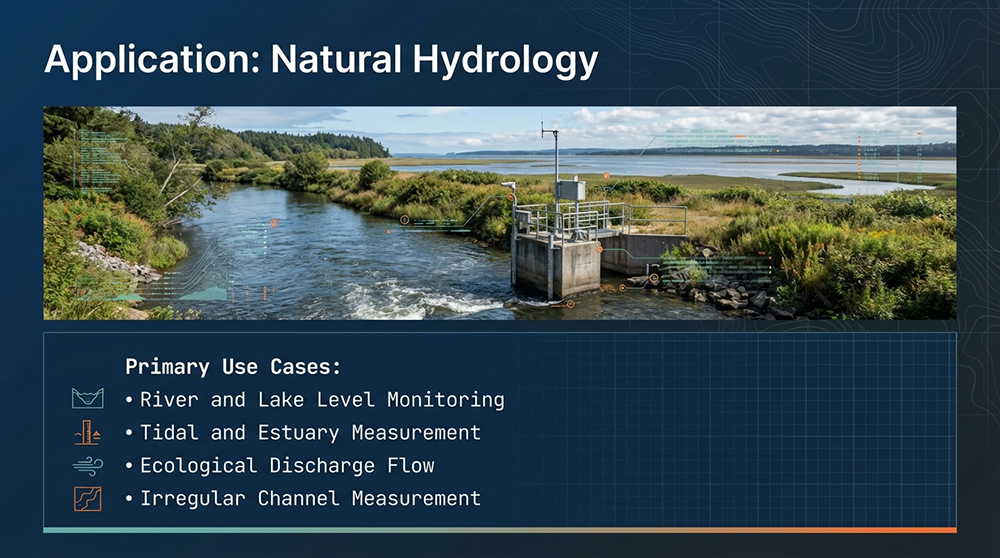
Field deployments across South and Southeast Asia demonstrate the efficacy of this 3-in-1 solution in addressing diverse regional water challenges.
4.1 India: Optimizing Irrigation in Irregular Channels
In India, water managers face the challenge of monitoring flow in vast, irregular channels where standard level-to-flow formulas often fail due to non-linear velocity relationships. By providing real-time velocity and level data simultaneously, the radar sensor allows for accurate flow calculations in these complex geometries, ensuring optimized agricultural distribution and precise monitoring of river basins.
4.2 Indonesia: Reservoir Management and Ecological Discharge
Indonesia’s reservoir operators utilize the sensor’s high sensitivity (starting at 0.01 m/s) to manage ecological discharge. Maintaining minimum flow to protect downstream biodiversity is a critical legal requirement in the archipelago. The sensor’s ability to monitor reservoir gates and tides without contact ensures reliable data even in high-humidity coastal environments, facilitating better flood gate control.
4.3 Philippines: Urban Drainage and Underground Pipe Networks
In the Philippines, the sensor is a critical component of urban flood control within underground pipe networks. The IP68-rated Aluminum and PBT housing is essential for surviving the humid, corrosive gases common in sewage and drainage systems. Engineers must account for the 8cm blind area during installation to ensure accurate monitoring during peak tropical rainfall events when pipes reach near-capacity levels.
5. Connectivity and Data Integration
The sensor is designed for seamless integration into modern SCADA and IoT ecosystems:
- Standardized Communication: Utilizes an RS485 physical interface supporting the Modbus-RTU protocol with selectable baud rates of 9600 or 115200 for high-speed data transmission.
- Wireless Expansion: Supports modular integration with 4G, WIFI, GPRS, LORA, and LORAWAN for remote telemetry in isolated regions.
- Granular Data Output: Matching server software provides real-time visualization of critical metrics, including Cumulative Flow, Signal Strength (for both velocity and water level), and Flow Direction.
6. Technical Specifications Reference Table
| Feature | Specification |
| Product Name | Radar Water Flow Sensor |
| Speed Range | 0.01 m/s ~ 30 m/s |
| Speed Accuracy | ±0.01 m/s (Radar simulator calibration) |
| Speed Measurement Pitch Angle | 0° – 80° (Automatic compensation) |
| Speed Antenna Beam Angle | 12° * 25° |
| Ranging Blind Area | 8 cm |
| Maximum Ranging Range | 40 m |
| Ranging Accuracy | ±1 mm |
| Ranging Antenna Beam Angle | 6° |
| Maximum Distance (Radar to Surface) | 30 m |
| Operating Temperature | -20°C ~ 70°C |
| Shell Material | Aluminum alloy, PBT |
| Dimensions (mm) | 155 mm * 79 mm * 94 mm |
| Protection Level | IP68 |
| Power Supply Range | 9 ~ 30 VDC |
7. Installation and Implementation
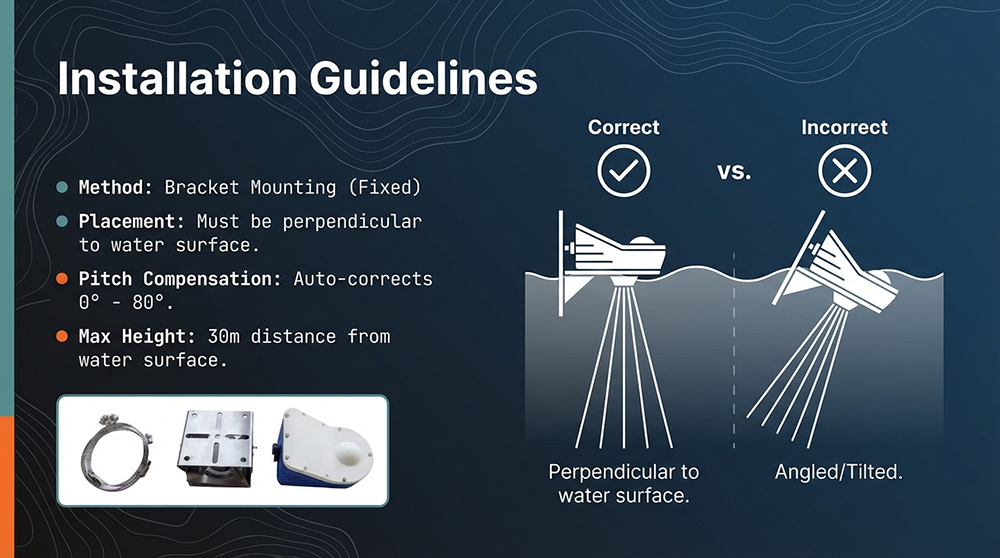
The Radar Water Flow Sensor employs a versatile bracket installation method. Its compact dimensions (155mm x 79mm x 94mm) allow for easy mounting on existing bridge rails or specialized armatures. The system features automatic pitch angle compensation (0° to 80°) to maintain accuracy across varied mounting heights.
Quick Note: To prevent measurement errors and multipath interference, the sensor should be extended away from the bank or channel wall using the bracket. Ensure the radar cone is entirely unobstructed; if the beam reflects off the side of the channel or mounting pillar, data integrity will be compromised.
8. Conclusion
The Radar Water Flow Sensor provides a high-accuracy, cost-effective solution for the complex hydrological needs of India, Indonesia, and the Philippines. By delivering a resilient 3-in-1 measurement package that thrives in harsh environmental conditions, this technology is essential for future-proofing water resource management and protecting critical infrastructure throughout the region.
Tags:
Non-contact measurement Radar flowmeter
Radar Water Flow Sensor
Underground pipe networks
For more sensor information,
please contact Honde Technology Co., LTD.
WhatsApp: +86-15210548582
Email: info@hondetech.com
Company website: www.hondetechco.com
Post time: Feb-28-2026