

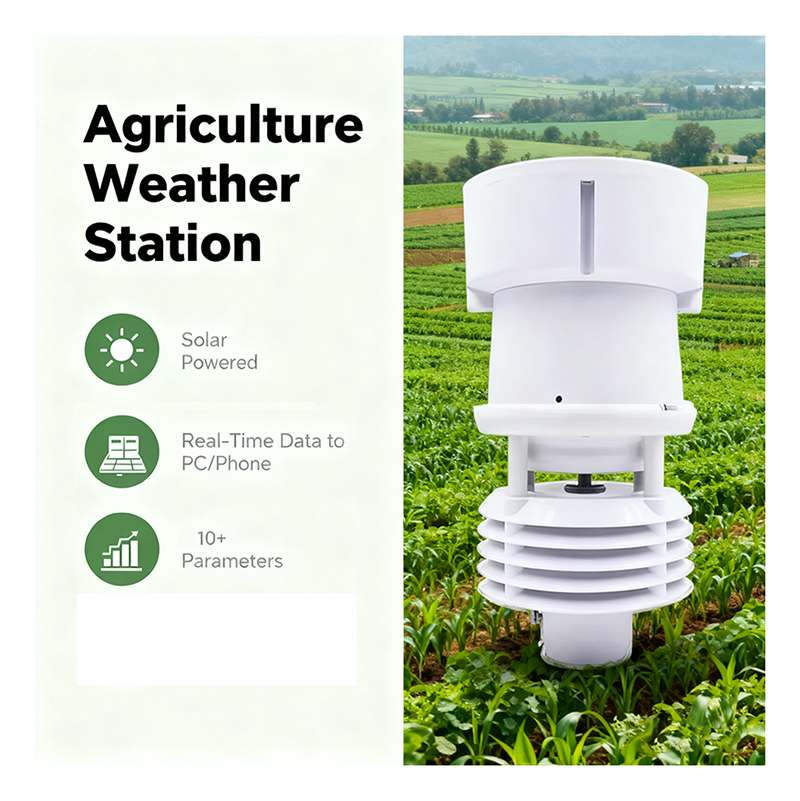
Facing the complex challenges brought about by climate change, such as frequent extreme weather, uneven distribution of water resources and the dominance of small-scale farming, the sustainable development of agriculture in Southeast Asia is urgently seeking technological innovation as a breakthrough point. HONDE’s integrated intelligent agricultural weather station, specifically designed for tropical agriculture, is rapidly spreading across the vast farmlands, orchards and plantations in Southeast Asia due to its highly integrated, robust and easy-to-deploy features. It not only provides farmers with unprecedented insights into the microclimate in the fields, but also serves as a key bridge connecting traditional agriculture with data-driven decision-making, helping the region build a more climate-resilient agricultural production system.
I. Unique Challenges of Agriculture in Southeast Asia and the Value of Precise Meteorological Data
Agriculture in Southeast Asia is deeply dominated by the tropical monsoon climate, and its core pain points are closely related to meteorology:
The “spatio-temporal variation” of rainfall: The alternation of floods in the rainy season and water shortages in the dry season, precise rainfall monitoring is the lifeline of irrigation and drainage management.
The “dual pressure” of high temperature and high humidity: A continuous environment of high temperature and high humidity is highly likely to induce crop diseases (such as rice blast and powdery mildew of rubber trees), and also affects the health of livestock and poultry.
Typhoons and local severe convective weather: Frequent extreme weather causes physical damage to crops and disrupts production plans.
The “resource threshold” for small-scale farmers: Traditional meteorological services are difficult to be accessible to all. The high cost and complex technology prevent small-scale farmers from obtaining accurate data.
The value of the HONDE Agricultural Meteorological Station lies in its ability to deliver professional-level meteorological monitoring capabilities to the fields in an economical, reliable and user-friendly manner, directly addressing the aforementioned challenges.
Ii. HONDE Agricultural Meteorological Station: Tailored for tropical environments
In response to the environmental characteristics of high temperature, high humidity, abundant rainfall and frequent salt fog in Southeast Asia, the HONDE Meteorological Station has been comprehensively strengthened:
Multi-parameter integrated system: A single station integrates sensors for air temperature and humidity, wind speed and direction, rainfall, total solar radiation and photosynthetically active radiation, with all core parameters included.
Tropical protection design
Anti-corrosion: The main body is made of anti-salt spray material, and the sensor is designed to prevent insects and dust.
Water and heat resistant: With a protection grade of IP65, it can operate continuously and stably under heavy rain and intense sunlight.
Low power consumption and long battery life: High-efficiency solar power supply combined with a low-power design ensures uninterrupted operation even during continuous rainy seasons.
Flexible communication and deployment: Supports multiple communication methods such as 4G and LoRaWAN, adapting to different network conditions from plains to mountains, and from near-sea to inland areas. The integrated pole design enables rapid deployment by a single person, significantly reducing installation and maintenance costs.
Iii. Core Application Scenarios: Data-driven Agricultural Revolution
The “Smart Water Manager” for Rice Cultivation
In the Mekong Delta of Vietnam and the central plains of Thailand, meteorological stations are transforming the water management of rice.
Application: Precise monitoring of rainfall and evaporation demands in the field.
Decision-making: Based on real-time data, the system precisely guides the timing of drainage during the rainy season to prevent waterlogging. Optimize the irrigation plan during the dry season to achieve “shallow water frequent irrigation” or “moist irrigation”. Practical experience shows that it can help farmers save 20-30% of water and reduce methane emissions.
2. The “Pest and Disease Early Warning Outpost” for High-Value Cash Crops
In oil palm plantations in Malaysia, banana plantations in the Philippines and orchards in Thailand, meteorological stations serve as the “first line of defense” for disease prevention and control.
Application: Continuously monitor temperature and humidity, and precisely calculate the “leaf wetting time”.
Decision-making: When environmental conditions consistently meet the prevalence models of specific diseases (such as oil palm blight and banana leaf spot disease), the system automatically sends early warnings to farmers’ mobile phones, guiding them to carry out preventive pesticide application during the most economically effective window period. This move can reduce the use of pesticides by 15-25% and significantly improve the quality of fruits and the export pass rate.
3. “Field Emergency Command for Extreme Weather”
Typhoon Warning: Along the coasts of the Philippines and Vietnam, real-time wind speed and direction data help plantations to reinforce facilities and harvest ripe fruits in a timely manner before typhoons arrive, minimizing losses to the greatest extent.
Drought monitoring: By integrating rainfall and evaporation data, early drought warnings are established in some areas of Indonesia to guide the adjustment of planting structures or the initiation of emergency irrigation.
4. “Environmental Optimizer” for Facility Agriculture and Precision Planting
In the emerging smart greenhouses in Vietnam and Thailand, the external reference data provided by meteorological stations, in conjunction with internal sensors, intelligently control the shading, ventilation, cooling and supplementary lighting systems, creating the best growth environment and enhancing the yield and quality of crops such as tomatoes and strawberries.
Iv. Empirical Case: The Transformation from Data to Harvest
In a tea cooperative in West Java Province, Indonesia, the HONDE agricultural meteorological station network has been deployed. By analyzing the data, the cooperative found that:
The combination of humidity and temperature in tea gardens at a specific altitude in the early morning is highly correlated with the accumulation of the best flavor substances in tea leaves.
Through monitoring, they can predict the best picking period more accurately.
Based on this, they adjusted the picking schedules for different plots. After one production season, the proportion of high-end tea output of the cooperative increased by 18%, and the overall income rose significantly. The cooperative manager said, “In the past, we picked tea based on the weather. Now, the weather station tells us when the weather is the best.” The data enabled our little leaves to fetch a better price.”
Conclusion
In Southeast Asia, a region where global food security and the supply of specialty agricultural products are of vital importance, addressing climate uncertainty has become a core issue in agricultural development. HONDE agricultural meteorological Station, with its profound understanding of the demands of tropical agriculture and reliable technical implementation, is transforming the once elusive “timing” into measurable, manageable and value-added “digital assets”. It starts from the fields and farmlands, providing thousands of farmers with the “weapons” for scientific decision-making. It not only enhances production efficiency and risk resistance, but also promotes the transformation of the entire regional agriculture towards intelligence, low carbonization and high value. As the digital wave deepens, HONDE will continue to be committed to enabling every farm and every plantation to have its own “climate intelligence”, jointly building a solid future for the sustainable development of agriculture in Southeast Asia.
About HONDE: As a global leader in smart agriculture and environmental monitoring solutions, HONDE has been deeply rooted in the Southeast Asian market and is committed to transforming innovative technologies into productivity tools accessible to farmers through localized product design and services. We believe that the warmth of technology lies in its inclusiveness and the value of data lies in its empowerment. Amidst the green mountains and clear waters of Southeast Asia, HONDE is working with its partners to write a new chapter of win-win integration between digital technology and traditional agriculture.
For more weather station information, please contact Honde Technology Co., LTD.
WhatsApp: +86-15210548582
Email: info@hondetech.com
Company website: www.hondetechco.com
Post time: Dec-22-2025