

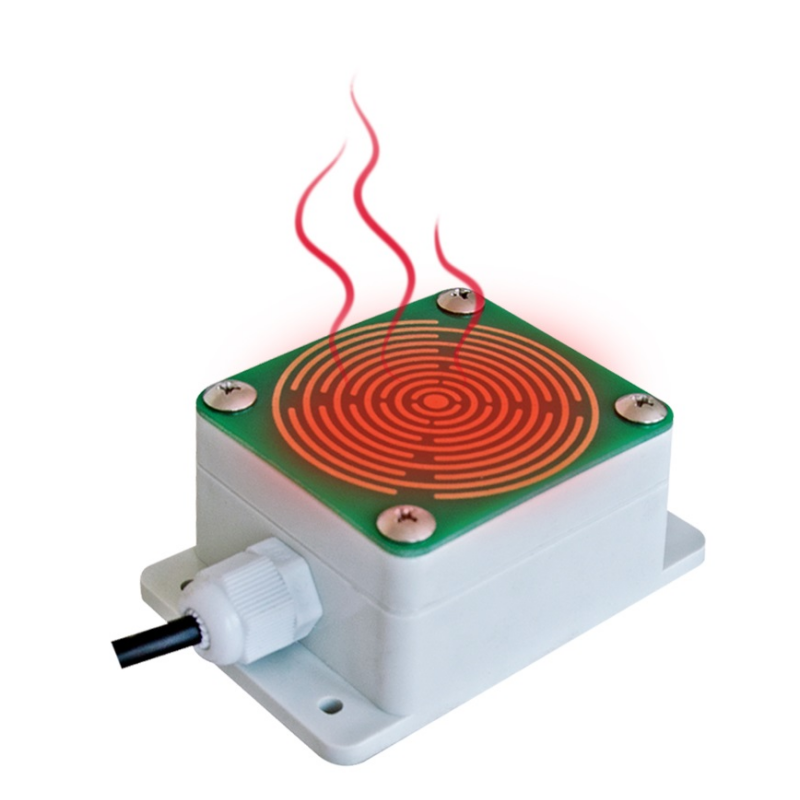
In the field of meteorological monitoring and automatic control, the perception of precipitation events has evolved from simple “presence or absence” judgments to precise identification of precipitation forms (such as rain, snow, freezing rain, hail, etc.). This subtle yet crucial distinction is becoming the decision-making cornerstone for ensuring traffic safety, optimizing agricultural management, and enhancing the efficiency of facilities. The high-precision optical rain and snow sensor launched by HONDE Company, with its advanced detection principle and reliable performance, is transforming intangible precipitation into clear and actionable data instructions, playing a core role as an “intelligent weather sentinel” in multiple key industries.
I. Technical Core: Surpassing Tradition, Accurately Identifying “Phenomena”
HONDE’s rain and snow sensors have abandoned the traditional tipping bucket or vibration principles and adopted non-contact optical scattering measurement technology, achieving a qualitative leap:
Working principle: The sensor emits a beam of infrared light and precisely monitors the changes in its light intensity and pattern after being scattered by precipitation particles in the air.
Morphological recognition: Precipitation particles of different shapes, sizes and densities (raindrops, snowflakes, ice crystals) have significant differences in the scattering characteristics of light. The built-in intelligent algorithm can distinguish rainfall, snowfall, sleet and freezing rain in real time by analyzing these features, and calculate the intensity of precipitation.
Core advantages
High precision and rapid response: High detection sensitivity, capable of sensing fine precipitation, response time measured in seconds, no mechanical moving parts, and maintenance-free.
Strong anti-interference ability: It is not easily disturbed by environmental factors such as vehicle dust, insects, and vibrations, and the data is stable and reliable.
All-weather operation: Equipped with an automatic heating function to prevent snow or ice from covering the optical window, ensuring continuous normal operation in severe cold and snowy weather.
Ii. Core Application Scenarios: Data-driven intelligent decision-making
Intelligent transportation system: The “Early Warning Pioneer” of Road Safety
Highways and Bridges: Deployed on dangerous sections prone to icing and fog. When the sensors detect freezing rain or snowfall, the monitoring center can immediately activate the emergency response plan.
Interlocking control: Automatically or promptly spray de-icing agents, adjust the variable message board to release speed limits and warning information, shifting from “post-event handling” to “pre-event prevention”.
Benefits: Significantly reduce the traffic accident rate during winter rain and snow weather, and enhance the efficiency and safety of road network traffic.
Intelligent connected vehicles and autonomous driving: As key sensors in the roadside units of vehicle-road coordination, they provide high-precision local weather information for passing vehicles and assist the vehicle decision-making system.
2. Smart Agriculture: The “Guardian” of Facilities and Production
Intelligent greenhouses and livestock and poultry houses: Installed outside the facilities, they monitor precipitation patterns in real time.
Interlocking control: When snowfall is detected, the skylight will automatically close to prevent the snow from collapsing the greenhouse film or cold air from entering. When continuous rainfall is detected and the humidity is saturated, pay attention to the risk of diseases.
Precision irrigation: Distinguish between effective rainfall and ineffective precipitation (such as brief light rain), optimize irrigation procedures, and avoid waste of water resources.
Field crop management: Warn of abnormal snowfall or freezing rain, guide farmers to take timely disaster prevention measures such as covering, and protect seedlings and fruits and vegetables.
3. Smart Cities and Buildings: “Efficiency Enhancers” for Operations and Security
Intelligent security and lighting: Integrated with cameras and street lamps. When rain or snow is detected, the camera wipers can be automatically triggered, switched to fog-penetrating mode, or the street lamp brightness strategy can be adjusted (higher lighting is usually required on rainy or snowy days).
Building automation: Controlling the opening and closing logic of canopies at building entrances and automatic doors to enhance user experience and indoor environment management.
Municipal sanitation: Provide precise start and stop time and type data for the intelligent dispatching of snowplows and water sprinklers.
4. Renewable Energy and Specific Industries
When snowfall is detected in photovoltaic power stations, it can be linked to analyze whether the sudden drop in power generation is caused by snow cover, and prompt or start snow cleaning and removal operations to reduce power generation losses.
Open-air material yards and ports: Warning of heavy rain or heavy snow, guiding the covering of materials, adjusting loading and unloading operation plans, reducing cargo damage and operational disruptions.
Iii. The System Value of HONDE Rain and Snow Sensors
From qualitative to quantitative: Transform the vague “It’s snowing” into an exact data stream of “It’s snowing now, with an intensity of X millimeters per hour”.
From passive response to active early warning: It provides the automation system with a decision-making window several minutes to tens of minutes in advance, achieving preventive control.
Reduce operation and maintenance costs: Through precise judgment, unnecessary equipment start-up and shutdown as well as manual inspection (such as misjudging a cloudy day as rain and canceling operations) are avoided, thereby enhancing the efficiency of resource utilization.
Enhancing system reliability: As a key environmental perception input, it has improved the overall intelligence level and risk resistance capacity of complex systems such as transportation, agriculture, and urban management.
Iv. Empirical Case: Data-Driven “Ice-breaking” Actions
On a key section of a provincial expressway in Northeast China, the HONDE rain and snow sensor network has been deployed at multiple long longitudinal slopes and bridge positions. On a winter morning, the system detected that the temperature on a certain section of the road had dropped sharply to -5℃ and a freezing rain signal appeared, nearly an hour earlier than it was discovered by manual inspection. The monitoring center immediately activated the contingency plan
The information board upstream of this section has issued a warning saying “The bridge deck is icy. Slow down.”
2. The maintenance vehicle automatically receives the instruction and goes to this section of the road to spread preventive de-icing agents.
3. The traffic dispatch temporarily restricted the passage of large trucks.
Post-event data comparison shows that no traffic accident caused by icy road surface occurred on this section of the road during this freezing rain incident, while in similar weather conditions in the past, an average of 2 to 3 skidding or rear-end collisions would happen. Highway managers commented: “HONDE sensors are like installing ‘eyes that can see through the weather’ for us, enabling us to take action before danger forms.”
Conclusion
Precipitation, as one of the most common and complex weather phenomena, has distinct risks and opportunities behind its subtle differences in form. HONDE’s rain and snow sensors, with their precise recognition capabilities, have successfully translated this “language” of nature into machine-readable and system-usable digital instructions. It is quietly transforming the operational logic in fields such as transportation, agriculture, and urban management – upgrading from relying on experience and passive response to proactive early warning and intelligent collaboration based on precise data. In the intelligent era of the Internet of Everything, the HONDE rain and snow sensor is no longer merely a meteorological device; it has become a key sensing component in building a safe, efficient, and resilient social infrastructure, quietly safeguarding the orderly operation of society and people’s peaceful lives.
About HONDE: As a continuous innovator in environmental intelligent perception technology, HONDE is committed to deeply integrating cutting-edge optical, algorithmic and Internet of Things technologies to provide customers with refined environmental data solutions that go beyond traditional measurement. We believe that a deeper and more accurate interpretation of natural phenomena is an indispensable part of building an intelligent future.
For more weather sensor information, please contact Honde Technology Co., LTD.
WhatsApp: +86-15210548582
Email: info@hondetech.com
Company website: www.hondetechco.com
Post time: Dec-19-2025