

In the world of solar photovoltaic and solar thermal power generation, solar radiation is the only and free “fuel”, but its energy flow is intangible and variable. Accurately and reliably measuring the input of this “fuel” is the absolute cornerstone for evaluating system performance, optimizing operational strategies, and ensuring investment returns. With its profound accumulation in the field of high-precision environmental sensing, HONDE’s series of solar radiation sensors have evolved from basic meteorological observation equipment to the “efficiency scale” and “data heart” that run through the entire life cycle of photovoltaic power stations, from site selection – construction – operation – assets, providing an indispensable core data source for the refined and intelligent management of the industry.
I. Core Value: A paradigm Shift from “fuzzy perception” to “precise measurement”
For photovoltaic power stations, the precise measurement of solar radiation data resolves a fundamental cognitive issue: What is the actual power generation efficiency of the power station? This is directly reflected in three core applications:
The golden benchmark for performance ratio calculation: The performance ratio of a power station is the core indicator for measuring its health (PR = actual power generation/theoretical power generation). The precise radiation data provided by the HONDE radiation sensor is the only objective and impartial input in the theoretical power generation calculation, ensuring the authenticity and reliability of the PR value, which can be used for horizontal benchmarking and long-term performance degradation analysis.
2. Diagnostic Key for Attribution of Power Generation Fluctuations: When power generation fluctuates abnormally, is it due to weather conditions or equipment failure? Real-time and high-precision radiation data can be immediately distinguished. If the radiation is stable but the power generation drops sharply, internal problems such as strings, inverters or shading can be quickly identified.
3. Decisive factors for power prediction accuracy: For grid-connected power stations, the accuracy of short-term power generation prediction is related to grid dispatching and power trading revenue. Radiation data is the most direct driving factor for predictive models, and its quality directly determines the reliability of the prediction.
Ii. HONDE Radiation Sensor Product Matrix: Matching Diverse Technical Demands
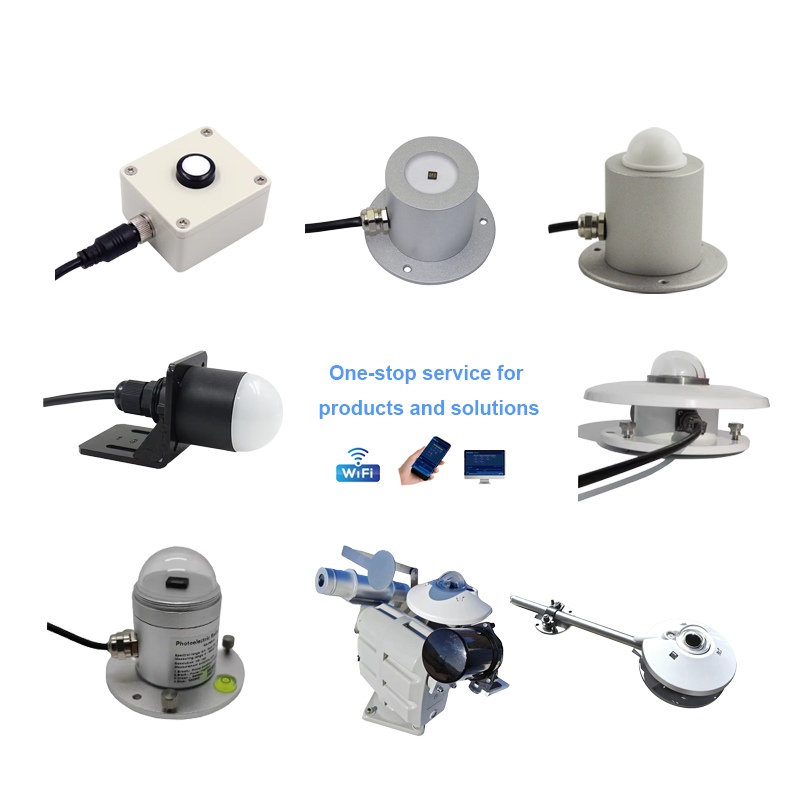
HONDE offers complete measurement solutions for different photovoltaic technology routes and monitoring requirements:
The benchmark choice for Photovoltaic power stations – Total Radiation Meter
Function: Placed horizontally, it measures the total solar radiation (including direct and scattered) within a hemispherical sky (180°). It is an international standard instrument for evaluating the theoretical power generation of fixed photovoltaic systems.
HONDE’s advantages: It features outstanding long-term stability, rapid response and precise temperature compensation, ensuring the long-term comparability and authority of data.
The Eye of Solar Thermal and High-Efficiency Tracking Power Stations – Direct Radiation Meter:
Function: Equipped with an automatic solar tracker, it is always perpendicular to the sunlight and accurately measures direct normal radiation. It is the sole criterion for evaluating the energy input of concentrated solar thermal power stations and high-precision dual-axis tracking photovoltaic systems.
HONDE’s advantages: High tracking accuracy, automatic calibration capability, and stable operation in harsh environments (strong winds, sandstorms), providing pure and reliable DNI data.
Powerful tools for scientific research and in-depth analysis – Scattering radiation sensors and spectral radiometers
Scattered radiation meter: It is used to analyze the impact of cloudy weather and assist in calculating direct radiation.
Spectral radiometer: It analyzes the energy distribution of solar radiation in different bands, providing key data support for evaluating the performance and attenuation mechanism of new high-efficiency batteries (such as perovskite and heterojunction).
Iii. Key Empowerment Throughout the Entire Life Cycle
1. Project development and resource assessment stage
During the site selection stage of the power station, HONDE mobile radiation monitoring stations are deployed for on-site measurement for at least one year. By analyzing the annual total radiation, monthly distribution, and direct scattering ratio, it provides a decisive basis for technology selection, system design, power generation simulation, and investment return rate calculation, thereby controlling investment risks from the source.
2. Construction period acceptance and performance guarantee testing
After the power station is completed, HONDE sensors will serve as third-party benchmark devices for power curve verification and performance guarantee testing, ensuring that the power station meets the performance indicators stipulated in the contract. This is a key link in the project handover and financial closed loop.
3. Refined operation and maintenance and energy efficiency improvement during the operation period
Intelligent cleaning optimization: By comparing theoretical radiation (sensor data) with the actual output power of components, precisely quantify dust loss. Combining the cleaning cost with the electricity price, calculate the cleaning time point with the optimal economic benefit to maximize the operation and maintenance revenue.
Fault diagnosis and health management: Under stable radiation conditions, locate the subarrays with abnormal power generation performance, quickly guide drones or personnel to troubleshoot, and improve operation and maintenance efficiency.
Tracking system calibration: Provide real-time solar position feedback for single-axis/dual-axis tracking systems, continuously correct mechanical and algorithmic deviations, and ensure they are always at the optimal Angle.
4. Asset Management and Financial Derivatives
Long-term and precise radiation-power generation correlation data is the core data asset for the securitization, refinancing and insurance product design of power station assets. It provides a solid model for assessing the stability of the long-term cash flow of power stations, greatly enhancing investor confidence and asset liquidity.
Iv. Technical Support: Designed for the harsh environment of power stations
Photovoltaic power stations are mostly located in extreme environments such as deserts, plateaus and coastal areas. HONDE sensors have been enhanced for this purpose:
Environmental robustness: With an IP65 high protection rating, a wide operating temperature range, and built-in heating and ventilation devices, it effectively addresses challenges such as sand and dust, salt spray, high temperature and humidity, and freezing.
Low-maintenance design: The optical surface is coated with a hydrophobic self-cleaning coating, and the modular design facilitates rapid on-site maintenance and calibration.
Intelligent Internet of Things: Supports multiple communication methods such as 4G and optical fiber, and data can be uploaded to the server system for real-time viewing.
V. Empirical Case: Data-Driven Real Money
After deploying the HONDE high-precision radiation monitoring network and establishing a data-based intelligent cleaning model for a large-scale 500MW photovoltaic power station:
Optimize the annual fixed cleaning frequency to a dynamic cleaning based on dust loss, reducing the cleaning frequency by 2 times.
Meanwhile, due to the avoidance of excessive ash accumulation, the estimated annual power generation loss was reduced by 1.8%.
Just these two items add over 1.2 million US dollars in revenue to the power station each year, and the payback period of the system investment is less than one year.
Conclusion
In an era when photovoltaic power has achieved full grid parity and power station operations have shifted from “extensive scale” to “meticulous cultivation”, every kilowatt-hour of electricity produced is crucial to the ultimate return on assets. HONDE solar radiation sensors, with their scientific-grade measurement accuracy and industrial-grade operational reliability, convert free sunlight into high-value data assets that can be precisely measured, deeply analyzed, and guided for action. It is not only the “eyes” of the power station, but also the core sense of the “smart brain” that enhances the power station’s asset management level, uncovers hidden value, and ensures long-term stable returns. From the Atacama Desert in Chile to the Gobi Desert in China, HONDE is laying an indispensable data foundation for the global solar energy industry to move from scale expansion to high-quality development with its precise measurement of “light”.
About HONDE: As an expert in the fields of smart energy and precise environmental monitoring, HONDE is committed to providing the renewable energy industry with full life-cycle data solutions ranging from resource assessment, precise perception to intelligent operation and maintenance. We firmly believe that precise measurement is the first and most crucial step towards achieving efficient transformation and outstanding management.
For more sensor information, please contact Honde Technology Co., LTD.
WhatsApp: +86-15210548582
Email: info@hondetech.com
Company website: www.hondetechco.com
Post time: Dec-22-2025