

In an age of lidar, weather satellites, and AI prediction models, a simple mechanical device—two small plastic buckets and a lever—remains the source of rainfall data for 95% of the world’s automatic weather stations. It’s a testament to engineering simplicity and the democratization of climate science.
A Legacy from Florence Beats in the Present
In 1822, British astronomer George Symons invented the first practical tipping bucket rain gauge in Florence.
The mechanical robustness and transparent principle of the tipping bucket rain gauge make it irreplaceable for benchmark precipitation measurement.”
Part 1: The Timeless Design – Why Simplicity is the Ultimate Sophistication
1.1 Core Mechanical Principle: An Elegant Physical Dance
The operation is a choreographed dance of physics:
1: The Timeless Design – Why Simplicity is the Ultimate Sophistication
1.1 Core Mechanical Principle: An Elegant Physical Dance
The operation is a choreographed dance of physics:
- Collection: Rainwater enters through a standardized funnel.
- Reset: The opposite bucket moves into position, ready for the next cycle.
This process essentially digitizes continuous fluid volume into countable pulses, giving it an innate advantage for automated data logging.
| Parameter | Standard Tipping Bucket | Optical Disdrometer | Radar Rainfall Estimate |
|---|---|---|---|
| Resolution | 0.1 mm | 0.01 mm | 0.5-1 mm |
| Accuracy (minute-scale) | ±3% | ±5% | ±20-50% |
| Heavy Rain Performance | Excellent (<150 mm/h) | Moderate (prone to saturation) | Variable |
| Maintenance Interval | 6-12 months | 3-6 months | Continuous calibration needed |
| Unit Cost | $200 – $1,000 | $2,000 – $5,000 | System-level cost |
2: The Global Network – Capillaries of Climate Data
2.1 The Backbone of National Networks
USA: The Community Collaborative Rain, Hail, and Snow (CoCoRaHS) network boasts over 20,000 volunteers using standardized gauges, with data feeding directly into the National Weather Service.
Europe: The WMO’s SPICE project deployed reference-grade gauges across 15 countries to unify calibration standards.
Japan: 1,300 Automated Meteorological Data Acquisition System (AMeDAS) stations use heated tipping bucket gauges to measure rain and snow-water equivalent.
2.2 Critical Applications
- Flood Forecasting: The Thames Barrier flood warning system relies on a dense network of upstream tipping bucket gauges, providing 2-6 hours of lead time.
- Precision Agriculture: Farms in California’s Central Valley use gauge data to optimize irrigation, reducing water use by 25-40%.
- Urban Hydrology: Copenhagen’s “Cloudburst Management Plan” uses 300 gauges for real-time rainfall intensity monitoring.
- Climate Research: Sixty years of continuous data from Alpine stations in Switzerland are core evidence for studying precipitation pattern shifts.
3: Modern Challenges & Innovation Frontiers
3.1 Known Errors & Corrections
Modern research has quantified and developed corrections for traditional error sources:
- Wind-Induced Undercatch: Efficiency drops 10-20% in winds over 5 m/s (improved with wind shields).
- Evaporation Loss: Can cause 1-3% underestimation in hot weather (mitigated by special coatings).
- High-Intensity Rainfall: Bucket flip time becomes a limiting factor above 150 mm/h (addressed with dual-bucket systems).
3.2 Innovations in Materials & Manufacturing
- 3D-Printing: Open-source projects like “OpenRain” offer printable components, slashing costs to under $20.
- Advanced Materials: Carbon-fiber-reinforced polymer buckets minimize thermal expansion, reducing temperature-related drift.
- Self-Cleaning Coatings: Nano-scale hydrophobic coatings reduce dust and biological fouling, extending maintenance cycles.
3.3 Integration with IoT & AI
- Edge Intelligence: New models include microprocessors to run local anomaly-detection algorithms.
- Network Calibration: Algorithms use readings from multiple gauges in an area to automatically flag devices needing service.
- Crowdsourced Data Fusion: Companies like ClimaCell integrate data from thousands of low-cost gauges to improve forecast model accuracy.
4: The Socio-Technical Dimension – Democratizing Climate Science
4.1 The Citizen Science Movement
- Education: Thousands of schools worldwide use assembling and installing gauges as a STEM project.
- Community Empowerment: Africa’s “Farmer Weathermen” program trains locals to use simple gauges for planting decisions.
- Data Democracy: Open-source hardware/software platforms allow individuals to contribute data to global networks.
4.2 Economics & Accessibility
- Cost Revolution: Mass production has reduced the core module cost from $500 to around $50.
- Global South Impact: India’s meteorological department increased its weather station density fivefold using low-cost tipping bucket networks.
Conclusion
Tipping bucket rain gauge are the fundamental interface connecting Earth’s hydrological cycle to human understanding, a cornerstone of democratized climate science, and a reliable witness as we face an uncertain future together.
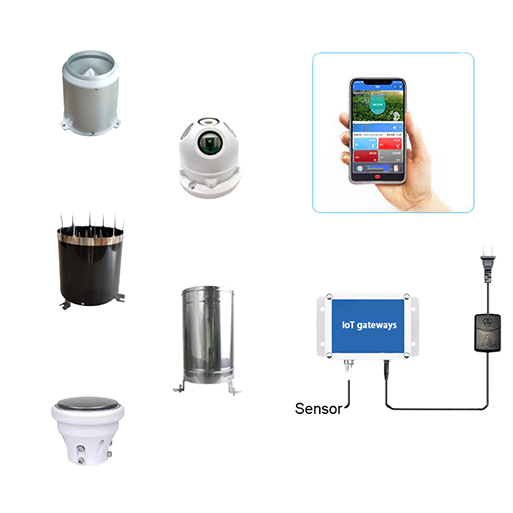
Complete set of servers and software wireless module, supports RS485 GPRS /4g/WIFI/LORA/LORAWAN
For more rain gauges information,
please contact Honde Technology Co., LTD.
Email: info@hondetech.com
Company website: www.hondetechco.com
Tel: +86-15210548582
Post time: Dec-23-2025