

When the stability of global supply chains, the safety margins of factories, and the fairness of energy transactions all hinge on the answer to a simple question—”How much is left inside?”—measurement technology has undergone a silent revolution.
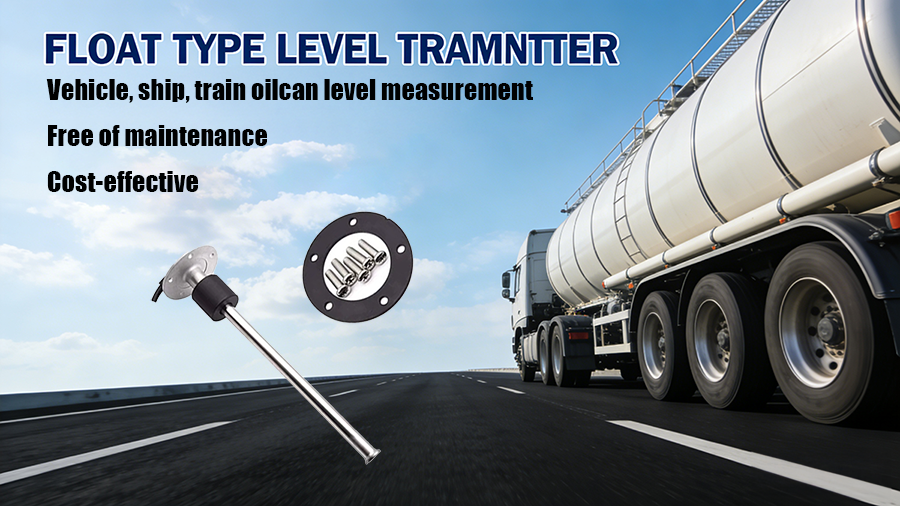
In 1901, as Standard Oil drilled its first gusher in Texas, workers gauged the contents of massive storage tanks by climbing up and using a marked measuring pole—a “dipstick.” A century later, on a storm-tossed FPSO in the North Sea, an engineer in the control room clicks a mouse to monitor the level, volume, mass, and even interface layers of hundreds of tanks with millimeter precision.
From a wooden pole to a beam of radar waves, the evolution of level measurement technology is a microcosm of industrial automation. The problem it solves has never changed, but the dimensionality, speed, and significance of the answer are worlds apart.
The Technology Evolution Tree: From ‘Sight’ to ‘Insight’
First Generation: Mechanical Direct Reading (Extension of the Human Eye)
- Examples: Sight glass gauges, magnetic level indicators (flip-type), float switches.
- Logic: “The liquid level is there.” Relies on manual, on-site inspection. Data is isolated and non-remote.
- Status: Remains vital for local indication and simple alarm applications due to reliability, intuitiveness, and low cost.
Second Generation: Electrical Signal Output (The Birth of the Signal)
- Examples: Hydrostatic level transmitters, float & reed switch assemblies, capacitive sensors.
- Logic: “The level is an X mA electrical signal.” Enabled remote transmission, forming the backbone of early SCADA systems.
- Limitations: Accuracy affected by medium density and temperature; complex installation.
Third Generation: Waves & Fields (The Non-Contact透视)
- Examples: Radar level transmitters (high-frequency EM waves), Ultrasonic level sensors (sound waves), RF Capacitance (RF field).
- Logic: “Transmit-Receive-Calculate time-of-flight = Distance.” The kings of non-contact measurement, definitively solving challenges posed by viscous, corrosive, high-pressure, or otherwise complex media.
- Pinnacle: Guided Wave Radar can distinguish oil-water interfaces; FMCW Radar maintains stable accuracy even on extremely turbulent surfaces.
Fourth Generation: Fused Perception (From Level to Inventory)
- Examples: Level gauge + Temperature/Pressure sensor + AI algorithms.
- Logic: “What is the standard volume or mass of the medium in the tank?” By fusing multiple parameters, it directly outputs the key data needed for custody transfer or inventory management, eliminating manual calculation errors.
Core Battlefields: The ‘Life-and-Death’ Line of Accuracy & Reliability
1. Oil & Gas/Chemicals: The Measure of Safety and Money
- Challenge: A measurement error in a large storage tank (up to 100m in diameter) directly translates to millions in trade loss or inventory discrepancy. Internal volatile gases, turbulence, and thermal stratification challenge accuracy.
- Solution: High-precision radar level gauges (error within ±1mm), paired with multi-point average temperature sensors, integrated into internationally recognized Automatic Tank Gauging systems. Their data is admissible for custody transfer. It’s not just an instrument; it’s a “legal scale.”
2. Power & Energy: The Invisible ‘Waterline’
- Challenge: The water level in a power plant’s deaerator, condenser, or boiler drum is the ‘lifeline’ for safe unit operation. High temperature, high pressure, and “swell & shrink” phenomena demand extreme reliability.
- Solution: Redundant configuration using ”Differential Pressure Transmitters + Electrical Contact Gauges + Gage Glass.” Cross-verification via different principles ensures trustworthy readings under extreme conditions, preventing dry-firing or overfilling disasters.
3. Food & Pharmaceuticals: The Barrier of Hygiene and Regulation
- Challenge: CIP/SIP cleaning, aseptic requirements, high-viscosity media (e.g., jam, cream).
- Solution: Hygienic radar level gauges with flush-mounted 316L stainless steel or Hastelloy antennas. Designed for dead-space-free installation, they withstand high-frequency, high-temperature washdowns, meeting stringent standards like FDA and 3-A.
4. Smart Water: The ‘Blood Pressure Monitor’ for Urban Veins
- Challenge: Monitoring city water network pressure, controlling lift station levels in wastewater plants, flood early warning.
- Solution: Submersible pressure transmitters combined with non-full pipe ultrasonic flow meters, connected via LPWAN (e.g., NB-IoT), form the nerve endings of the urban water system, enabling leak预警 and optimized dispatch.
The Future is Here: When the Level Gauge Becomes an ‘Intelligent Node’
The modern level gauge’s role has long surpassed simple “measurement.” It is evolving into:
- A Sentinel for Predictive Maintenance: By analyzing changes in radar echo signal patterns (e.g., signal attenuation from buildup), it can provide early warnings of antenna fouling or internal tank structure failure.
- An Advisor for Inventory Optimization: Integrated into ERP/MES systems, it calculates real-time inventory turnover and can automatically generate procurement or production scheduling suggestions.
- The Data Source for Digital Twins: It supplies high-fidelity, real-time level data to a plant’s digital twin model for simulation, training, and optimization.
Conclusion: The Interface from Vessel to Data Universe
The evolution of the level gauge is, at its core, the deepening of our conceptual understanding of “inventory.” We are no longer satisfied with knowing “full” or “empty,” but instead pursue dynamic, traceable, correlated, and predictive precision data.
Complete set of servers and software wireless module, supports RS485 GPRS /4g/WIFI/LORA/LORAWAN
For more sensor information,
please contact Honde Technology Co., LTD.
Email: info@hondetech.com
Company website: www.hondetechco.com
Tel: +86-15210548582
Post time: Dec-11-2025