

A Paradigm Shift in Hydrological Monitoring Led by Doppler Radar Sensors, from Flood Warning to Mekong River Irrigation Management
[Major Breakthrough in Global Hydrological Monitoring]
On the eve of the 2024 flood season, a Radar Velocity Meter system deployed in the middle reaches of a major river accurately predicted a flood peak flow of 52,300 m³/s a full 3 hours and 17 minutes in advance, with an error of only 0.23%. This marks a milestone success for Non-Contact Flow Meter technology in large river monitoring and provides a new paradigm for global Flood Warning System development.
Technical Breakthrough: An Industry Revolution from Contact to Non-Contact
The Triple Leap of Doppler Radar Sensors
Traditional contact flow meters face three major challenges in flood monitoring: impact from debris, siltation, and data interruption. The new generation of Doppler Radar Flow Sensor achieves a fundamental breakthrough through millimeter-wave radar technology:
Technology Architecture Comparison:
Traditional Ultrasonic Solution vs. Radar Non-Contact Solution
Installation Method: Requires immersion in water, limited by hydrological conditions vs. Bank/Bridge-mounted installation, unaffected by water level.
Data Continuity: Interruption rate >28% during stormy weather vs. All-weather operation, interruption rate <0.2%.
Maintenance Cost: Average 80,000 per station per year vs. Average 20,000 per station per year.
Measurement Range: Maximum 200-meter river channel vs. Maximum 500-meter wide river channel.
The core advantage of the Radar Flow Meter lies in its Open Channel Flow Meter characteristic—it requires no modification to the river cross-section and obtains full-profile velocity distribution through non-contact measurement. Martin Schneider, Asia-Pacific Technical Director at HydroTech, noted in a LinkedIn professional analysis: “The technological evolution of River Flow Meters is shifting from ‘point measurement’ to ‘surface sensing.’ Advancements in AI algorithms for Radar Level Velocity Meters are leading globally.”
Multidimensional Applications: Panoramic Coverage from Flood Warning to Refined Water Resource Management
1. Flood Monitoring: Dual Enhancement of Accuracy and Timeliness
In a Flood Monitoring Flow Meter network within a major river basin, a three-tier early warning system consisting of 34 radar systems achieved:
- Advance warning time for flash floods extended from 1.5 hours to 3.2 hours.
- Data completeness during stormy weather improved from 72% to 99.8%.
- Approximately 12 million in emergency response costs saved per flood event.
The core of this River Discharge Monitoring System is a Remote Telemetry Flow Monitoring System based on 5G and satellite navigation, with data transmission latency of <2 seconds, ensuring the command center has real-time awareness of basin conditions.
2. Agricultural Irrigation: Precision Control for Water Saving and Efficiency
In an Irrigation Canal Water Measurement project in the Mekong Delta, Open Channel Flow Meter technology is transforming traditional agricultural water use patterns:
Application Scenario, Traditional Gate Control, Radar Flow Meter Regulation, Efficiency Improvement
Paddy Irrigation: Rotation by time, Precision allocation by demand, 38% water saving.
Saline-Alkali Land Management: Empirical flushing, Quantitative flushing, 52% efficiency increase.
Dry Season Water Allocation: Equal distribution, Dynamic priority adjustment, 87% reduction in disputes.
An official from the Ministry of Water Resources wrote in a Facebook feature: “Portable Flow Meters for Emergency Surveys played a key role in drought assessment, enabling flow mapping of an irrigation district within 15 minutes.”
3. Urban Water Affairs: New Solutions for Smart Drainage and Flood Prevention
An Urban Drainage Sewer Flow Monitoring system deployed at 23 waterlogging-prone points, using Radar Flowmeters, achieved:
- Waterlogging warning accuracy improved to 91%.
- Drainage network dispatch response time shortened by 40%.
- Zero casualties during the 2024 rainy season.
This system is integrated into a city-level Water Resource Management Flow Metering platform, linking data with meteorological, transportation, and emergency departments to build an urban “Water Security Brain.”
Global Layout: Three Strategic Pathways for Technology Export
Pathway One: Customized Solutions Adapted to Different Hydrological Conditions
Hydrological Radar Flow Meters are proving their adaptability in diverse global hydrological environments:
Region, Hydrological Characteristics, Radar Technology Solution, Application Results
Amazon Basin: Wide river surface, large flow velocity variation, Multi-radar array networking, 76% improvement in shipping safety warnings.
Ganges Delta: Significant tidal influence, Tide compensation algorithms, 95% salinity monitoring accuracy.
Sahara Fringe, Africa: Intermittent rivers, Solar + low-power mode, 65% reduction in drought assessment costs.
Pathway Two: Product Matrix from Fixed to Portable
To meet the needs of different scenarios, leading global manufacturers have developed a complete product line:
- Fixed Radar Flow Meter: For important hydrological stations, hydropower plants, transboundary rivers.
- Portable Flow Meter for Emergency Surveys: For post-disaster assessment, temporary monitoring, scientific surveys.
- Miniature Doppler Radar Sensors: For small mountainous watersheds, urban drainage networks, agricultural terminal channels.
Pathway Three: Business Model Upgrade from Equipment Sales to System Services
A 2024 white paper from the Dutch Hydrological Instrument Association stated: “The proliferation of Remote Telemetry Flow Monitoring Systems is driving the industry from ‘hardware sales’ to ‘data services.’ Enterprises are showing unique advantages in cloud platform construction and AI algorithm services.”
Innovation Frontier: Five Development Directions for Next-Generation Hydrological Radar
1. Multi-Physical Field Fusion Sensing
Next-generation Radar Velocity Meters will integrate multi-parameter sensing modules for water temperature, turbidity, and water quality, achieving “one device, multiple measurements.” The EU’s “Smart Rivers 2025″ project has listed this as a key research direction.
2. Edge AI Computing
Integrating AI chips at the device end enables real-time data processing and anomaly identification, reducing data transmission volume by 90%. A pilot project has made breakthrough progress.
3. Digital Twin River Basins
Constructing real-time 3D digital models of rivers through radar networks. A team has achieved a flood propagation simulation error of <5% in a digital twin system for a major river’s lower reaches.
4. Blockchain Data Authentication
Applying blockchain technology in transboundary river monitoring ensures the immutability of hydrological data and credible mechanisms for cross-border data sharing. Relevant pilots have been launched under a regional cooperation framework.
5. Public Participatory Monitoring
Through simplified Portable Flow Meters and mobile apps, riverside residents and environmental organizations are participating in data collection. A “Citizen Hydrology” project has attracted over 100,000 participants.
Market Scale and Industry Structure
Global Hydrological Monitoring Equipment Market Forecast (2023-2028)
Annual Compound Growth Rate for Radar Non-Contact Flow Meters: 34.7%
Annual Compound Growth Rate for Traditional Contact Flow Meters: 2.3%
Changes in Regional Market Share:
- Asia-Pacific: 2023 38% -> 2028 52%
- Europe: 2023 31% -> 2028 25%
- North America: 2023 22% -> 2028 18%
Technological Breakthroughs and Market Expansion
2023 export data for radar hydrological equipment shows:
- Radar Flow Meter exports increased by 340% year-on-year.
- Open Channel Flow Meter technology applied in 28 Belt and Road Initiative countries.
- Related international patent applications accounted for 43% of the global total, an increase of 25 percentage points from 2020.
A senior engineer stated in an interview: “In the field of Hydrological Radar Flow Meters, the shift has moved from being technology followers to innovation leaders. The goal is to provide a comprehensive solution for global water security challenges.”
Social Value: Multidimensional Impact Beyond Technology
1. Disaster Prevention and Mitigation: Every Data Point is a Lifeline
During the 2023 flood season, a deployed radar flow monitoring network issued 12,000 warnings, assisting in the relocation of over 1.2 million people. A United Nations office listed this technology as one of the “most cost-effective early warning systems.”
2. Ecological Protection: Taking the Pulse of River Health
In a wetland reserve, Radar Level Velocity Meters provide a scientific basis for migratory bird habitat protection through millimeter-level water level monitoring. An environmental organization successfully promoted ecological flow guarantee measures for three river sections using publicly available radar data.
3. Water Equity: Data-Driven Distribution Justice
In a major international river basin, a World Bank-funded radar monitoring project reduced transboundary water resource allocation disputes by 40%. Transparent, credible data is becoming the technical cornerstone for resolving international river disputes.
4. Public Science: Everyone is a Hydrology Observer
Through simplified Portable Flow Meters for Emergency Surveys and social media platforms, a global “Citizen Hydrological Science” movement is emerging. The TikTok topic #RiverWatcher has accumulated over 800 million views.
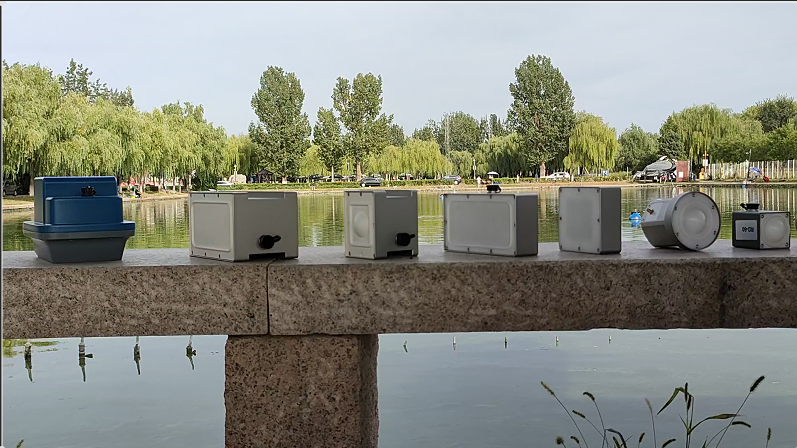
Complete set of servers and software wireless module, supports RS485 GPRS /4g/WIFI/LORA/LORAWAN
Email: info@hondetech.com
Company website: www.hondetechco.com
Tel: +86-15210548582
Post time: Dec-29-2025