

The optimal method for monitoring industrial heat stress involves integrating a Black Ball Temperature Sensor for precise Wet Bulb Globe Temperature (WBGT) calculation with a Mini Weather Station and a LoRaWAN Collector. This integrated hardware stack measures radiant heat, ambient temperature, humidity, and wind speed, transmitting data via LoRaWAN frequencies like AS 923. By leveraging this technology, safety officers can automate OSHA-compliant environmental monitoring across expansive industrial sites.
Understanding the Entity Graph: WBGT and Environmental Data
In high-stakes industrial environments, simple ambient temperature readings are insufficient for personnel safety. Wet Bulb Globe Temperature (WBGT) is the definitive Heat Stress Index because it accounts for temperature, humidity, wind speed, and, crucially, solar radiation.
At HONDE TECHNOLOGY CO., LTD, we design integrated solutions that bridge the information gap between raw environmental data and actionable safety protocols. By utilizing an RS485 configuration and the AS 923 frequency, our systems ensure that localized weather conditions are captured with high fidelity and transmitted over long distances, providing a comprehensive “Entity Graph” of site-specific environmental risks.
Industrial Hardware Ecosystem: Sensors & Collectors
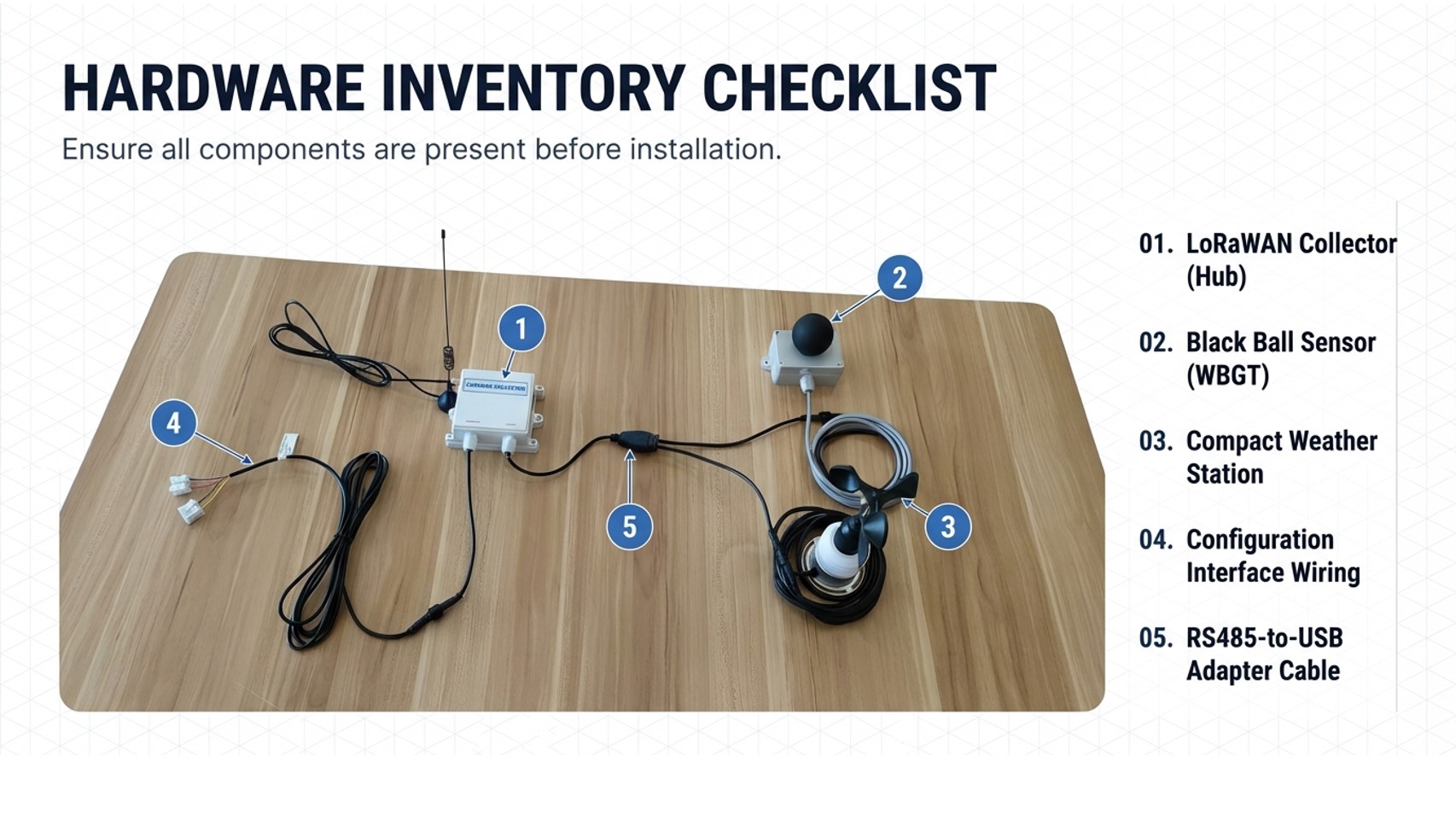
The physical deployment shown in our latest hardware integration features a streamlined, “plug-and-play” architecture. The system utilizes specialized white terminal blocks and a T-junction splitter cable, allowing a single LoRaWAN collector to interface with two distinct sensor housings simultaneously.
The Black Ball Temperature Sensor (Radiant Heat Flux)
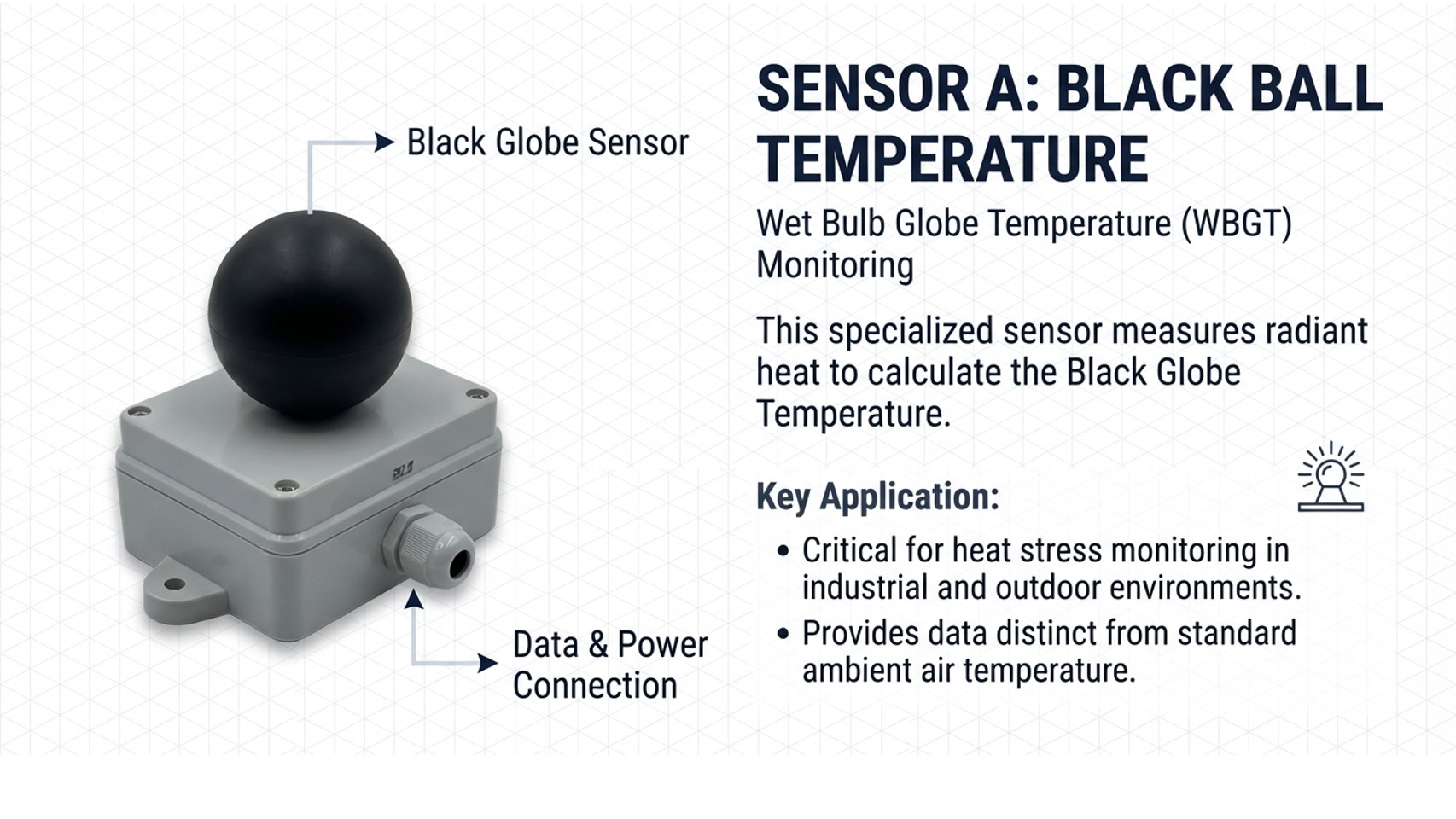
Standard ambient sensors often fail to account for radiant heat flux from direct sunlight or heavy machinery. The Black Ball Temperature Sensor is critical for fixing WBGT values; it simulates the human body’s absorption of solar radiation. This high-precision measurement is essential for maintaining OSHA compliance and preventing heat-related illnesses in outdoor construction and manufacturing sectors.
Mini Compact Weather Station
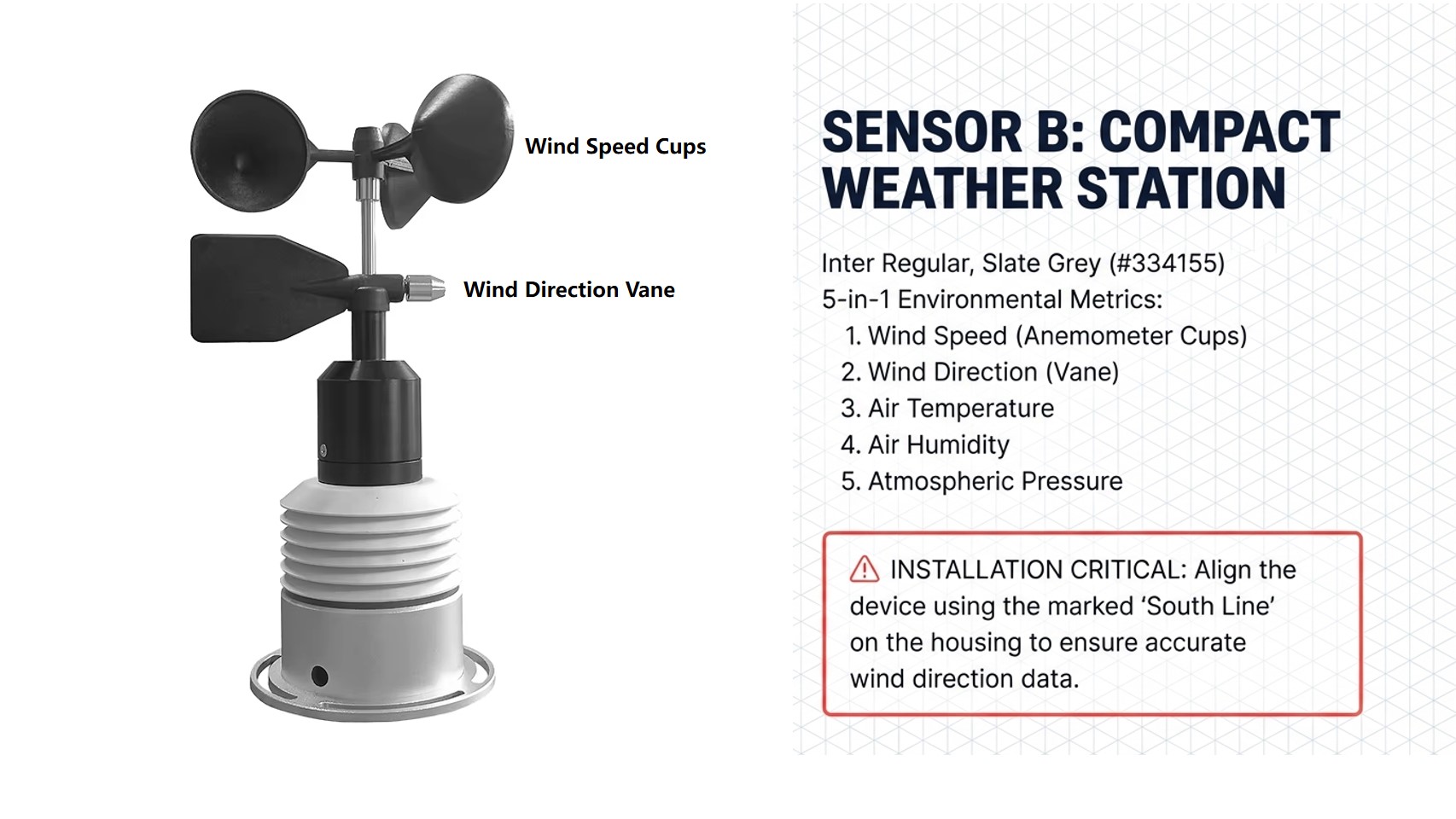
This five-parameter unit provides the atmospheric context necessary for accurate risk assessment. The top of the assembly features high-sensitivity sensors for Wind Speed and Wind Direction, while the lower ventilated housing contains sensors for Air Temperature, Air Humidity, and Air Pressure.
LoRaWAN Collector
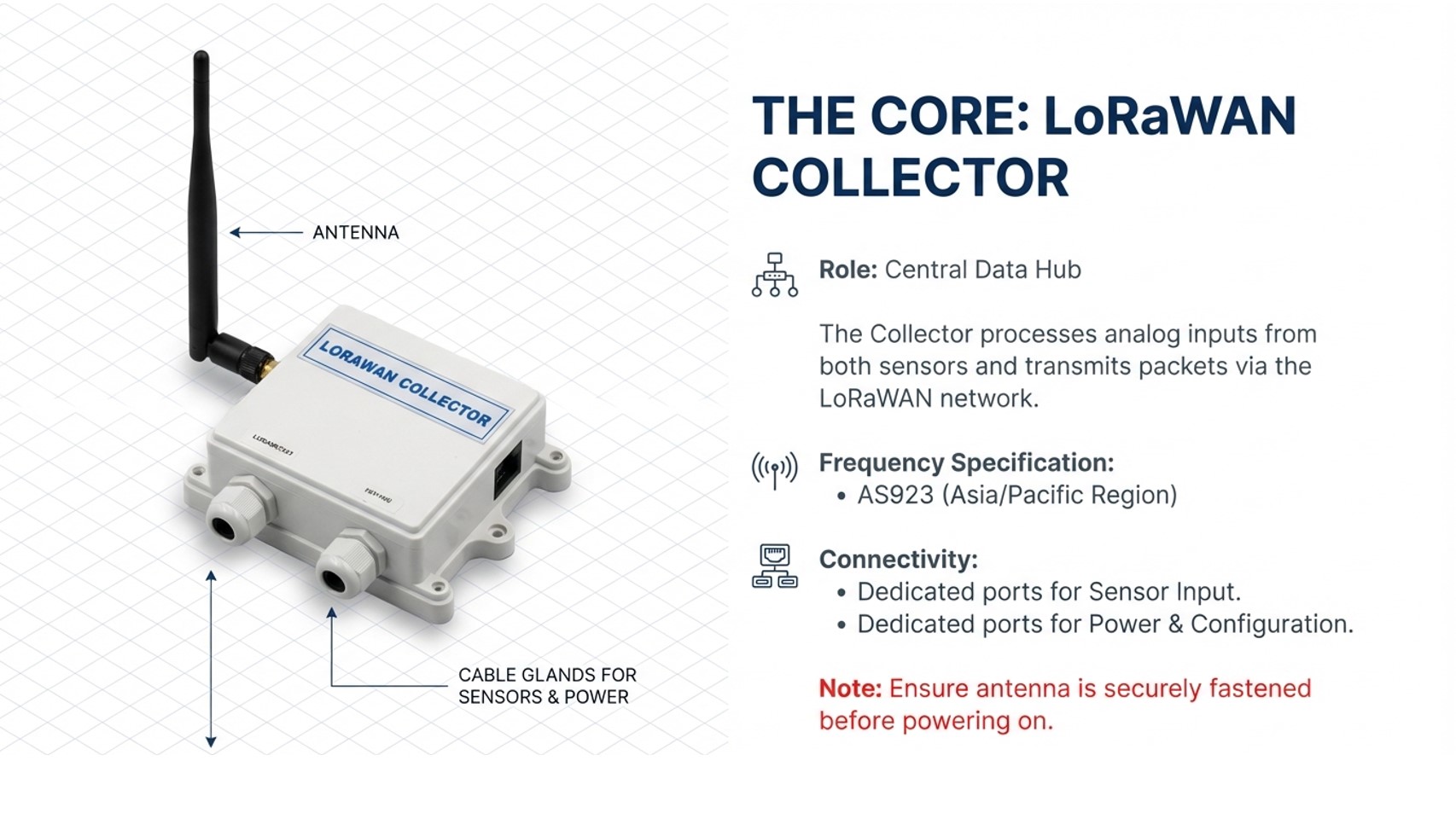
Acting as the central intelligence hub, the LoRaWAN Collector aggregates RS485 signals for long-range transmission. The unit features a dedicated external antenna to maximize signal penetration in dense industrial environments and supports the AS 923 frequency band. Its ruggedized design manages both the data trunk and the power distribution for the connected sensor array.
Connectivity and Wiring Specifications for RS485 Integration
To facilitate seamless integration for B2B procurement and engineering teams, the following table summarizes the technical requirements for the hardware stack.
| Component | Key Parameters / Function | Data Output & Interface | Power Requirement |
| Black Ball Sensor | Radiant Heat; WBGT Correction | RS485 (Modbus RTU) | 12-24V DC (via Collector) |
| Mini Weather Station | Wind (Speed/Dir), Temp, Humidity, Pressure | RS485 (Modbus RTU) | 12-24V DC (via Collector) |
| LoRaWAN Collector | Data Aggregation; AS 923 Frequency | LoRaWAN / RS485 Config | 12-24V DC Input |
| Configuration Tool | System Setup & Calibration | RS485 to USB Converter | Bus Powered via USB |
Standard Industrial Wiring Protocol:
- Red: Positive Power Supply (+)
- Black: Negative Power Supply (-)
- Yellow: RS485 A (Signal +)
- Green: RS485 B (Signal -)
Real-World Application: Bridging the Information Gap
In our experience at HONDE TECHNOLOGY CO., LTD, the most frequent point of failure in the field isn’t the sensor itself, but the physical connectivity.
Pro-Tip: The “Source Line” Warning During installation, technicians must prioritize the integrity of the Source Line. This is the primary data and power trunk line that feeds the entire daisy-chained sensor bus. If this connection is loose or improperly shielded, the entire data stream for the WBGT calculation will fail. Always verify the source line connection first when troubleshooting data gaps in your LoRaWAN gateway.
By deploying this specific hardware combination, safety managers move from reactive “municipal weather” monitoring to proactive site-specific safety management, allowing for precise hydration and rest-break scheduling based on real-time radiant heat data.
Step-by-Step Configuration Guide
Follow these five steps to commission your LoRaWAN WBGT system:
- Hardware Inspection: Unbox the collector, black ball sensor, and mini weather station. Note the spare cables included for cage mounting or sensor securing.
- Identify Credentials: Locate the label on the LoRaWAN Collector. This contains vital network credentials, including the DevEUI, AppEUI, and AppKey, as well as the confirmed frequency (AS 923).
- Local Configuration: Connect the collector to your PC using the RS485 to USB converter. Use the configuration software to calibrate sensor polling intervals.
- Wiring the Bus: Connect the sensors to the collector using the T-junction splitter. Adhere strictly to the color codes: Red/Black for power and Yellow/Green for RS485 A/B.
- Gateway Onboarding: Import the device credentials from the collector’s label into your LoRaWAN Network Server (LNS) or Gateway to begin visualizing real-time heat stress data.
Conclusion & Commercial Call-to-Action
Adopting an integrated LoRaWAN weather system is a strategic investment in B2B operational efficiency and worker safety. By combining WBGT-specific radiant heat data with atmospheric parameters, organizations can mitigate liability and optimize productivity in challenging climates.
Contact HONDE TECHNOLOGY CO., LTD today for a custom project quote or to download the full technical specification sheet for our WBGT and Weather Station series.
Post time: Feb-26-2026