

1. Introduction: The Immediate Answer for Precision Farming
2. The Foundation of Data: Advanced Soil & Environmental Sensing
As a consultant in the agricultural IoT space, I emphasize that data integrity begins at the probe. The Hondetech ecosystem deploys industrial-grade hardware designed to withstand the chemical and physical rigors of long-term burial.
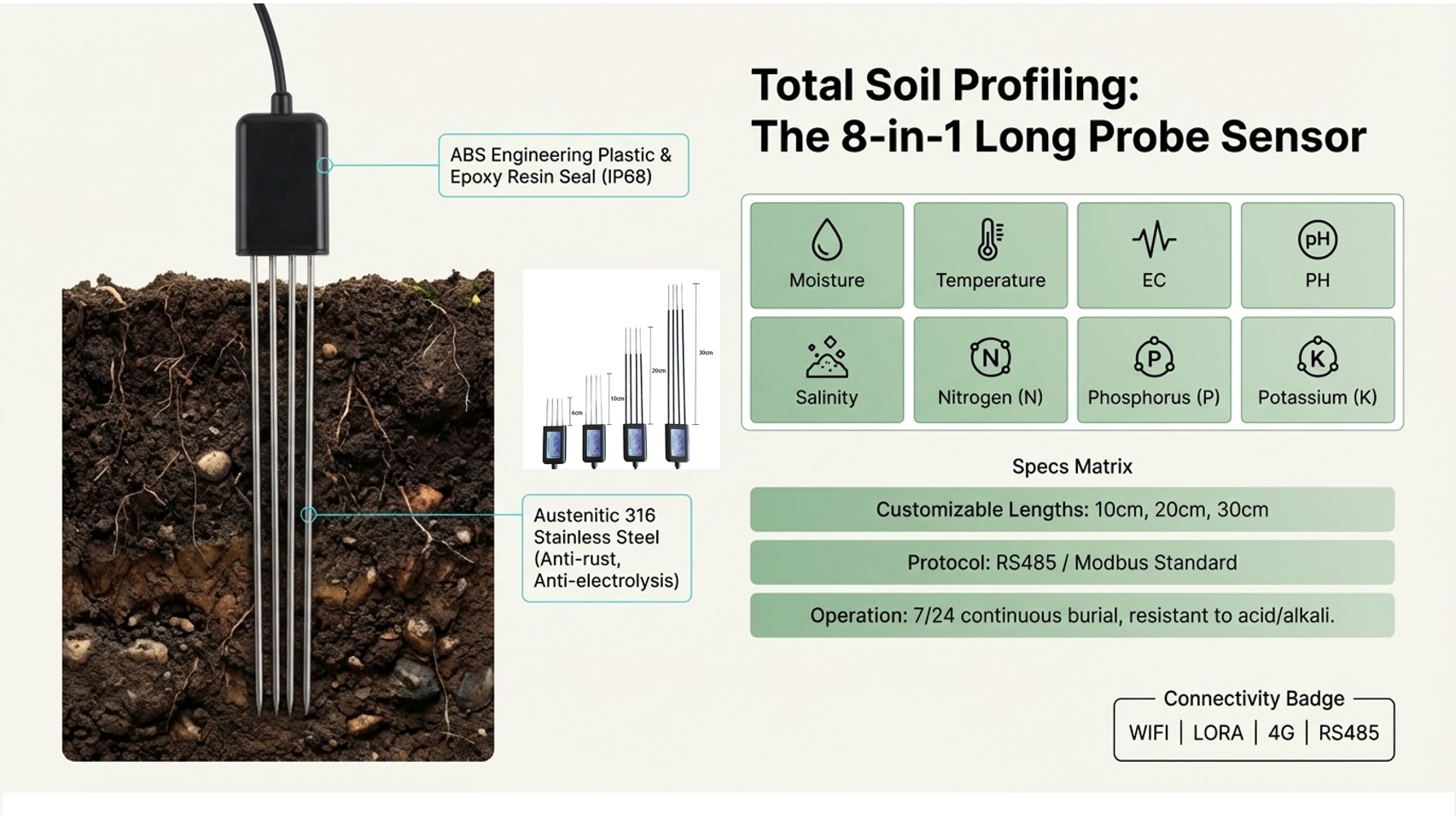
The flagship 8-in-1 Soil Sensor is a masterclass in “Entity Graph” engineering, measuring moisture, temperature, Electrical Conductivity (EC), pH, salinity, and Nitrogen (N), Phosphorus (P), and Potassium (K) simultaneously.
- Material Science: The sensors utilize ABS engineering plastic and epoxy resin for an IP68 waterproof rating. Crucially, the probes are constructed from Austenitic 316 stainless steel. This material choice is vital for preventing electrolysis and resisting corrosion in high-salinity or acidic/alkali soil environments, ensuring decadal reliability.
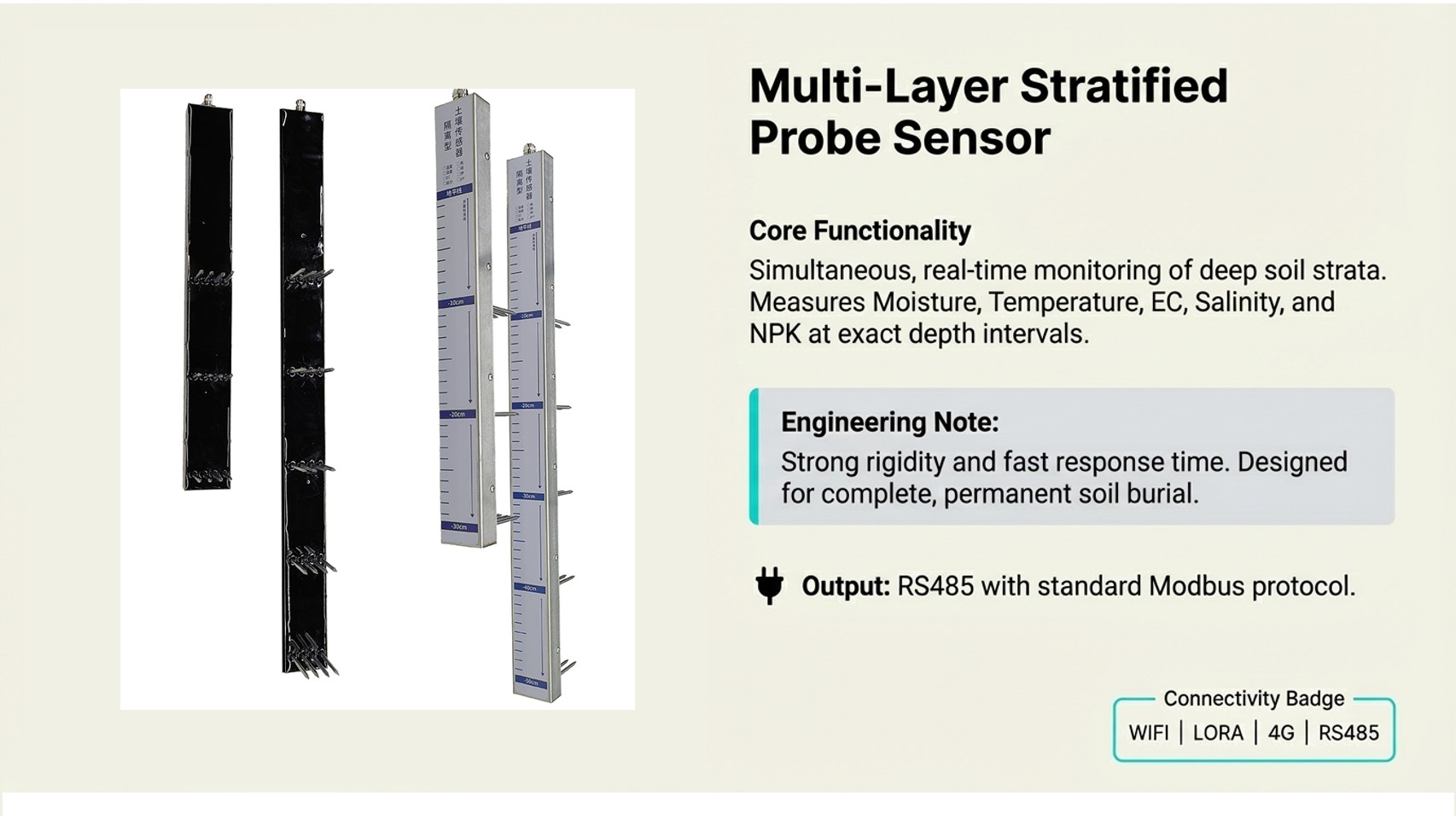
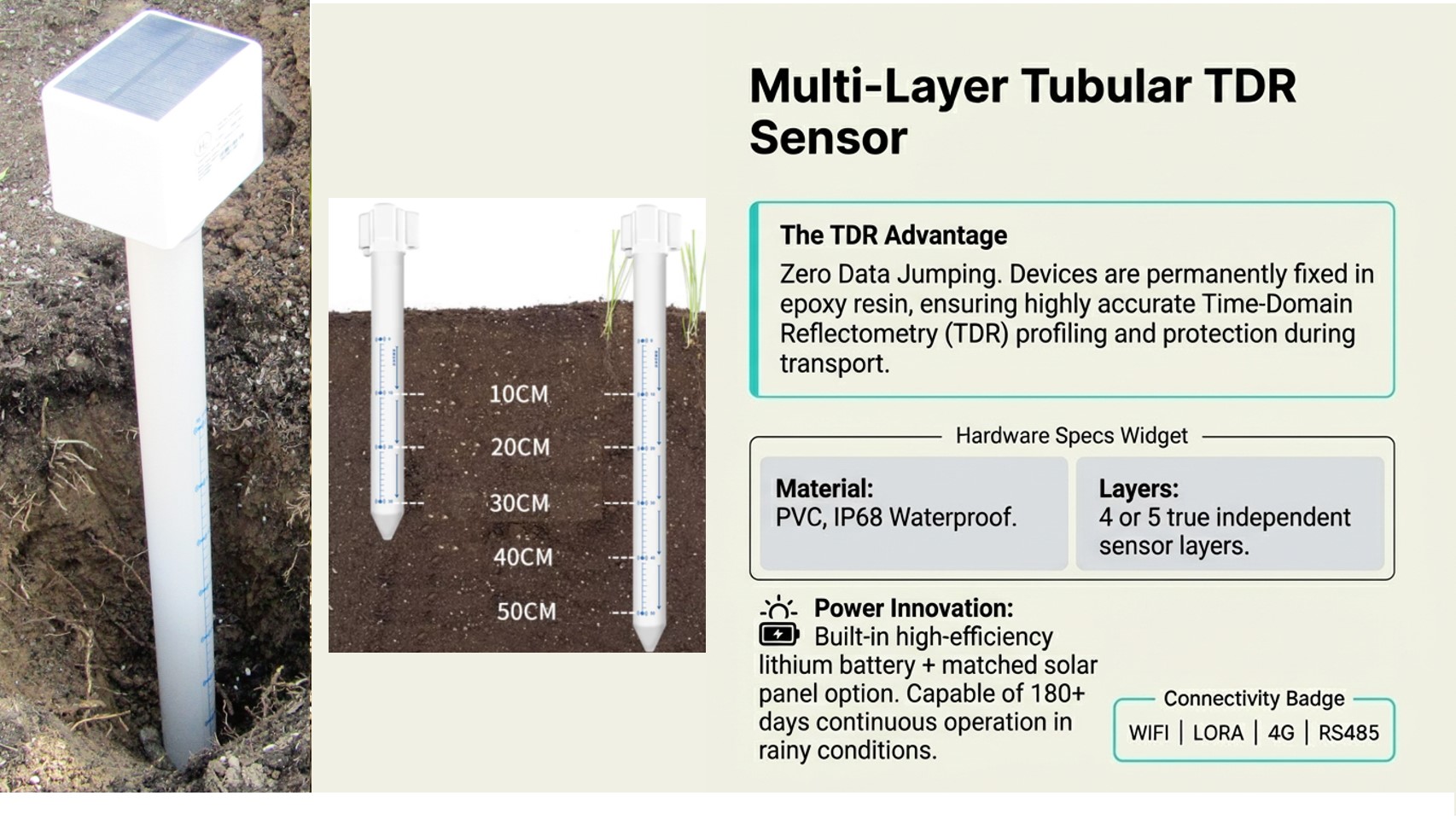
- Sub-Surface Profiling: For deep-soil intelligence, we deploy Tubular Multi-layer Sensors. It is critical to distinguish between models: the 3-layer and 5-layer units (such as Model RD-SMTS5L-01) are “7-in-1″ sensors measuring moisture, temp, EC, salinity, and NPK. Conversely, the 4-layer tubular model is specialized strictly for high-frequency moisture and temperature profiling.
3. Comparing Wireless Connectivity: Choosing the Right Protocol
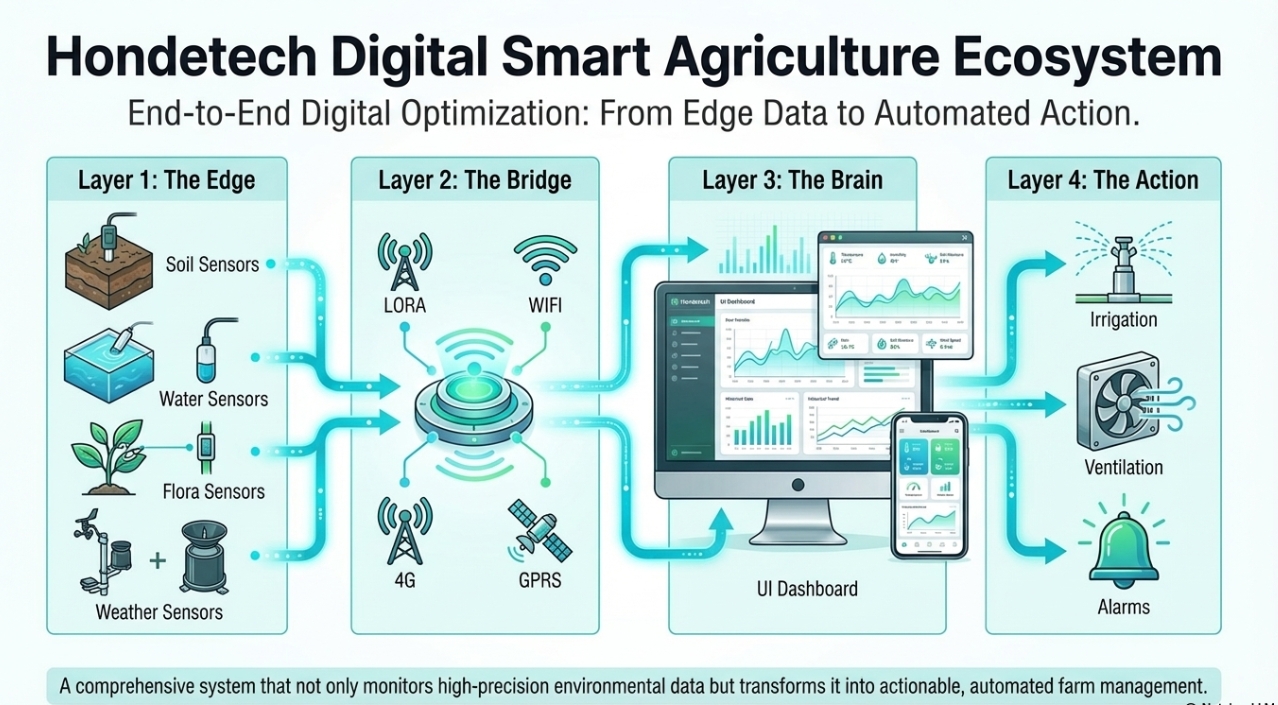
Selecting a transmission protocol requires balancing topographical constraints with power requirements. Hondetech solutions utilize Collection Terminals—sophisticated hubs that bridge sensor arrays to the digital cloud.
| Connection Type | Typical Range / Use Case | Key Features & Hardware Interface |
| WIFI | Max 200m; local greenhouses | High-speed transfer via local routers; ideal for facilities with existing infrastructure. |
| LORA / LORAWAN | 3–5km; expansive open fields | Long-range penetration with ultra-low power; requires a LORA Gateway. |
| GPRS / 4G | Global Cellular; remote sites | Direct-to-cloud transmission; perfect for scattered sites without local network hubs. |
4. Cloud Ecosystem & Software: Turning Raw Data into Decisions
The software interface is the “Semantic Roadmap” where raw electrical signals become business intelligence. The Hondetech cloud platform provides a granular look at farm health through several dedicated modules.
The primary Monitoring Screen provides a high-level “Data Acquisition System” overview. Technical users can monitor parameters such as Soil Humidity (distinct from volumetric moisture in the UI), Soil EC, and Soil Salinity. It also tracks system health via Battery Voltage (mV) and allows for “Low Power Consumption” toggles to extend the field life of remote terminals.
The platform generates detailed data curves for trend analysis. Users can query specific timeframes and use the “Download Data” feature to export Excel reports. These reports include critical variates like Soil Nitrogen and Soil Phosphorus, allowing for precise nutrient prescription maps.
To mitigate crop stress, the Alarm Setting module allows users to define custom thresholds. Notifications are delivered via Email, SMS Binding, ensuring that stakeholders are alerted the moment moisture or salinity levels deviate from the optimal range.
5. Why Partner with HONDE TECHNOLOGY?
Navigating the IoT market requires a partner with a proven track record. Founded in 2013, HONDE TECHNOLOGY CO., LTD. brings over a decade of specialized R&D to the precision farming sector.
6. Specialized Solutions: Beyond Standard Soil Sensing
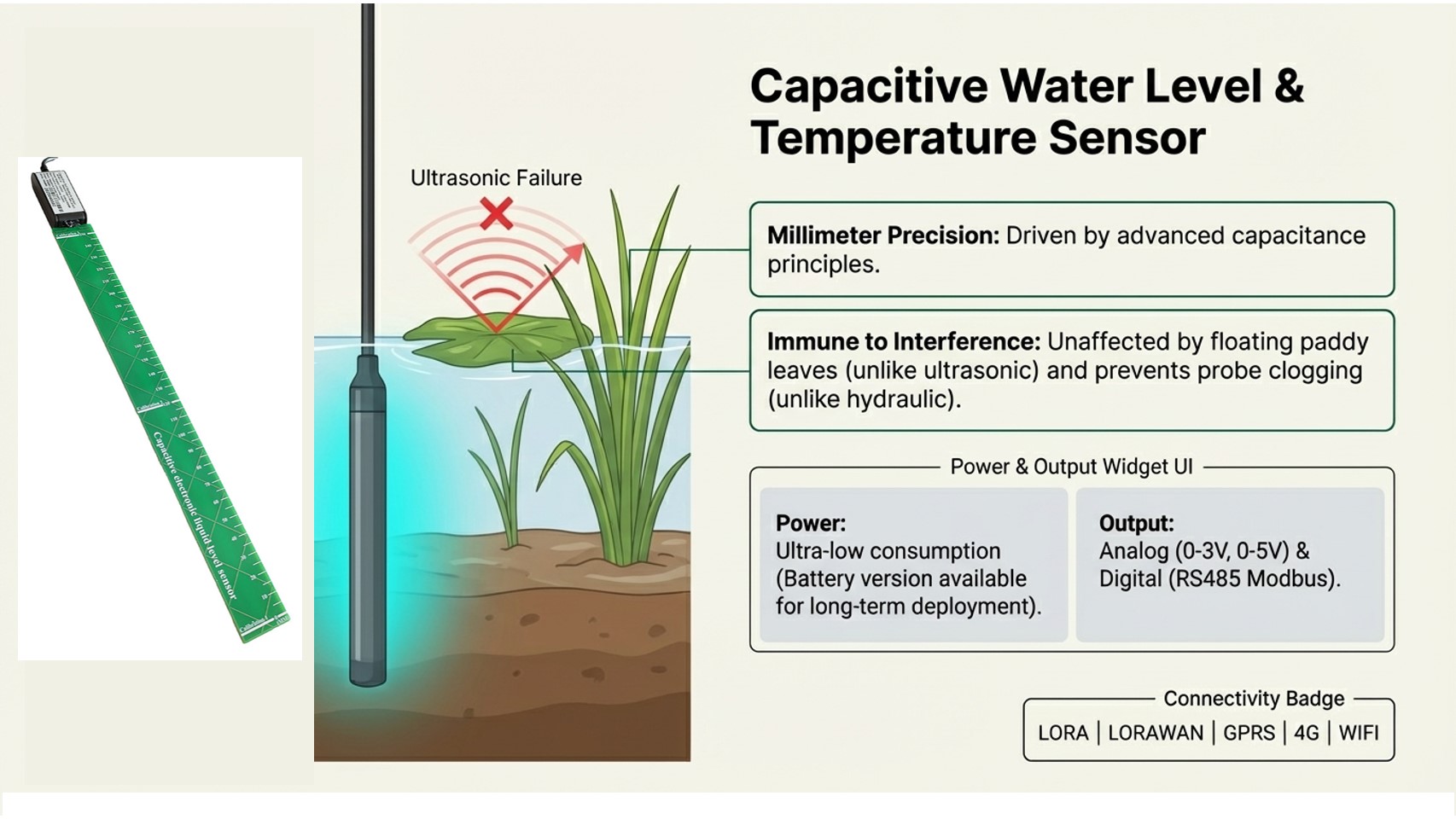
For aquatic environments and rice cultivation, we offer the Capacitance Liquid Level Sensor. This unit offers several advantages over traditional sensing methods:
- Interference Resistance: Unlike ultrasonic sensors, it is not affected by dense paddy field leaves.
- Anti-Clogging: The capacitance design avoids the probe clogging common in hydraulic meters.
- MM-Level Accuracy: Provides high-precision liquid level monitoring alongside temperature.
- Industrial Integration: Supports the RS485/Modbus protocol, allowing seamless integration with industrial PLC systems and automated pump controls.
7. Conclusion & Actionable Next Steps
In 2026, precision farming is no longer an optional upgrade—it is a requirement for competitive production. By integrating industrial-grade sensing with robust wireless architectures and intelligent cloud software, you can eliminate the guesswork from your agricultural operations.
- Website: www.hondetechco.com
- Email: info@hondetech.com
Post time: Mar-13-2026