

Introduction: When Sunlight Becomes a “Variable”
The core of photovoltaic power generation is to convert solar radiation energy into electrical energy, and its output power is directly affected in real time by multiple meteorological parameters such as solar irradiance, ambient temperature, wind speed and direction, atmospheric humidity and precipitation. These parameters are no longer merely figures in weather reports, but key “production variables” that directly affect the power generation efficiency of power stations, equipment safety and investment returns. The automatic weather Station (AWS) has thus transformed from a scientific research tool into an indispensable “sensory nerve” and “decision-making cornerstone” for modern photovoltaic power stations.
I. Multi-dimensional Correlation between Core Monitoring Parameters and Power Station Efficiency
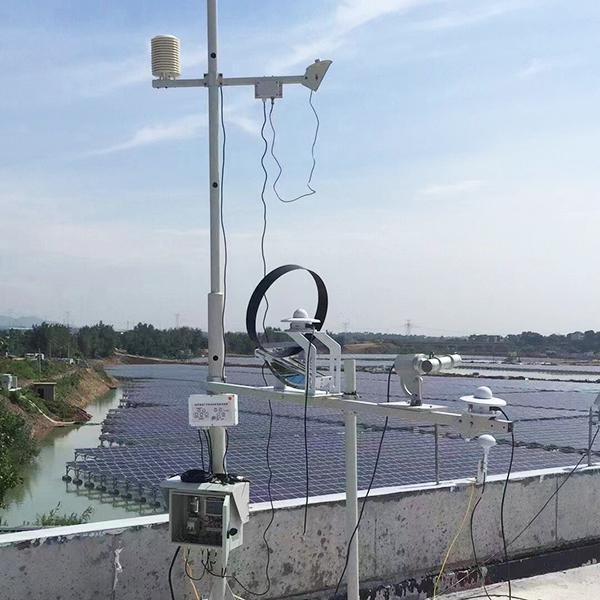
The dedicated automatic weather station for photovoltaic power stations has formed a highly customized monitoring system, and every piece of data is deeply bound to the operation of the power station:
Solar radiation monitoring (” source metering “for power generation)
Total radiation (GHI) : It directly determines the overall energy received by photovoltaic modules and is the most crucial input for power generation prediction.
Direct radiation (DNI) and scattered radiation (DHI) : For photovoltaic arrays that use tracking brackets or specific bifacial modules, this data is crucial for optimizing tracking strategies and accurately assessing backside power generation gain.
Application value: It provides irreplaceable benchmark data for power generation performance benchmarking (PR value calculation), short-term power generation forecast, and power station energy efficiency diagnosis.
2. Ambient temperature and component backplane temperature (the “temperature coefficient” of efficiency)
Ambient temperature: It affects the microclimate and cooling requirements of the power station.
The backsheet temperature of the module: The output power of photovoltaic modules decreases as the temperature rises (typically -0.3% to -0.5%/℃). Real-time monitoring of the backplane temperature can accurately correct the expected power output and identify abnormal heat dissipation of components or potential hot spot hazards.
3. Wind speed and Direction (The “Double-edged sword” of safety and Cooling
Structural safety: Instantaneous strong winds (such as those exceeding 25m/s) pose the ultimate test for the mechanical load design of photovoltaic support structures and modules. Real-time wind speed warnings can trigger the security system, and when necessary, activate the wind protection mode of the single-axis tracker (such as “storm location”).
Natural cooling: Appropriate wind speed helps to lower the operating temperature of components, indirectly enhancing power generation efficiency. The data is used to analyze the air-cooling effect and optimize the array layout and spacing.
4. Relative humidity and Precipitation (” warning signals “for operation and maintenance and faults)
High humidity: It may induce PID (Potential-induced Attenuation) effects, accelerate equipment corrosion, and affect insulation performance.
Precipitation: Rainfall data can be used to correlate and analyze the natural cleaning effect of components (a temporary increase in power generation), and guide the planning of the best cleaning cycle. Heavy rain warnings are directly related to the response of flood control and drainage systems.
5. Atmospheric pressure and Other Parameters (refined “auxiliary factors”)
It is used for higher-precision irradiance data correction and research-level analysis.
Ii. Data-driven Smart Application Scenarios
The data stream of the automatic weather station, through the data collector and communication network, flows into the monitoring and data acquisition (SCADA) system and power prediction system of the photovoltaic power station, giving rise to multiple intelligent applications:
1. Precise prediction of power generation and grid dispatching
Short-term forecasting (hourly/day-ago) : Combining real-time irradiation, cloud maps and numerical weather forecasts (NWP), it serves as the core basis for power grid dispatching departments to balance the volatility of photovoltaic power and ensure the stability of the power grid. The prediction accuracy is directly related to the assessment revenue of the power station and the market trading strategy.
Ultra-short-term prediction (minute-level) : Mainly based on the monitoring of sudden changes in irradiance in real time (such as cloud passing), it is used for the rapid response of AGC (Automatic Generation Control) within power stations and smooth power output.
2. In-depth diagnosis of power station performance and operation and maintenance optimization
Performance ratio (PR) analysis: Based on the measured irradiation and component temperature data, calculate the theoretical power generation and compare it with the actual power generation. A long-term decline in PR values may indicate component decay, stains, obstructions or electrical faults.
Intelligent cleaning strategy: By comprehensively analyzing rainfall, dust accumulation (which can be indirectly inferred through irradiation attenuation), wind speed (dust), and power generation loss costs, an economically optimal component cleaning plan is dynamically generated.
Equipment health warning: By comparing the power generation differences of different sub-arrays under the same meteorological conditions, faults in combiner boxes, inverters or string levels can be quickly located.
3. Asset Security and Risk Management
Extreme weather alert: Set thresholds for strong winds, heavy rain, heavy snow, extreme high temperatures, etc., to achieve automatic alerts and guide operation and maintenance personnel to take protective measures such as tightening, reinforcing, draining or adjusting the operation mode in advance.
Insurance and Asset Evaluation: Provide objective and continuous meteorological data records to offer reliable third-party evidence for disaster loss assessment, insurance claims, and power station asset transactions.
Iii. System Integration and Technological Trends
Modern photovoltaic weather stations are developing towards higher integration, greater reliability and intelligence.
Integrated design: The radiation sensor, temperature and humidity meter, anemometer, data collector and power supply (solar panel + battery) are integrated into a stable and corrosion-resistant mast system, enabling rapid deployment and maintenance-free operation.
2. High precision and high reliability: The sensor grade is approaching the second-level or even first-level standard, featuring self-diagnosis and self-calibration functions to ensure the long-term accuracy and stability of data.
3. Integration of edge computing and AI: Conduct preliminary data processing and anomaly judgment at the station end to reduce the burden of data transmission. By integrating AI image recognition technology and using a full-sky imager to assist in identifying cloud types and cloud volumes, the accuracy of ultra-short-term predictions is further enhanced.
4. Digital Twin and Virtual Power Station: Meteorological station data, as precise input from the physical world, drives the digital twin model of the photovoltaic power station to conduct power generation simulation, fault prediction, and operation and maintenance strategy optimization in the virtual space.
Iv. Application Cases and Value Quantification
A 100MW photovoltaic power station located in a complex mountainous area, after deploying a micro-meteorological monitoring network consisting of six sub-stations, has achieved:
The accuracy of short-term power prediction has improved by approximately 5%, significantly reducing the fines for grid assessment.
Through intelligent cleaning based on meteorological data, the annual cleaning cost is reduced by 15%, while the power generation loss caused by stains is decreased by more than 2%.
During a strong convective weather, the windbreak mode was activated two hours in advance based on the strong wind warning, which prevented possible damage to the support. It is estimated that the loss was reduced by several million yuan.
Conclusion: From “Relying on Nature for a living” to “Acting in accordance with Nature”
The application of automatic weather stations marks a shift in the operation of photovoltaic power stations from relying on experience and extensive management to a new era of scientific, refined and intelligent management centered on data. It enables photovoltaic power stations not only to “see” the sunlight but also to “understand” the weather, thereby maximizing the value of every ray of sunlight and enhancing the power generation revenue and asset security throughout the entire life cycle. As photovoltaic power becomes the main force in the global energy transition, the strategic position of the automatic weather station, which serves as its “intelligent eye”, is bound to become increasingly prominent.
For more weather station information,
please contact Honde Technology Co., LTD.
WhatsApp: +86-15210548582
Email: info@hondetech.com
Company website: www.hondetechco.com
Post time: Dec-17-2025