

When you see an old farmer squatting by the ridge of a field, grabbing a handful of soil and pinching it, lost in thought – he is interpreting the oldest code of the land: soil moisture. Today, a metal probe inserted into the soil is conducting the same or even deeper dialogue in a digital way. This is the agricultural soil temperature, humidity and electrical conductivity (EC) sensor, the “underground scout” of smart agriculture.
It’s not just “an iron rod inserted into the soil” : What is it?
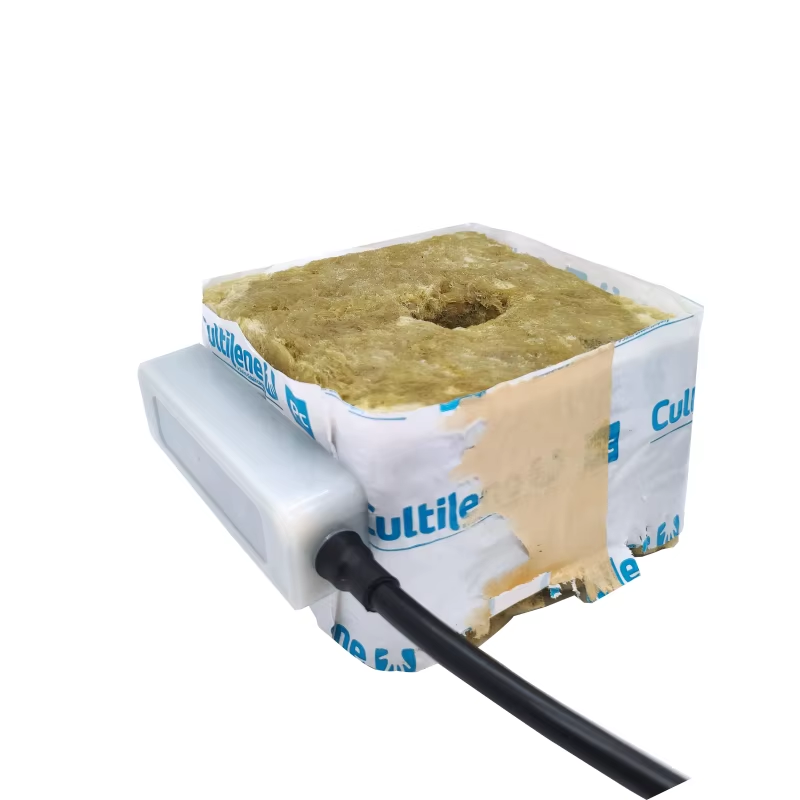
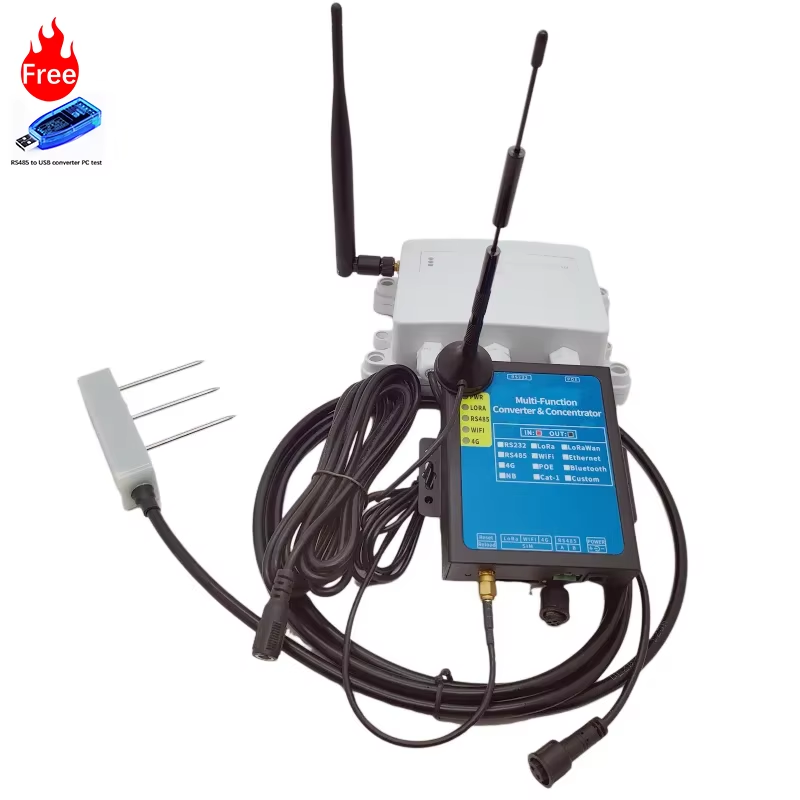
This is usually a slender rod-shaped probe containing precise electronic components. It can simultaneously, continuously and in situ measure the three core life indicators of the root layer soil:
Temperature: The “Cold and Hot Pulse” of Soil
Volumetric water content: The “degree of dryness” of soil
Electrical conductivity (EC) : The “concentration of nutrient salts” in soil
It utilizes principles such as time-domain reflectometry (TDR) or frequency-domain reflectometry (FDR) to non-destructively detect moisture and salinity through the propagation characteristics of electromagnetic waves in soil media. Data is transmitted in real time to the management platform via wired or wireless means, drawing an invisible “map of underground life”.
Decoding the “Agronomic Language” of Three Major Parameters
Soil temperature: The starting gun of life
It is far more than just one number. A stable soil temperature of 5 centimeters deep passing through 12℃ is an accurate signal for corn sowing. The root system of strawberries is most active at 15-22℃. Winter soil temperature data can predict the overwintering survival rate of underground pests. It controls the rate of seed germination, microbial activity and nutrient decomposition, and serves as the precise scale of the agricultural calendar.
2. Soil Moisture: The “Balance” between Efficiency and Dispute
In Israel’s drip irrigation orchards, sensors convert water data into irrigation instructions. When the moisture content of the main root layer between 20 and 40 centimeters drops below the set threshold, the system automatically replenishes water to the optimal range. This not only saves over 30% of water, but more importantly, it eliminates the traditional dispute of “you stealing my water” – data becomes the sole criterion for fairness and science.
3. Soil electrical conductivity (EC) : An invisible nutrient map
The EC value can indirectly reflect the total amount of soluble salt ions in the soil solution. If it is too high, it means there is a risk of salinization and it will “burn the roots”. If it’s too low, it might be due to insufficient nutrients. In large farms in Heilongjiang, the salt distribution map of the fields drawn by EC sensors directly guides the route of variable fertilizer applicators: less potassium fertilizer is applied in areas with high EC, and precise supplementation is provided in areas with low EC, achieving the goal of reducing fertilizer use while increasing efficiency.
Collaborative value: 1+1+1>3
When the data of the three are integrated, revolutionary insights are generated:
Anticipating diseases: Persistent high humidity combined with suitable temperature makes it a breeding ground for root diseases. The system can issue early warnings.
Optimizing fertilization: Only by knowing the soil moisture status can one determine when to fertilize – fertilizing when there is less water is burning, and fertilizing when there is more water is loss.
Coping with stress: High temperature + low humidity = Crop heat stress; Low temperature + high humidity = risk of root asphyxiation. The sensor combination can issue the alarm the earliest.
Practical scenarios: From Precision to wisdom
In the greenhouse: Sensor-linked environmental control system. When it detects that the night temperature is too low and the humidity is too high, it will automatically start heating and dehumidification to prevent downy mildew and avoid energy waste at the same time.
In high-standard farmland: The probe network generates dynamic soil profile maps. When irrigating, the depth to which water seeps through the “front” can be clearly seen, ensuring thorough watering without deep seepage.
In organic farms: EC data helps monitor the natural waxing and waning patterns of soil fertility, guides the planting of cover crops and the timing of organic fertilizer application, and achieves precise management of ecological cycles.
Technological frontiers and future challenges
Today’s sensors are becoming smarter, tougher and more multi-dimensional:
Node AI-ization: Directly calculate the water demand index at the edge, providing a faster response.
Material innovation: More resistant to salt and alkali corrosion, suitable for long-term burial.
Functional integration: Some high-end sensors have integrated pH value or selective detection functions for nitrogen, phosphorus and potassium ions, evolving towards an “all-round underground laboratory”.
However, challenges still exist: How to achieve the same level of reliability at a lower cost? How can we make data interpretation more “user-friendly” and directly convert it into a simple command like “Water for 2 hours tomorrow morning”?
Conclusion
Soil sensors, the silent “root system translators”, are transforming chaotic “sensations” into clear “data”, bringing unified field management into an era of personalized “root zone care”. It made us realize for the first time that the micro-environment beneath every inch of land is so unique and dynamic.
It has not changed the essence of plant growth, but has completely transformed the way we understand and support this growth. In a future where resource constraints are increasingly tight, understanding the “whispers” of the earth might be a crucial step for us to make a new contract with nature.
Extended thinking: When sensors tell us the specific needs of each crop, will agriculture completely shift from “plot management” to “plant management”? Are we ready to embrace such a meticulous yet data-driven new farming ethic?
For more soil sensor information,
please contact Honde Technology Co., LTD.
WhatsApp: +86-15210548582
Email: info@hondetech.com
Company website: www.hondetechco.com
Post time: Dec-29-2025