

Efficient water management is becoming increasingly important for modern agriculture. In many irrigation districts, water is still distributed according to fixed schedules rather than actual field conditions. When rainfall occurs, irrigation channels may continue delivering water, resulting in unnecessary consumption, higher operating costs, and potential soil salinity problems.
For agricultural irrigation projects, especially in arid and semi-arid regions, knowing when to irrigate is only part of the challenge. Measuring exactly how much water is delivered to each section of the irrigation network is equally important.
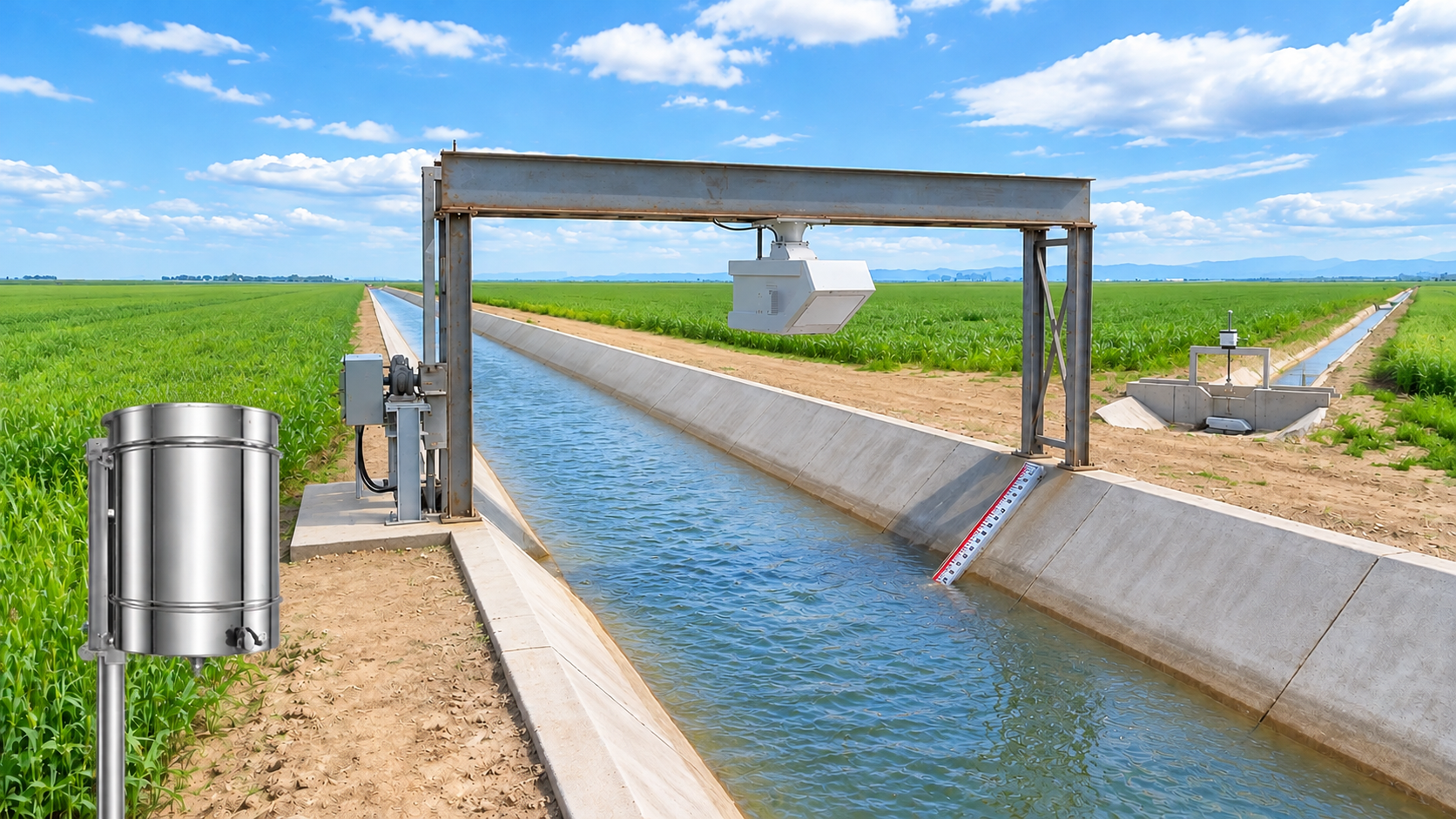
Honde Technology provides an integrated smart irrigation monitoring solution that combines rainfall measurement, dual radar open channel flow monitoring, ultrasonic water level measurement, and electronic water gauges. The system helps irrigation operators monitor rainfall, measure water distribution, and improve the management of agricultural water resources.
1. Why Do Modern Irrigation Systems Need Accurate Water Monitoring?
Traditional irrigation management often faces three common challenges.
Unnecessary irrigation after rainfall
Conventional irrigation schedules do not always respond to changing weather conditions. Water may continue flowing into agricultural fields even after sufficient rainfall, wasting valuable water resources.
Inaccurate water measurement in open channels
Traditional mechanical measuring equipment can be affected by sediment accumulation, aquatic plants, and changing channel conditions. These factors make long-term water flow measurement and maintenance more difficult.
Lack of reliable water consumption records
For irrigation districts implementing water quota management, water allocation, or volumetric charging, accurate measurement is essential. Without reliable consumption data, it is difficult to determine how much water each irrigation area actually uses.
A smart irrigation monitoring system addresses these challenges by combining weather monitoring with real-time water measurement.
2. Four Key Devices for a Smart Irrigation Monitoring System
The proposed solution integrates four types of monitoring equipment, each serving a different part of the irrigation network.
HD-RDWS-01 Outdoor Tipping Bucket Rain Gauge
Application: Agricultural rainfall monitoring
The HD-RDWS-01 outdoor tipping bucket rain gauge measures rainfall in agricultural areas and transmits precipitation data to the monitoring platform.
When rainfall reaches a predefined irrigation control threshold, the system can trigger an irrigation suspension signal through the cloud platform, helping operators avoid unnecessary water delivery.
Key functions:
- Automatic rainfall measurement
- Real-time rainfall data collection
- Remote data transmission
- Support for rainfall-based irrigation control
- Suitable for outdoor agricultural monitoring stations
By integrating rainfall information into irrigation management, agricultural operators can make better decisions about when to start, reduce, or stop irrigation.
RD-600-01 Dual Radar Open Channel Flow Meter
Application: Main irrigation canals and branch channels
The RD-600-01 dual radar open channel flow meter is designed for non-contact flow measurement in irrigation channels.
Installed above a trapezoidal concrete channel, the system uses dual radar measurement to obtain water velocity and water level data. These measurements are used to calculate channel flow and accumulated water volume.
Unlike conventional contact-based equipment, radar sensors operate above the water surface without direct contact with the flowing water.
Key advantages:
- Dual radar measurement of water velocity and level
- Non-contact installation above the channel
- Reduced interference from floating debris and aquatic plants
- Suitable for irrigation canals and open-channel applications
- Flow measurement accuracy up to ±2% under specified installation and operating conditions
- Accumulated water volume measurement
- Suitable for remote monitoring and water consumption management
For irrigation districts introducing volumetric water management or water-rights allocation, accumulated water volume provides important measurement data for water distribution records and settlement.
RD-UWLR5-01 Ultrasonic Open Channel Level Sensor
Application: Secondary and tertiary irrigation channels
For smaller irrigation channels, the RD-UWLR5-01 ultrasonic open channel level sensor offers a practical water level monitoring option.
When installed with a standard Parshall flume, water level measurements can be converted into flow information according to the corresponding flume rating relationship.
Key advantages:
- Non-contact ultrasonic level measurement
- Suitable for standard Parshall flumes
- Practical solution for distributed irrigation monitoring points
- Supports centralized data collection
- Helps reduce the complexity of manual water level inspections
This configuration is suitable for irrigation projects that need to monitor multiple small channels without installing a more complex flow measurement system at every location.
RD-EWLS-01 Stainless Steel Electronic Water Gauge
Application: Visual water level monitoring in concrete channels
The RD-EWLS-01 electronic water gauge is designed for water level monitoring in irrigation channels.
Its stainless steel construction provides a practical solution for outdoor channel installations. The visible red and white scale allows field personnel to check water levels directly, while the electronic output supports remote data collection.
Key advantages:
- Stainless steel construction
- Visible red and white measurement scale
- Direct visual water level inspection
- RS485 communication output
- Suitable for concrete irrigation channels
- Supports both local observation and digital monitoring
Combining electronic measurement with a visible scale makes daily inspections more convenient and helps improve transparency in field water management.
3. How Does the Smart Irrigation Monitoring System Work?
The system connects rainfall monitoring, channel flow measurement, and water level monitoring through a centralized management platform.
Step 1: Monitor rainfall conditions
The HD-RDWS-01 collects rainfall data from agricultural fields and sends the information to the monitoring platform.
Step 2: Make irrigation decisions
The platform evaluates rainfall information against predefined irrigation thresholds. When rainfall is sufficient according to the configured control strategy, an irrigation suspension command can be issued to the electric water gate.
This helps prevent unnecessary irrigation after rainfall.
Step 3: Measure water distribution
When irrigation is required, the RD-600-01 measures water velocity and water level in the main channel. The system calculates flow rate and accumulated water volume, providing continuous information about water distribution.
Step 4: Monitor downstream channels
The RD-UWLR5-01 and RD-EWLS-01 can be installed at secondary and tertiary channels to monitor water levels and support distributed irrigation management.
Step 5: Centralized data management
Monitoring data is transmitted to the cloud platform or control center for visualization, historical records, and water consumption analysis.
This allows irrigation managers to understand rainfall conditions, channel flow, and water distribution across different irrigation areas.
4. Supporting Water Allocation and Volumetric Water Management
Accurate water measurement is particularly important in irrigation districts implementing water quotas and volumetric water charging.
With the RD-600-01 dual radar open channel flow meter installed at key water distribution points, operators can obtain accumulated water volume records for different channels.
These records can support:
- Irrigation water allocation
- Water consumption statistics
- Agricultural water quota management
- Volumetric water charging
- Water distribution analysis
- Irrigation efficiency evaluation
When integrated with an authorized water management platform, the monitoring system can provide measurement data for water allocation and water-rights management.
For agricultural organizations, this means moving from estimated water consumption toward more transparent, measurable water management.
5. Typical Applications
The integrated monitoring solution can be used in various agricultural water management projects.
Large Agricultural Irrigation Districts
Monitor rainfall and water distribution across main canals, branch canals, and field irrigation networks.
Drip and Sprinkler Irrigation Projects
Use rainfall information and water consumption data to support irrigation scheduling and reduce unnecessary water delivery.
Agricultural Groups in Arid Regions
Improve water allocation and monitoring across large agricultural areas where water resources are limited.
Smart Water Conservancy Projects
Integrate rainfall and open-channel flow measurement into centralized water management platforms.
Agricultural Water Quota and Trading Projects
Provide accumulated water consumption records to support water allocation, accounting, and authorized volumetric charging systems.
6. Why Choose Honde Technology for Smart Irrigation Monitoring?
Honde Technology provides environmental monitoring and water management equipment for agricultural, hydrological, and industrial applications.
For smart irrigation projects, we offer a combination of monitoring devices designed to cover different measurement requirements:
- Rainfall monitoring: HD-RDWS-01 tipping bucket rain gauge
- Main canal flow monitoring: RD-600-01 dual radar open channel flow meter
- Small channel water level monitoring: RD-UWLR5-01 ultrasonic level sensor
- Visual and electronic water level measurement: RD-EWLS-01 stainless steel electronic water gauge
The equipment can be selected according to channel dimensions, installation conditions, measurement requirements, and communication needs.
Whether you are upgrading an existing irrigation district or developing a new smart agricultural water management project, we can help configure a suitable monitoring solution.
7. Looking for a Smart Irrigation Channel Flow Monitoring Solution?
Are you planning an agricultural irrigation modernization project, an open-channel flow monitoring network, or a water consumption management system?
Honde Technology can provide equipment recommendations based on your project requirements.
Contact our team to discuss:
- Irrigation channel dimensions and installation conditions
- Required flow measurement range and accuracy
- Rainfall monitoring requirements
- RS485 and remote data transmission options
- Cloud platform integration
- Solar-powered monitoring station configurations
Build a smarter irrigation network with reliable rainfall monitoring, non-contact radar flow measurement, and digital water level monitoring.
Contact Honde Technology
Website: https://www.hondetechco.com
Email: info@hondetech.com
Honde Technology – Smart Monitoring Solutions for Agriculture and Water Management.
Post time: Nov-23-2026