

When you see the weather forecast saying “There will be rain in some areas”, have you ever wondered exactly where the rain will fall in the fields? When frost warnings sound, how can farmers precisely protect each young seedling? The white equipment quietly standing in the fields and at the edges of the land – agricultural meteorological stations – is becoming the key to answering these questions. It is not merely a meteorological observation tool, but also the nerve endings of smart agriculture.
More than just Observation: The “Climate Doctor” exclusive to Farmland
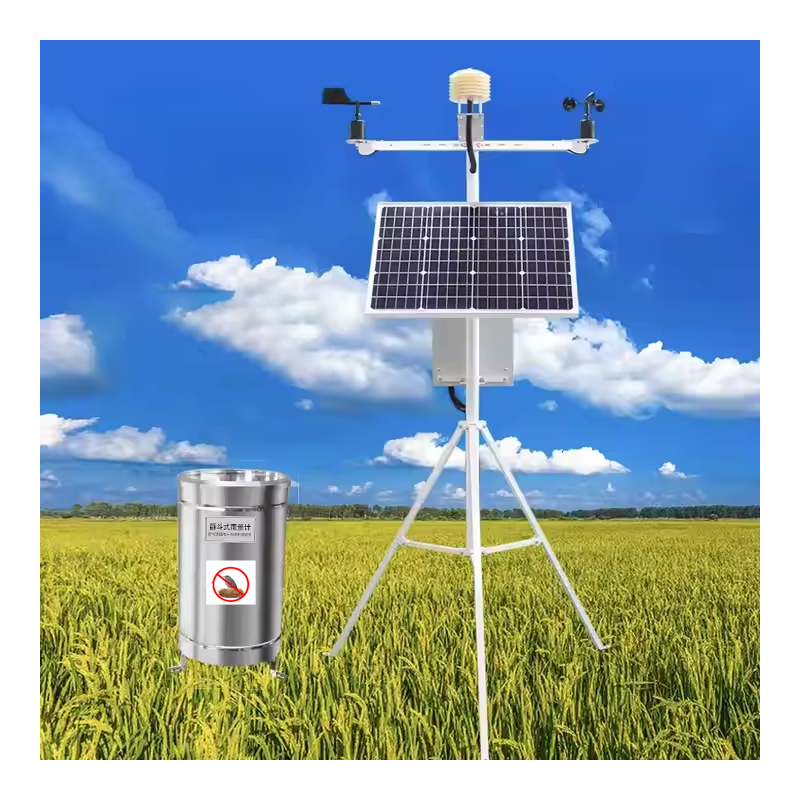
An agricultural meteorological station is an automatic monitoring system specially designed for the agricultural production environment. Compared with general weather stations, its core difference lies in “understanding agriculture” – in addition to monitoring conventional meteorological elements, it focuses more on the “microclimate and soil environment of farmland” that directly affect crop growth.
A typical agricultural meteorological station is equipped with unique “senses” :
Aerial Scout: Temperature and humidity, light intensity, wind speed and direction, and rainfall sensors, continuously recording the climate of the crop canopy.
Soil probe: Stratified monitoring of soil temperature, moisture content and electrical conductivity, directly indicating the state of crop roots “drinking water and eating”.
Specialized instruments for crops: Leaf surface humidity sensors can determine the risk of diseases, while accumulated temperature calculators predict the development stage of crops.
Special scene equipment: In orchards, there may be temperature gradient monitoring for frost prevention. In greenhouses, CO₂ concentration sensors are equipped.
These data are continuously flowing to the cloud platform or farmers’ mobile phones 24 hours a day through the solar power supply system and wireless network.
From Data to Decision-making: How Does It Empower Agricultural Production?
The revolution of precision irrigation
In the vegetable base of Shouguang, Shandong Province, China, the agricultural meteorological station is linked with the drip irrigation system. When the soil moisture probe shows that the humidity at a depth of 20 centimeters is below the threshold, the system automatically triggers irrigation, saving water by more than 30% per mu. The farmer smiled and said, “In the past, we relied on our feet to check if it was dry or wet. Now, we rely on data to ‘drink water’.”
2. Early warning of pests and diseases
In rice-growing areas, meteorological stations combined leaf surface humidity and temperature data to construct a risk model for rice blast disease. When hot and humid weather persists, the App will push pesticide application suggestions 48 hours in advance, reducing blind application and lowering the average pesticide usage by 15%.
3. The “Whistleblower” Dealing with Extreme Weather
During the frequent frost period in spring, the meteorological station in the apple orchard transmits temperature data at different heights of the orchard every 10 minutes. When the temperature of the tree canopy layer approaches the freezing point, the system automatically alarms and activates the anti-frost fan, helping local orchards reduce frost losses by approximately 40% in 2023.
4. Scientific basis for planting decisions
A certain farm utilized the accumulated temperature data from the meteorological station over the years and combined it with the real-time data of the current year to accurately predict the maturity period of corn, keeping the harvest time error within three days and effectively avoiding the threat of early frost.
The core node of smart agriculture: integrating into a larger digital ecosystem
A true modern agricultural meteorological station never works in isolation. It is the “perception terminal” of the smart agriculture system:
Linkage with agricultural machinery: The best window period for meteorological data to guide unmanned aerial vehicle (UAV) aerial spraying operations.
Integrate into the management platform: Data is imported into the farm management system and combined with crop models to generate a complete agricultural calendar for fertilization, irrigation, and harvesting.
Connecting the supply chain: Precise maturity period prediction enables preparations for agricultural product sales and logistics arrangements in advance.
Future Field: Smarter and more Inclusive
Technological evolution is making agricultural meteorological stations more powerful:
Cost reduction: The maturity of sensor technology makes it possible for micro weather stations priced at over a thousand yuan to enter ordinary farmers’ homes.
AI empowerment: Edge computing devices can analyze data on-site and immediately send voice reminders such as “Frost may form tonight. Please cover the greenhouses.”
Networked observation: In large farms, multiple meteorological stations form a monitoring network to draw a detailed “field climate map”, revealing those microclimate differences that are invisible to the naked eye.
Conclusion
The agricultural meteorological station, this silent “digital commander”, is transforming the experience-based agriculture that has relied on the weather for thousands of years into precision agriculture that “manages the weather with data”. It does not alter the rhythm of spring sowing and autumn harvest in agriculture, but profoundly changes the way we understand and respond to nature. In today’s era of intensifying climate change, these white figures standing in the fields might just be the most solid first step for us to build a resilient agricultural system.
It is worth considering: As technological equipment becomes increasingly intelligent, how can farmers of different ages and educational backgrounds truly make good use of these data? The key to agricultural modernization may not only lie in the hardware in the fields, but also in the invisible bridge between “people” and “data”.
For more weather station information, please contact Honde Technology Co., LTD.
WhatsApp: +86-15210548582
Email: info@hondetech.com
Company website: www.hondetechco.com
Post time: Dec-29-2025