

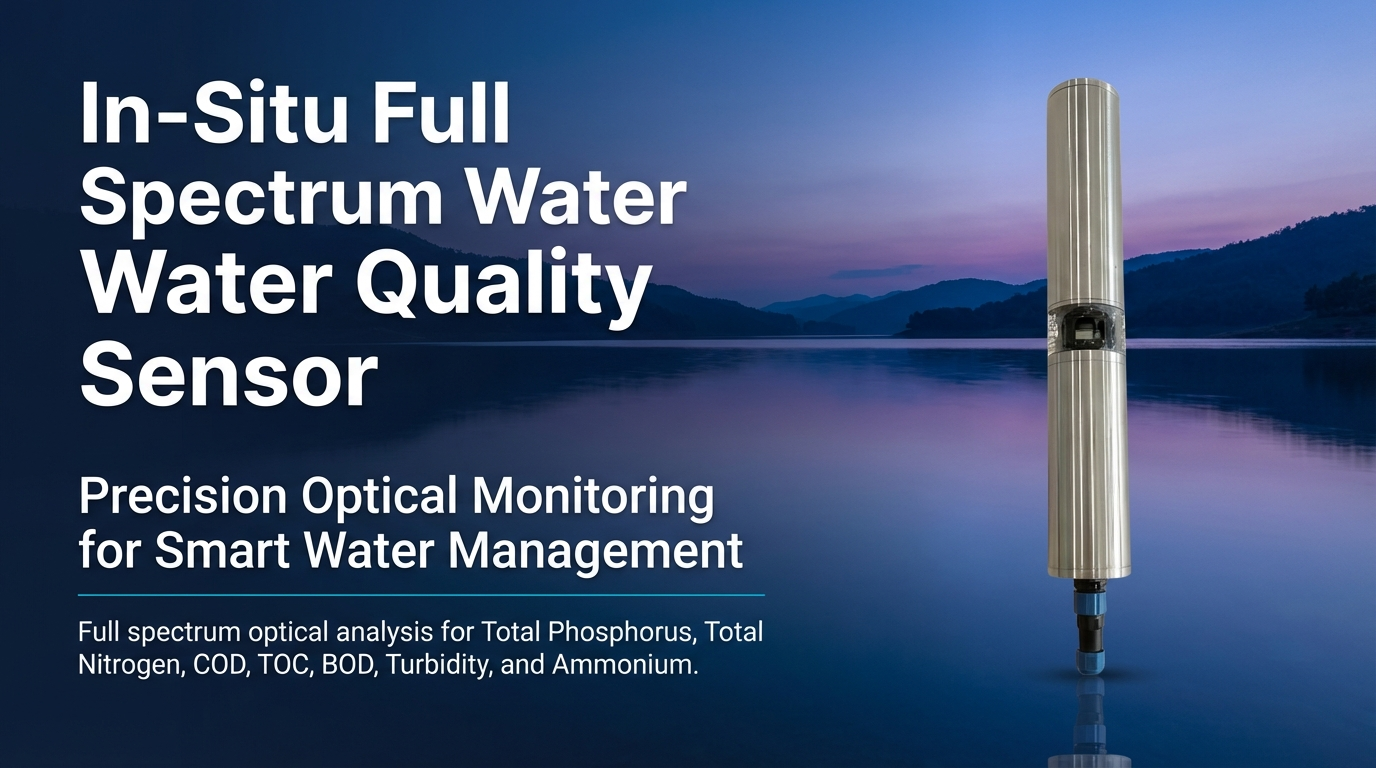
1. The Shift in Water Quality Monitoring: From Chemistry to Optics
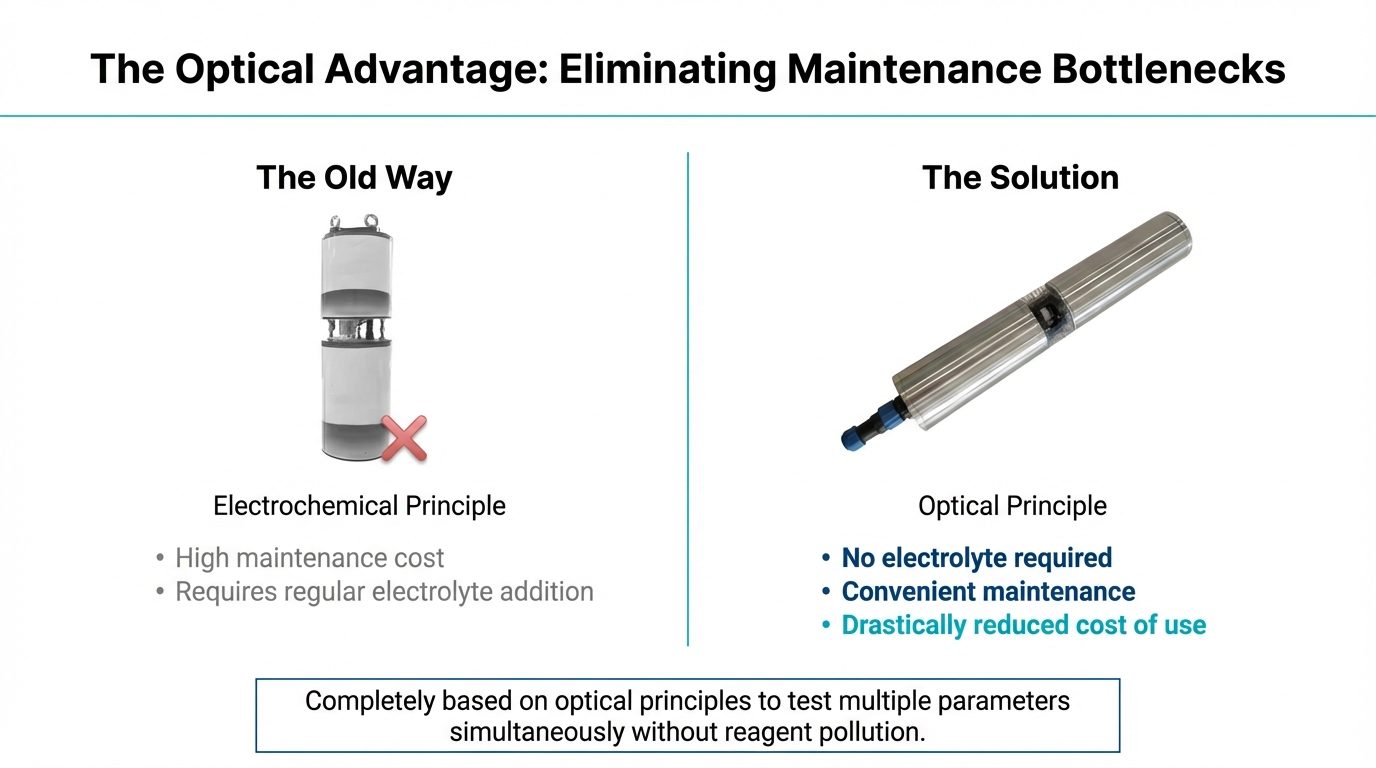
The global landscape of environmental monitoring is undergoing a fundamental transformation. As regulatory pressures mount and the need for real-time, actionable data becomes critical for industrial and municipal sectors, the industry is moving away from the “old way” of electrochemical sensing. Traditionally, monitoring required complex electrochemical probes that mandated regular electrolyte replenishment and frequent manual intervention, resulting in prohibitive maintenance costs and data gaps.
The “new way” is defined by optical principles. By leveraging advanced spectroscopy, In-Situ Full Spectrum Water Quality Sensors have rendered reagent-based systems obsolete for many applications. This shift represents more than just a technical upgrade; it is an economic disruption. By eliminating the recurring costs of chemical reagents and reducing maintenance to simple automated cleaning, this technology provides a significantly lower total cost of ownership while delivering high-frequency data streams.
2. Technical Foundation: Spectroscopy and Active Dual Optical Path Correction
At the core of this disruption is UV-visible near-infrared spectroscopy, operating across a comprehensive 190–900nm band range. Unlike narrowband sensors, full-spectrum analysis captures the entire “spectral fingerprint” of water, allowing for the identification of complex organic and inorganic compounds.
The primary technical differentiator is Active Correction of Dual Optical Paths. The sensor utilizes two distinct channels: a “Sample optical path” and a “Reference optical path.” As an industry analyst, I must emphasize that this is not a static calibration but a real-time correction mechanism. The reference path allows the system to compensate instantaneously for light source decay, temperature shifts, and electronic drift. This ensures high resolution and measurement stability even in high-turbidity environments.
Furthermore, the hardware is adaptable to specific water conditions. The sensor can be customized with different measurement optical path lengths—5mm, 10mm, or 35mm. This allows operators to optimize the sensor for different concentrations; for instance, a shorter 5mm path is ideal for high-concentration industrial wastewater, while a 35mm path provides the sensitivity required for clean drinking water.
3. The TP/TN Breakthrough: Multi-Parameter Intelligence
Perhaps the most significant market disruption is the sensor’s ability to monitor Total Phosphorus (TP) and Total Nitrogen (TN) optically. Historically, these parameters required laboratory wet chemistry or complex online “wet” analyzers. The ability to monitor TP and TN in-situ, alongside dozens of other parameters, represents a major technological leap.
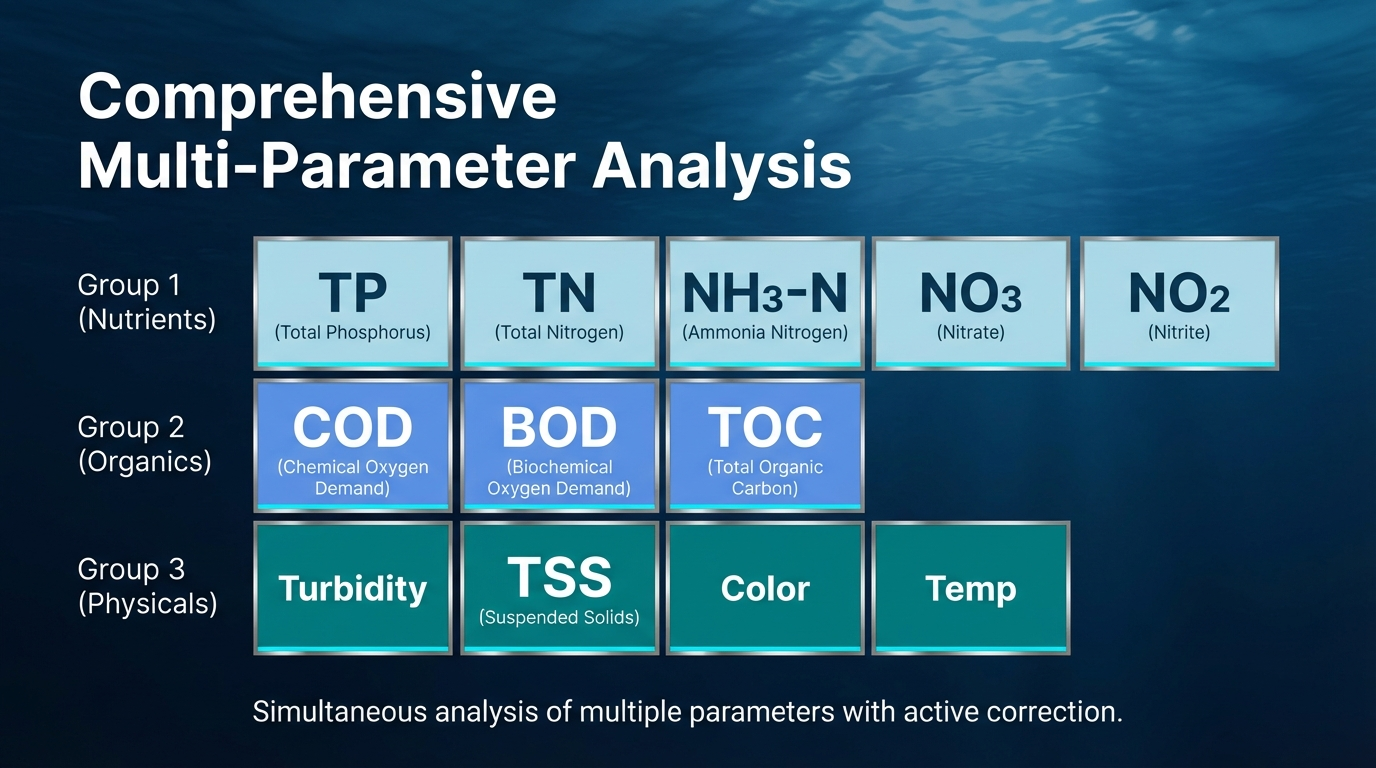
Through built-in parameter pre-calibration, a single sensor can provide a comprehensive profile of water quality simultaneously. The system detects the unique spectral “fingerprints” of various radicals and ions, including:
- Nutrients: Total Phosphorus (TP), Total Nitrogen (TN), Ammonium (and other root ions), Nitrate, and Nitrite.
- Organics: Chemical Oxygen Demand (COD), Permanganate Index (CODmn), Total Organic Carbon (TOC), and Biochemical Oxygen Demand (BOD).
- Physical Properties: Turbidity, Color, and Suspended Solids Concentration (TSS).
4. Sustainable Design and the “Zero-Reagent” Advantage
In an era of ESG (Environmental, Social, and Governance) accountability, the “Zero-Reagent” design is a major selling point. Because the sensor relies strictly on light, it introduces no secondary reagent pollution into the environment.
The hardware is engineered for extreme durability. The body is constructed from SUS 316L or SUS904 stainless steel, paired with a JGS1 quartz window. To combat biofouling and sediment buildup, the sensor features a compact high-pressure air cleaning and purge mechanism. This automated system maintains the optical window’s integrity, ensuring a long service life with minimal manual cleaning. While the initial investment for a full spectrum host (approximately $7,215 USD) is higher than basic probes, the elimination of reagents and reduced labor makes it the more economically sound choice for long-term infrastructure.
5. Connectivity and Intelligent Management for Smart Cities
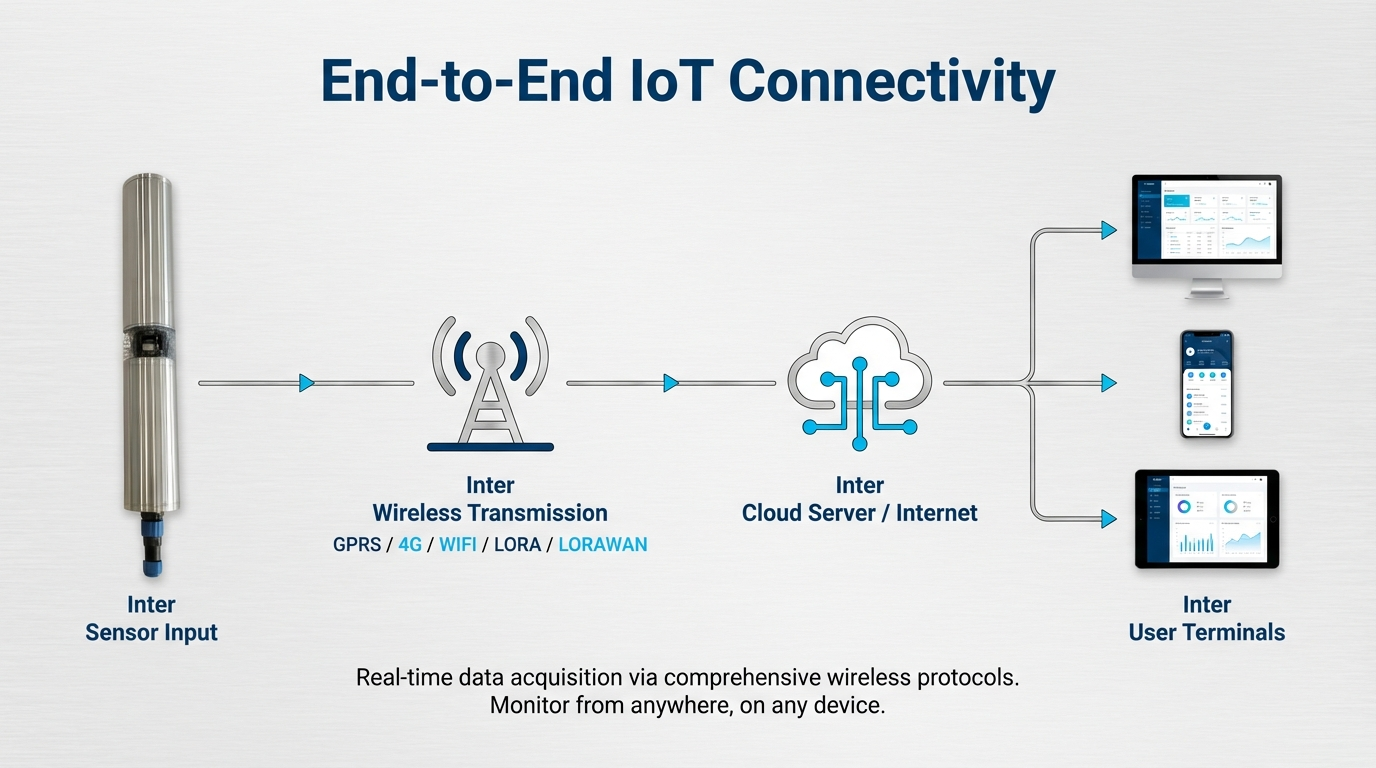
Integration into “Smart City” frameworks is facilitated through a robust suite of connectivity options, including GPRS, 4G, WIFI, LoRA, and LORAWAN. Data flows from the sensor through the Internet to a centralized management system, accessible via Web, Mobile, or Tablet PC views.
The Universal Controller: The system is anchored by a high-performance Universal Controller:
- Interface: 7-inch TFT touch screen with LED backlight (800×480 resolution).
- Operating System: Windows-based for familiar, sophisticated data management.
- Intelligence: The system supports “Fingerprint Warnings.” This AI-adjacent feature allows the sensor to recognize unknown spectral signatures that deviate from the norm, alerting operators to unexpected pollutants that have not been specifically calibrated for, providing an “early warning” system for chemical spills or illegal dumping.
6. Global Application Scenarios: Proving Ground for Developed Markets
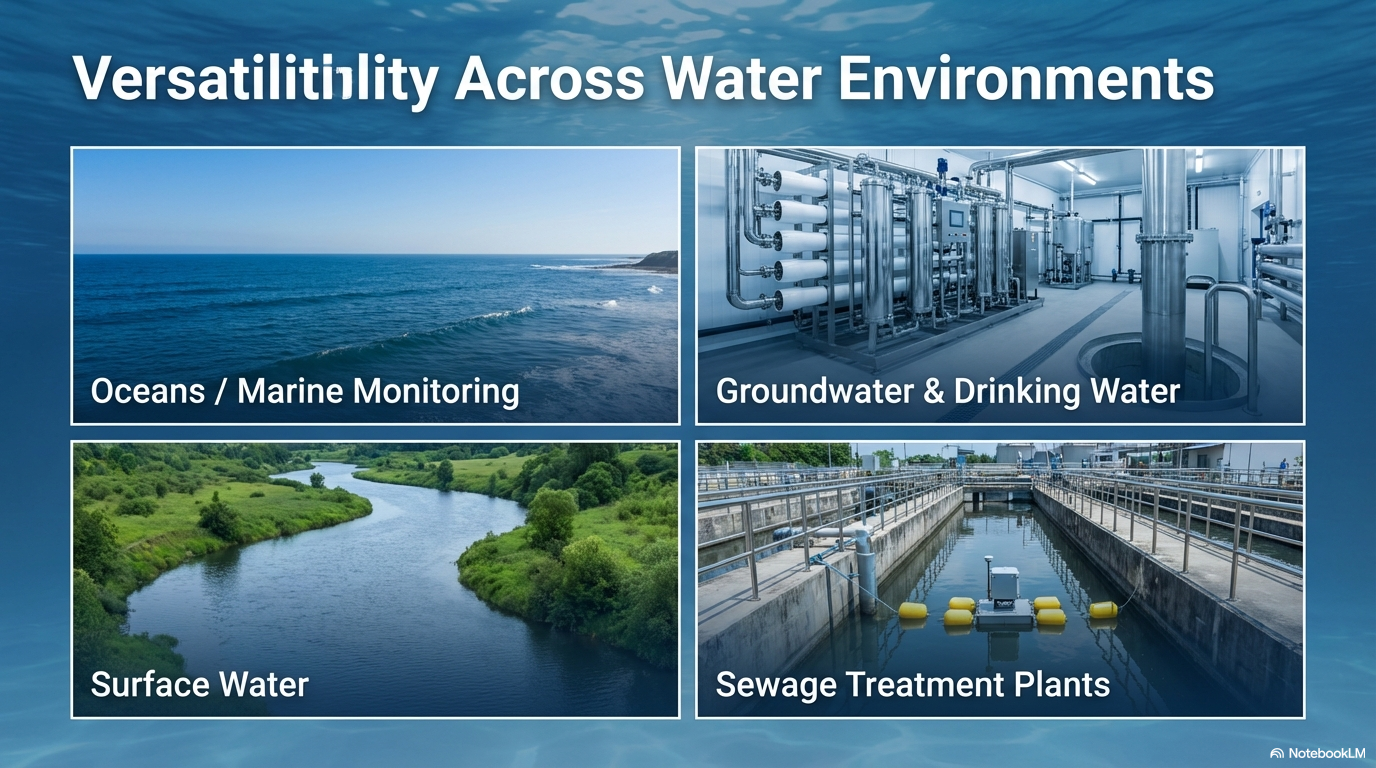
The sensor’s versatility is currently being demonstrated in highly digitized nations like Singapore and South Korea.
- Singapore (Coastal and Ocean Monitoring): In saline, corrosive ocean environments, the sensor’s SUS 316L housing and IP68 protection rating are essential. The IP68 rating ensures the unit remains fully functional under continuous submersion at depth, making it the tool of choice for coastal water protection.
- South Korea (Smart Urban Water Management): In South Korea’s highly integrated water grids, the sensor’s high-frequency monitoring and LoRA/4G capabilities allow for real-time management of drinking water and sewage treatment plants.
Installation Versatility: The sensor supports five distinct installation methods to suit these diverse environments: Immersion, Suspension, Shore, Direct plug-in, and Flow-through types.
7. Technical Specifications Summary
| Parameter Name | Specification / Value |
| Measurement Principle | Spectroscopy (dual optical path) |
| Band Range | 190–900nm |
| Dimensions | D60mm x L396mm |
| Ambient Temperature | 0°C – 60°C |
| Withstand Pressure | 1 bar |
| Flow Rate Range | Less than 3m/S |
| Response Time | Minimum 1.8s |
| Protection Level | IP68 (Sensor) / IP54 (Controller) |
| Power Consumption | 7.5W (Sensor) / 13W–15W (Controller) |
| Working Voltage | 12V (Sensor) / 220VAC (Controller) |
| Communication Interface | RS485 Modbus |
| Materials | SUS 316L / SUS904; JGS1 Quartz Window |
8. Conclusion: The Gold Standard for Modern Infrastructure
The transition to in-situ full spectrum technology is no longer a luxury—it is a necessity for modern environmental management. By combining active correction for high accuracy, the ability to monitor TP/TN without reagents, and the intelligence of fingerprint warnings, this technology has become the “gold standard.” For environmental protection agencies and industrial operators, investing in this optical technology represents a move toward a more sustainable, cost-effective, and data-rich future for global water security.
Tags:
In-Situ Full Spectrum Water Quality Sensor
Optical principle water sensor
Dual optical path water sensor
UV-visible near-infrared water monitoring
Spectroscopy water quality sensor
Multi-parameter water quality sensor
Total phosphorus (TP) / Total nitrogen (TN) sensor
COD / BOD / TOC sensor
Ammonia nitrogen / Nitrate / Nitrite sensor
Turbidity / TSS sensor
For more water quality sensor information,
please contact Honde Technology Co., LTD.
WhatsApp: +86-15210548582
Email: info@hondetech.com
Company website: www.hondetechco.com
Post time: Feb-27-2026