

Beyond satellite imagery and climate models, a grassroots movement of thousands of simple mechanical devices is recording the indispensable baseline data for a nation torn between drought and deluge
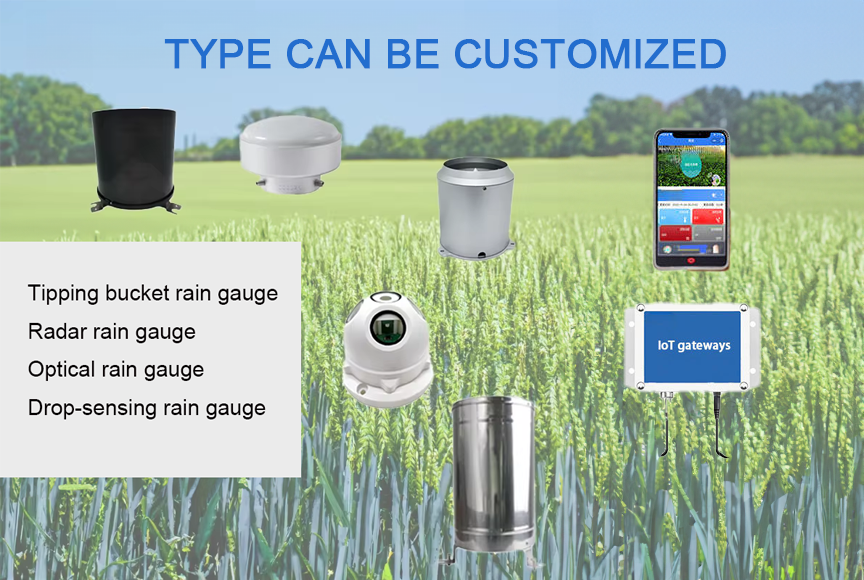
In the Sierra Norte mountains of Oaxaca, a red tipping bucket rain gauge at a community weather station recorded 1,200 millimeters of rain last season. Four hundred kilometers away in Guanajuato, an identical gauge “swallowed” just 280 millimeters—less than a quarter of the amount.
These two simple mechanical actions speak louder than any report, laying bare a brutal truth of Mexico’s water reality: extreme uneven distribution. The nation grapples simultaneously with severe drought in the north, seasonal floods in the south, and nationwide groundwater over-extraction. Faced with this complex crisis, decision-makers recognize that grand hydraulic projects and water-saving slogans must be built on the most fundamental question: How much water do we actually have?
The “ground truth” answer to this question relies heavily on those seemingly outdated tipping bucket rain gauges dotting the highlands, valleys, farmlands, and city rooftops.
National Mobilization: From Data Deserts to a Monitoring Network
Historically, vast gaps existed in Mexico’s precipitation data, especially in rural and mountainous areas. Since 2020, the National Water Commission, in partnership with agencies like the German Society for International Cooperation, has advanced the National Precipitation Observation Network Enhancement Plan. A core strategy is the large-scale deployment of low-cost, easy-to-maintain automatic tipping bucket rain gauge stations in areas beyond the reach of traditional weather stations.
- The Logic of Choice: In remote areas with limited budgets and maintenance capacity, the mechanical reliability, lack of need for external power (a solar panel can power the data logger), and ease of field diagnosis (look, listen, clean) make it the unambiguous choice.
- Democratizing Data: This data is transmitted in real-time to a national database and made available to local governments, researchers, and even interested farmers via an open online platform. Data has transformed from a secret archive into a public resource.
Core Application Scenarios: Data-Driven Water “Accounting”
Scenario 1: The “Fair Scale” for Agricultural Insurance
In Sinaloa, one of Mexico’s most vital agricultural regions, consecutive droughts and erratic rains plague farmers. The government and private insurers collaborated to launch ”weather index insurance.” Payouts are no longer based on subjective damage assessments but solely on cumulative rainfall data from multiple tipping bucket gauges in a defined area. If seasonal rainfall falls below the contract’s threshold, payment triggers automatically. Rainfall data becomes the farmer’s proof of claim and lifeline.
Scenario 2: The Urban Flood “Whistleblower”
In Mexico City, the sprawling metropolis built on a former lakebed, urban flooding is a perennial threat. Municipal authorities have densely deployed a network of tipping bucket stations in upstream catchment areas and at key drainage nodes. The real-time rainfall intensity data they provide is the direct input for the city’s flood预警 model. When multiple stations record an abnormal “tipping frequency” in a short period, the预警 center can issue precise alerts to downstream neighborhoods 30-90 minutes in advance and dispatch emergency crews.
Scenario 3: The Groundwater Management “Ledger”
In Guanajuato, which relies heavily on groundwater, agricultural water use is legally tied to water availability. Local water user associations established monitoring networks of tipping bucket gauges across watersheds. This data calculates the annual natural groundwater recharge, forming the scientific basis for allocating agricultural water quotas. Rainfall becomes a quantifiable water asset to be “booked” and “distributed.”
Scenario 4: The Climate Adaptation “Community Guide”
On the Yucatán Peninsula, Maya community farmers use data from community-run tipping bucket stations, combined with traditional knowledge, to adjust the planting times and varieties of corn and beans. They no longer rely solely on natural signs but have quantified historical data to better adapt to increasingly unpredictable rainy season onset.
Localized Challenges and Innovation
Applying this “simple” technology in Mexico requires adapting to unique challenges:
- Intense UV & Heat: Standard plastic components degrade quickly. Gauges use UV-stabilized materials and metal components.
- Dust: Frequent dust storms clog the funnel. Local maintenance protocols include regular cleaning with soft brushes and air blowers.
- Animal Interference: In the field, insects, lizards, and small mammals can enter. Installing fine mesh and protective housings has become standard.
The Future: From Isolated “Dots” to an Intelligent “Web”
A single tipping bucket gauge is a data point. When hundreds are connected into a network and integrated with soil moisture sensors and satellite rainfall estimates for cross-verification, their value transforms qualitatively. Mexican research institutions are using this ground-truth data to calibrate and refine satellite-based rainfall models, generating higher-precision national rainfall distribution maps.
Conclusion: Defending the Dignity of the Mechanical in a Digital Age
In an era dominated by lidar, phased-array weather radar, and AI prediction models, the enduring relevance of the tipping bucket rain gauge is a profound lesson in “appropriate technology.” It doesn’t pursue ultimate complexity but strives for ultimate reliability, sustainability, and accessibility within a specific context.
For Mexico, these metal buckets scattered across the nation are not merely measuring millimeters of rain. They are writing the fundamental ledger for the country’s water security, adding a rational foundation to community resilience, and reminding everyone in the most direct way possible: every drop of rain is a matter of survival and development. In this grand project vital to the nation’s livelihood, sometimes the most effective solution lies within a simple, stubborn, untiring “tipping bucket.”
Complete set of servers and software wireless module, supports RS485 GPRS /4g/WIFI/LORA/LORAWAN
For more rain gauge information,
please contact Honde Technology Co., LTD.
Email: info@hondetech.com
Company website: www.hondetechco.com
Tel: +86-15210548582
Post time: Dec-10-2025