

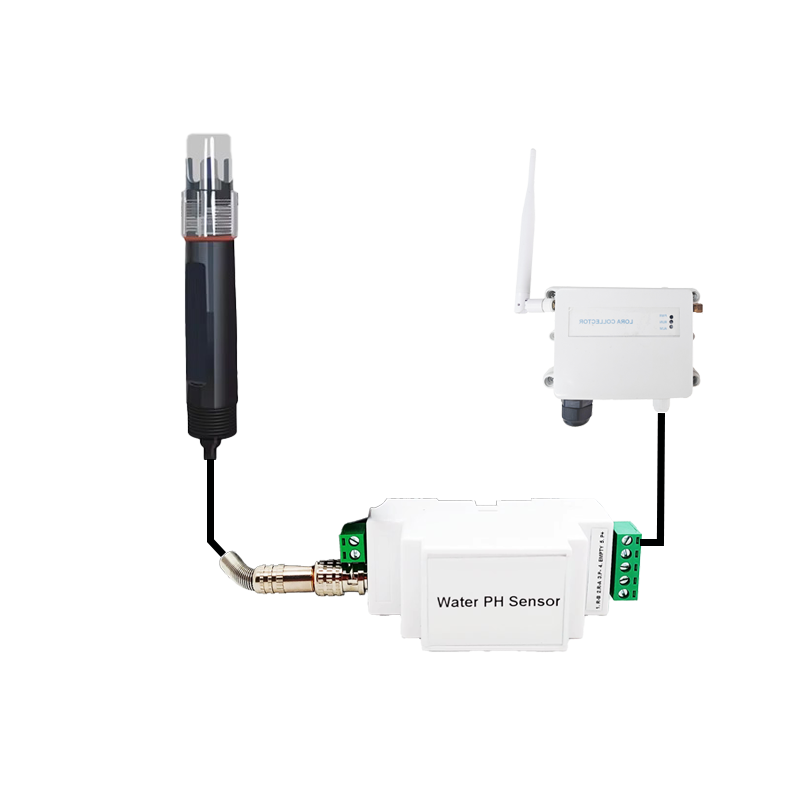
In an era of increasing water scarcity and pollution concerns, a technological breakthrough is quietly transforming our relationship with this vital resource. The latest generation of intelligent pH sensors combines laboratory-level accuracy with consumer-friendly pricing and real-time connectivity, bringing water quality monitoring from specialized labs directly into our homes and communities.
The Breakthrough: Pocket-Sized Precision
Gone are the days of bulky, expensive equipment requiring expert operation. Next-gen pH sensors leverage nanomaterials and IoT connectivity, shrinking to the size of a coin while slashing costs by up to 90% and achieving an astonishing precision of ±0.01 pH. These devices can operate continuously for up to two years using solar power, streaming data to cloud-based analytics platforms in real-time.
“The core breakthrough lies in self-calibrating algorithms and fouling-resistant electrode design,” explains Dr. Lewis, an environmental engineering professor at MIT. “They maintain long-term stability even in complex water bodies—something previously thought impossible.”
Global Impact: From the Amazon to Your Kitchen Tap
In Brazil, a network of hundreds of micro pH sensors deployed along the Amazon River now provides the first real-time, basin-wide water quality assessment, successfully providing early warning for three industrial pollution events.
In California, wineries use high-precision sensors to optimize irrigation, reducing water use by 40% while improving grape quality.
Most notably for consumers, a New York startup’s home pH monitor—priced at just $79 and as simple to install as plugging in a device—continuously tracks tap water, sending instant alerts to a smartphone app for any quality changes. It sold 100,000 units in its first month, with users sharing over 500,000 data points.
Social Media Ignites a Health Movement
On TikTok, the #WaterQualityCheck challenge has garnered over 2 billion views, with Gen Z testing everything from rainwater and bottled water to public fountains—even tears. These viral videos blend entertainment with unexpected public education on regional water disparities.
A Facebook group named “My Home Water Report” attracted 2 million members in three months, where users share sensor data and discuss filtration solutions, sparking a grassroots water safety movement.
Environmental Guardian: Predicting Algal Blooms 48 Hours in Advance
The most critical application comes from the Great Lakes monitoring project. Researchers discovered that subtle pH fluctuations can provide a 48-hour early warning for harmful algal blooms (HABs). By deploying a sensor network powered by AI analytics, they accurately predicted three major HAB events last summer, giving coastal communities crucial preparation time.
“pH is water’s ‘vital sign,’” says project lead Dr. Chen. “Like body temperature for humans, a small change can signal a major problem.”
Market Boom & Investment Surge
According to a LinkedIn industry report, the intelligent water monitoring market will reach $7.4 billion by 2025, growing at 22.3% annually. Tech giants like Google and Siemens have acquired several sensor startups, with venture capital pouring over $1.8 billion into the sector last year alone.
“This isn’t just an environmental tech play; it’s a health tech, AgriTech, and industrial tech convergence,” comments a Silicon Valley investor. “Water data will become one of the 21st century’s most valuable assets.”
The Future: Everyone Becomes a Water Steward
As sensor costs continue to fall and smartphones proliferate, personal water monitoring is becoming mainstream. Experts predict over 100 million smart pH sensors will be deployed globally in rivers, lakes, farms, and homes within five years, creating an unprecedented water quality data network.
“We are at an inflection point,” says UN water expert Marina. “This distributed monitoring network will revolutionize water management, enabling precise, timely protection and empowering the public to safeguard the water they drink.”
Complete set of servers and software wireless module, supports RS485 GPRS /4g/WIFI/LORA/LORAWAN
For more water sensors information,
please contact Honde Technology Co., LTD.
Email: info@hondetech.com
Company website: www.hondetechco.com
Tel: +86-15210548582
Post time: Dec-15-2025