

While lab reports are still warm from yesterday’s samples, a probe sheathed in 316L stainless steel is submerged in corrosive effluent, transmitting the true, second-by-second electrocardiogram of water pollution to the world.
Deep within a chemical plant, at the final discharge point, wastewater churns with unknown chemistry. The environmental engineer’s routine was once this: don protective gear, collect a “snapshot of truth” in a glass bottle from a pungent sampling point, and wait hours or days for lab analysis. By the time the report arrived, the water in the pipe was long gone—a dangerous discharge event could have begun and ended, leaving only a data ghost in its wake.
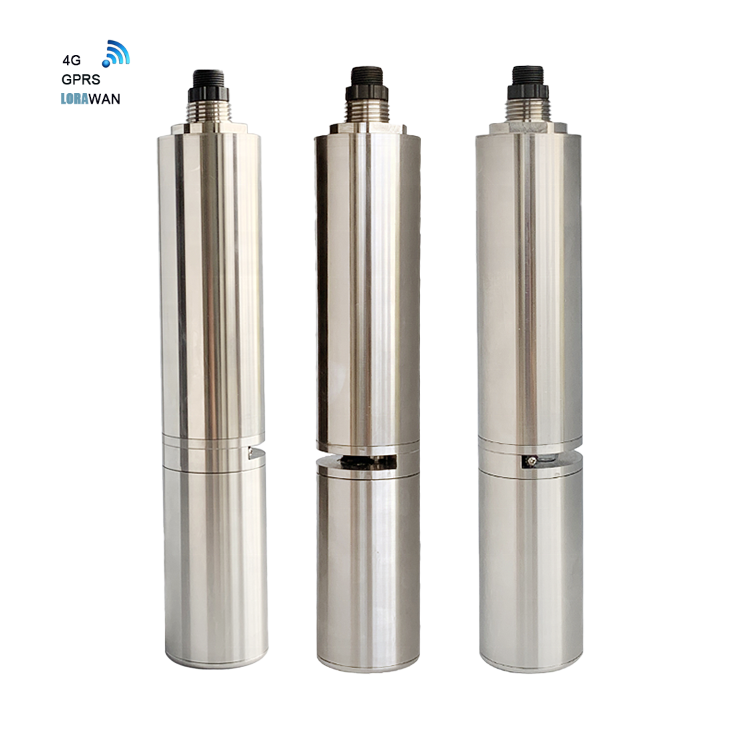
This “sample-wait-lagging judgment” model is the Achilles’ heel of traditional water management. The key to ending this blindness is to miniaturize and fortify the lab, then plunge it directly into the harshest conditions. This is the role of the stainless steel online COD sensor. It is not a delicate analyzer but an armored, ceaseless ”process sentinel.”
The Core Revolution: From Snapshots to a Real-Time Film
Traditional lab analysis is like taking a still photo of a river every few hours—you always miss the dynamic moment the fish jumps.
An online COD sensor is a 4K camera set up by the river, never turned off, recording the complete “film” of organic compound concentration changes frame by second.
Its value loop is starkly clear:
- Instant Detection: The sensor detects a 50% spike in COD concentration within 20 minutes.
- Real-Time Alarm: The control system receives an exceedance alert within one second.
- Automatic Intervention: The system automatically diverts the超标 effluent to a holding tank or increases pre-treatment chemical dosing.
- Risk Averted: A potential violation—carrying massive fines or even shutdown orders—is strangled in its cradle.
Why Must It Be Stainless Steel? A Victory for Materials Science
In industrial wastewater brimming with chlorides, sulfides, strong acids, and alkalis, common plastics or inferior metals corrode into failure within months. Choosing 316L stainless steel is an arms race against extreme environments:
- The King of Corrosion Resistance: Its high molybdenum content resists pitting and crevice corrosion caused by chlorides—the most common cause of sensor failure in wastewater.
- A Fortress of Structural Integrity: It withstands pipeline pressure fluctuations, occasional impacts from solids, and long-term vibration, ensuring absolute stability for the internal精密 optical or electrochemical core.
- Hygiene and Safety Standard: It meets the high hygiene grades required in food and pharmaceutical industries and is intrinsically safe, eliminating leakage risks.
In the Trenches: Four Stories Rewriting Industry Rules
Scenario 1: The Pharmaceutical Plant’s “Compliance Fuse”
A biopharma plant’s fermentation wastewater is notoriously complex, containing high levels of active chlorine from cleaning agents. Traditional probe membranes failed within weeks. Switching to a UV-spectrometry COD sensor with a full stainless steel housing and chloride-resistant algorithms enabled six months of continuous, fault-free operation. Its real-time data is now accepted as a credible source by environmental regulators’ online platforms, saving hundreds of thousands in third-party monitoring fees annually.
Scenario 2: The Leachate Treatment Plant’s “Ultimate Challenger”
Landfill leachate is called the “king of wastewater”—extremely high in COD, salinity, and complexity. At a major waste-to-energy plant in South China, a stainless steel COD sensor was installed directly in the aeration vortex of the equalization tank. Its minute-by-minute data became the “conductor’s baton” for the downstream biological and membrane treatment processes, boosting the system’s overall energy efficiency by 15%.
Scenario 3: The Coastal Industrial Park’s “Seawater Warrior”
In a chemical park in the Yangtze River Delta, seawater infiltration leads to extremely high chloride levels in wastewater. Stainless steel sensors became the only viable option. Like “scouts” dispersed across the pipeline network, they create a real-time map of organic load distribution, helping managers trace pollution sources accurately and optimize intake scheduling for the central treatment plant.
Scenario 4: The Brewery’s “Resource Recovery Navigator”
In beer brewing, tank-cleaning wastewater is rich in biodegradable organics (sugars, alcohol). An online COD sensor on a stainless steel pipe monitors this stream’s concentration in real time. When the COD value hits the optimal threshold, the system automatically diverts the flow to an anaerobic digester, transforming waste into biogas energy. The sensor data translates directly into projected kilowatt-hours.
Technology Landscape: Core Principles Paired with Steel
- UV Absorption (UV254): Measures absorbance of UV light at 254nm through a quartz window in the steel housing to estimate COD. Its advantage is reagent-free operation and fast response, perfectly suited for the sealed protection stainless steel provides.
- High-Temperature Digestion-Electrochemical Method: Digests the sample under high heat and pressure, then detects resulting substances electrochemically. Here, stainless steel withstands the brutal conditions of the reaction chamber.
- Ozone Oxidation-Electrochemical Method: A newer principle using ozone’s strong oxidizing power for very fast response. The stainless steel housing provides a stable, interference-free reaction environment.
The Future & Challenges: Smarter, Tougher Sentinels
The future stainless steel sensor will be not just a data provider but a preliminary diagnostician:
- Self-Diagnosis & Cleaning: Will monitor signal noise, optical window clarity, and trigger compressed air or ultrasonic cleaning automatically.
- Digital Twin Calibration: AI models will use auxiliary parameters like temperature, pH, and conductivity to dynamically compensate and calibrate COD readings, reducing cumbersome manual calibration.
- Modular Survival: The sensor core will be modular, allowing field technicians to replace it in minutes like changing a magazine, maximizing uptime.
Conclusion: From Data Lag to Cognitive Synchronization
The proliferation of stainless steel online COD sensors marks a paradigm shift in pollution control—from “back-end accountability” to “in-process governance.” What it grants us is not just a stream of real-time numbers, but a ”cognitive velocity” synchronized with the pollution process itself.
When every critical wastewater stream is guarded by such a tireless, corrosion-defying metal sentinel, we weave an intelligent sensory net over the entire industrial metabolism. It makes invisible organic pollution visible, controllable, and predictable. This line of defense, forged from data and steel, may do more to define a sustainable industrial future than any事后 punishment or remediation ever could.
Complete set of servers and software wireless module, supports RS485 GPRS /4g/WIFI/LORA/LORAWAN
For more water sensors information,
please contact Honde Technology Co., LTD.
Email: info@hondetech.com
Company website: www.hondetechco.com
Tel: +86-15210548582
Post time: Dec-10-2025