

Southeast Asia—In the early morning, the rice fields of Chiang Mai, Thailand, awaken with the first light. Farmer Somchai walks toward an unassuming metal device at the edge of the field—a tipping bucket rain gauge. It stands quietly, its bucket connected to a small data module. Somchai opens his phone, where an app displays real-time data transmitted from this traditional instrument.
“It’s like a sentinel in the fields,” says Somchai. “Last rainy season, it gave a three-hour advance warning of a heavy downpour, allowing us to complete our harvest before the floodwaters arrived.”
From the mountains of northern Thailand to the Mekong Delta in Vietnam, from the Philippine archipelago to the oil palm plantations of Malaysia, this century-old meteorological tool is undergoing a digital rebirth.
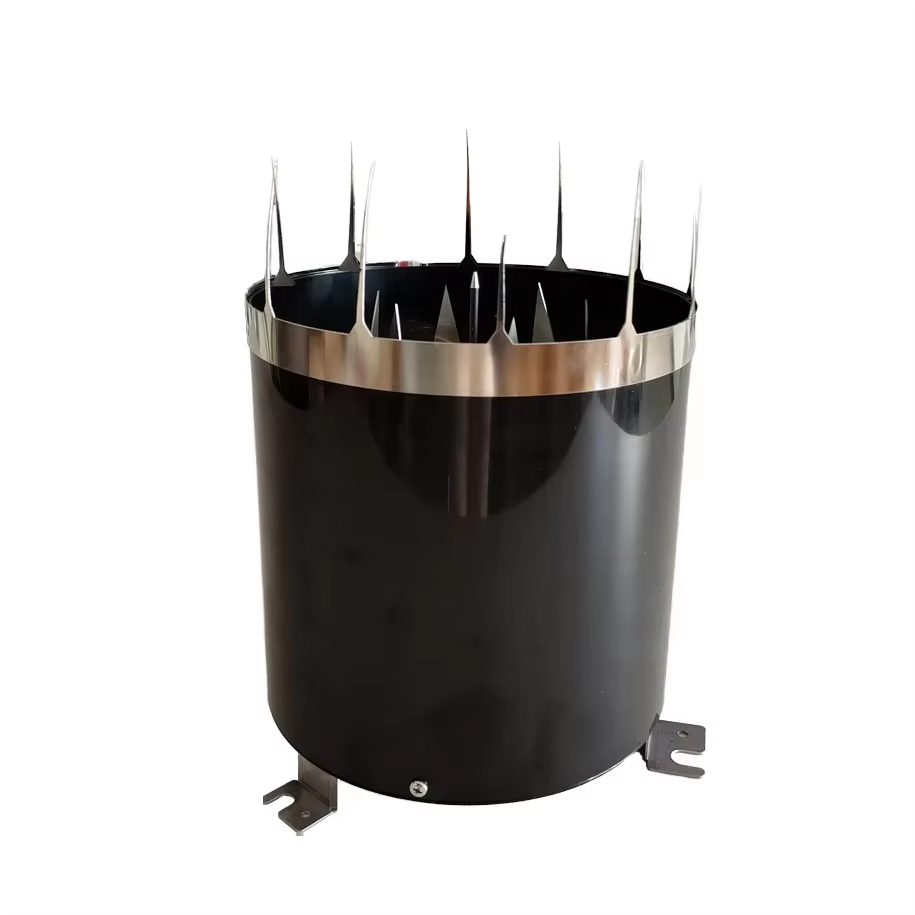
Modern Transformation of Traditional Tools
The tipping bucket rain gauge—a meteorological instrument that operates on a simple mechanical principle, where rainwater fills one side of a bucket, causing it to tip and trigger a count—is now equipped with IoT modules. The upgraded device can transmit data to the cloud in real-time via wireless networks, allowing farmers to check rainfall information anytime through mobile apps.
In Trà Vinh Province, Vietnam, hundreds of such smart rain gauges form a monitoring network covering the delta. The apps farmers use not only display rainfall levels but also provide multilingual voice prompts: “Heavy rain expected in one hour. Recommend stopping fertilization.” On Leyte Island in the Philippines, communities use this data to build typhoon warning systems. Last year, they successfully organized evacuations ahead of a major typhoon, achieving zero casualties.
“In the past, we relied on observing clouds and sensing humidity to predict the weather,” says Vietnamese farmer Trần Văn Sơn, showcasing his mobile app in the field. “Now, the data tells us more precise information.”
Practical Innovation in the Face of Climate Crisis
Social Media Spread: From Tool to Topic
On social platforms, a video of Filipino teenagers demonstrating how to use tipping bucket rain gauge data to predict the weather garnered over two million views. Under the hashtag #MyRainGaugeStory, farmers, students, and community workers share how this traditional tool helps them cope with extreme weather.
Policy-Driven Scale-Up
The Thai government launched the “One Village, One Rain Gauge” initiative in 2023, deploying over 5,000 smart monitoring points to date. The project not only provides equipment but also trains local farmers in usage and maintenance. Several state governments in Malaysia have also incorporated similar systems into climate-resilient agriculture programs.
Cross-Disciplinary Fusion: Dialogue Between Technology and Humanities
In Bali, Indonesia, artists and technologists collaborated to transform a year’s worth of rainfall data into a sound art piece, allowing the public to perceive climate patterns through auditory experiences. This innovative approach brings meteorological data out of specialized fields and into the public sphere.
Tangible Benefits: Data-Driven Agricultural Resilience
On an oil palm plantation in Johor, Malaysia, data records show measurable improvements: after implementing precision irrigation based on rainfall data, palm fruit yield per hectare increased by 18%, while water savings reached 35%.
“Most importantly, risk management has improved,” explains plantation manager Ahmad Zahi. “When the system detects abnormal rainfall patterns, we adjust fertilization and irrigation plans in advance to avoid losses.”
In the Philippines, insurance companies have launched innovative rainfall index insurance products. When connected tipping bucket rain gauges record extreme weather data as stipulated in contracts, the claims process automatically initiates, significantly shortening the time required for traditional insurance assessments and payouts.
Beyond Tools: Building Climate-Resilient Communities
In Battambang Province, Cambodia, tipping bucket rain gauges have become part of eco-tourism. Homestay owners design the devices as interactive installations, allowing tourists to scan QR codes for real-time rainfall data and participate in weather prediction games. “This is not just a tourism experience,” says the project leader. “It’s also a vivid classroom for climate education.”
In many villages in the Philippines, women have taken on the role of “climate data officers.” They are responsible for maintaining equipment, recording data, and sharing analysis results at community meetings. “Disaster prevention decisions used to be male-dominated, but now women have more say through data,” says a community worker.
Research by the nonprofit organization Climate Resilience Asia notes: “The success of this technology lies in its inclusivity—it doesn’t require users to have advanced technical knowledge but translates complex data into intuitive decision-making support.”
Future Ecosystem: How Data Creates More Value
Industry observations indicate that the digitization of tipping bucket rain gauges is just the beginning. In Southeast Asia, an innovation ecosystem is forming around agricultural meteorological data:
Insurance Innovation: More insurance companies are exploring index-based insurance products using precise weather data, reducing transaction costs and expanding coverage.
Carbon Farming: In peatland conservation areas in Malaysia, precise rainfall data helps farmers optimize irrigation, reduce greenhouse gas emissions, and participate in carbon credit trading.
Supply Chain Optimization: Coffee cooperatives in Vietnam adjust processing methods and export schedules based on rainfall patterns across regions, improving product consistency.
Education and Awareness: Schools in Thailand incorporate rainfall monitoring into science curricula, enabling students to analyze local climate data and understand the impacts of global climate change.
The Rain Gauge Through Multiple Perspectives
“Technological innovation should be like this—simple, practical, and close to people’s needs.” — Regional agricultural research expert.
“My father taught me to read the clouds, and I taught him to check rainfall data on his phone. This is the fusion of agricultural wisdom across two generations.” — A young Indonesian farmer shares on social media.
“In the fight against climate change, the most effective tools are often those that can be understood and used by ordinary people.” — International development agency project report.
Recommended Communication Strategies:
- Short-Video Platforms: Produce series showcasing the entire process—from factory production and field installation to data application of tipping bucket rain gauges.
- Professional Communities: Publish case study reports analyzing best practices for different crops and terrains.
- Mass Media: Create infographics explaining how traditional tools, through technological adaptation, serve modern agriculture.
- Educational Institutions: Develop teaching modules allowing students to understand climate science by analyzing rainfall data.
Conclusion: When Tradition Meets Modernity
In the fields of Southeast Asia, the digital transformation of the tipping bucket rain gauge tells a story of adaptation. This is not about high-tech replacing tradition but the continuity and evolution of wisdom across generations.
These metal gauges, installed along rice fields, palm plantations, and hillsides, connect the past and the future through data, bridging local knowledge and global science, and linking every climate-vulnerable community to humanity’s collective efforts to address challenges.
They remind us: in facing the global challenge of climate change, solutions may lie in the tools we already have—requiring only a bit of innovation, connection, and courage to face the future.
Complete set of servers and software wireless module, supports RS485 GPRS /4g/WIFI/LORA/LORAWAN
Please contact Honde Technology Co., LTD.
Email: info@hondetech.com
Company website: www.hondetechco.com
Tel: +86-15210548582
Post time: Dec-29-2025