

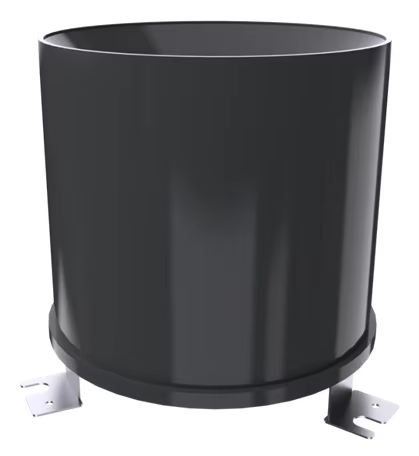
A weather instrument based on a 135-year-old principle is unexpectedly entering the public eye. The tipping bucket rain gauge—once found only in professional weather stations—is now playing a key role in TikTok challenges, flash flood warning systems, and smart agriculture in various forms such as automatic rain gauges and digital rain gauges.
Chapter 1: The Science Behind the TikTok Trend
The #RainBucketChallenge is spreading across global short-video platforms. The rules are simple: measure 24-hour rainfall with a homemade automatic rain gauge device and pair it with a creative video.
Few realize that this seemingly entertaining challenge is advancing citizen weather science. British weather enthusiast @WeatherJoe’s video shows a striking comparison: a homemade tipping bucket rain gauge differed by only 3.2% from a professional device worth over ten thousand yuan under moderate rainfall conditions.
“The key lies in the precise balance design of the tipping bucket,” explained a Cambridge University engineering professor in the video comments. “Modern digital rain gauges still rely on this core principle—each 0.2mm of rainfall triggers a tip—a century-old design that remains irreplaceable.”
Highlights from Trending Comments:
- “My 50-yuan DIY automatic rain gauge data actually matched the meteorological bureau’s app!”
- “The ‘click’ of the tipping bucket is the best white noise”
Chapter 2: 17 Minutes Before a Deadly Flash Flood
In July 2023, in Ya’an, Sichuan, an IoT network of professional rain gauges issued a flash flood warning 17 minutes in advance.
The local emergency management bureau director revealed at a press conference: “Traditional weather station grids are spaced about 10km apart. Our deployment of 200 digital rain gauges created a 1km grid. It was this 9km increase in density that captured the critical data of localized heavy rainfall.”
System data showed: in the暴雨中心 area, the tipping bucket rain gauge recorded 86mm of hourly rainfall, while a standard station 5km away showed only 34mm. “It was this 52mm difference that prompted our evacuation decision.”
The professional rain gauge system used in this case has become a classic teaching example in meteorological engineering on LinkedIn, with related technical solutions being adopted by countries like Pakistan and the Philippines.
Chapter 3: How Chinese Innovation is Reshaping Global Rainfall Monitoring
In a Zhejiang factory, automatic rain gauges roll off the production line at 30 units per minute. These palm-sized devices integrate digital rain gauge technology with powerful features:
- Clog-resistant dual tipping bucket system (for dust, leaves)
- Solar self-powering (2-year battery life)
- BeiDou/GPS dual-mode positioning
- Temperature compensation algorithms
The company’s overseas marketing director revealed: “We exported 80,000 professional rain gauges last year, mainly to Belt and Road countries. In some African regions, our device density now exceeds that in Europe.”
The innovation lies in smart calibration: using machine learning to detect bucket wear and automatically correct errors, extending the field lifespan of automatic rain gauges from 2 to 5 years.
Chapter 4: The “Rain Accountant” in Agriculture
In Ningxia’s wine region, each 3-hectare vineyard is equipped with an IoT digital rain gauge. The system not only records rainfall but also links with soil sensors for precision irrigation.
“We used to rely on experience; now we rely on data,” said the winery’s technical lead. “Tipping bucket rain gauge data showed a 12% decrease in rainfall during this year’s flowering period compared to last year. We adjusted irrigation accordingly, expecting 30% water savings.”
A more ingenious application appears in insurance: Shandong apple growers use professional rain gauge data as the basis for disaster compensation claims. During a 2022 hailstorm, minute-by-minute rainfall intensity data improved claims processing efficiency by 70%.
Chapter 5: The “Nerve Endings” of Urban Flood Control
In Guangzhou’s Huangpu District, 200 explosion-proof automatic rain gauges operate within underground drainage pipes, monitoring inflow in real time.
“Traditional roadside rain gauges can’t reflect actual pipe conditions,” explained a municipal engineer. “Our digital rain gauges detected abnormal inflow in one pipeline despite light rainfall—investigation revealed construction blockage, preventing potential flooding.”
This professional rain gauge system has successfully warned of 3 local flooding incidents, with related papers selected as annual best cases by the International Association for Urban Hydrology.
Chapter 6: From Professional Equipment to Consumer Goods
Surprisingly, tipping bucket rain gauges are transitioning from professional meteorological equipment to consumer products. One tech brand’s smart home automatic rain gauge connects directly to a phone app via Wi-Fi, priced at just 299 yuan, with first-month sales exceeding 10,000 units.
“We simplified the core technology of professional rain gauges,” explained the product manager. “We retained the accuracy of digital rain gauges but made operation as simple as a smart plug.”
On Pinterest, “tipping bucket rain gauge DIY” tutorials have accumulated over 500,000 saves, spawning various forms like children’s science kits and desktop stress-relief toys. In one educational brand’s science kit, the miniature automatic rain gauge is the most popular component.
Chapter 7: The New Frontier of Data Assetization
With the development of carbon trading markets, precise rainfall data is becoming a scarce asset. One environmental tech company has launched a “rainfall data on-chain” project, storing data from thousands of professional rain gauges on the blockchain.
“In fields like ecological compensation and hydropower scheduling, the immutable rainfall data provided by digital rain gauges holds significant value,” said the project lead. “We’ve even received inquiries from hedge funds—they need detailed rainfall data to predict agricultural futures.”
Notably, after quality correction, data from civilian-grade automatic rain gauges has been adopted by some regional meteorological departments as supplementary to official monitoring networks. “This is an important breakthrough for citizen science,” commented a meteorological data expert. “Tipping bucket rain gauges are blurring the line between professional and amateur.”
The Next Decade of Rainfall Monitoring Technology
Q: How are different levels of rain gauges assigned roles?
China Meteorological Administration senior engineer: “Professional rain gauges are for national monitoring networks, requiring <3% error; digital rain gauges meet most industry needs; home automatic rain gauges promote public participation. The three complement each other.”
Q: Where is technological innovation focused?
Tsinghua University hydrology professor: “Next-generation tipping bucket rain gauges will integrate multiple technologies: anti-freeze heating, AI error compensation, edge computing. The smart professional rain gauge we’re developing can automatically identify and classify rain, snow, and hail.”
Q: How should ordinary people choose?
Meteorology science blogger: “Choose basic automatic rain gauges for home gardens; digital rain gauges with data export for agriculture; crowdsource professional rain gauges for community disaster prevention. The key is regular calibration—even the best tipping bucket rain gauge requires maintenance.”
Smart Rainfall Monitoring Networks
Next-generation automatic rain gauges are being developed in labs:
- Material innovation: Hydrophobic nanocoatings to reduce water adhesion loss
- Form breakthrough: Flexible tipping bucket designs that conform to building surfaces
- Network intelligence: Digital rain gauges forming self-organizing networks, where single-point failures don’t affect overall data
“We’re building a ‘rainfall IoT’,” demonstrated a tech company CTO with a prototype. “Each professional rain gauge is an intelligent node, not only collecting data but also analyzing rain patterns and predicting flood risks.”
Conclusion:
From the first commercialized tipping bucket rain gauge in 1888 to over 2 million automatic rain gauges operating globally today; from silent duty in professional weather stations to creative challenges by TikTok teens—this simple mechanical principle is being revitalized through digital rain gauge technology.
A meteorology blogger said in a million-liked video: “Professional rain gauges protect urban safety, home automatic rain gauges connect humans with nature. In this era of climate variability, perhaps what we need is not just more precise technology, but this spirit of taking every raindrop seriously.”
As rainfall monitoring moves from professional domains to public life, and as tipping bucket rain gauge data begins influencing everything from agricultural irrigation to financial transactions, we are witnessing the dawn of a more refined, democratic era in meteorological monitoring.
Please contact Honde Technology Co., LTD.
Email: info@hondetech.com
Company website: www.hondetechco.com
Tel: +86-15210548582
Post time: Dec-25-2025