

The best agriculture weather station system must integrate an 11-parameter weather station, modular multi-depth soil sensors, and high-speed 4G or Wi-Fi connectivity, all mounted on a 3-meter standardized stainless steel standpole. This integrated IoT solution provides a centralized hub for real-time remote monitoring, combining atmospheric data with subterranean insights to optimize crop yields and resource efficiency in modern precision farming environments.
Core Components of a Ruggedized Monitoring Hub
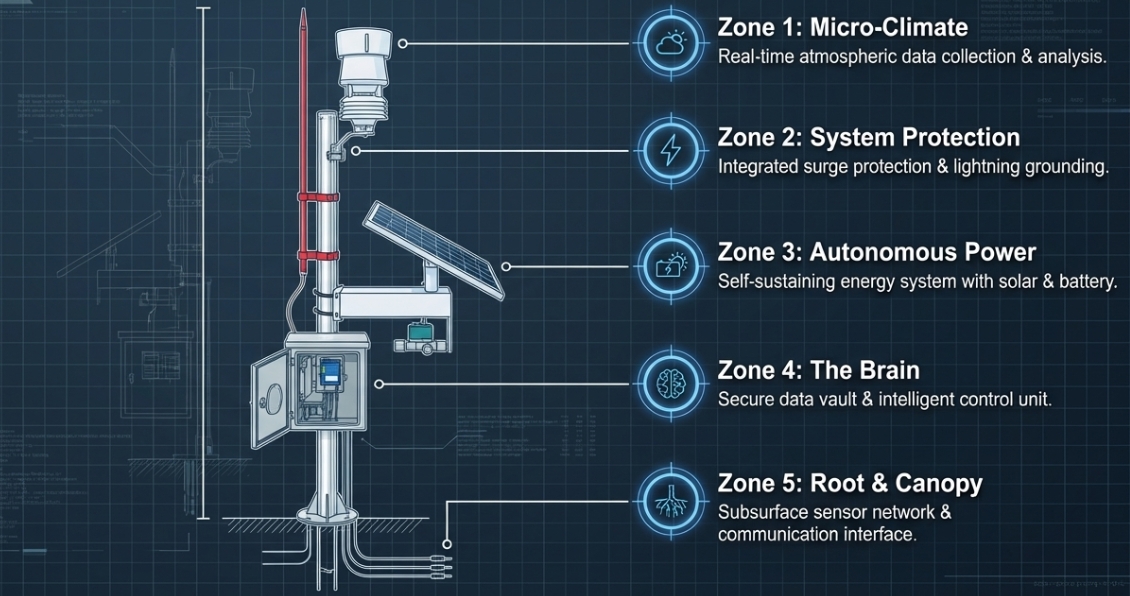
To achieve comprehensive farm oversight, the system utilizes a modular hardware architecture designed for high-fidelity remote monitoring and IoT sensor integration.
11-Parameter Compact Weather Station
This unit serves as the atmospheric heart of the system. It captures real-time data including air temperature, humidity, atmospheric pressure, dew point temperature, ultrasonic wind speed, ultrasonic wind direction, tilt, illumination, and radiation. Crucially, this 11-parameter module is customizable; for instance, sensors for rainfall or particulate matter (PM2.5/10) can be integrated to meet specific regional agricultural requirements.
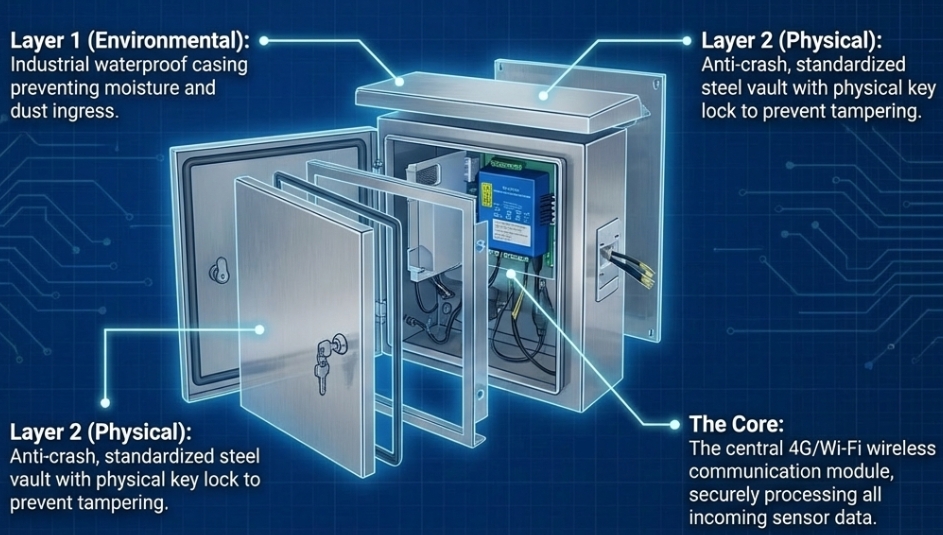
Redundant Enclosure System
All sensor data is funneled into a central wireless hub housed within a dual-layer protective enclosure. The system features an internal waterproof case protected by an outer stainless steel cabinet. This outer layer includes a secure locking mechanism with physical keys, providing essential anti-theft and environmental protection for remote deployments.
Autonomous Power Supply
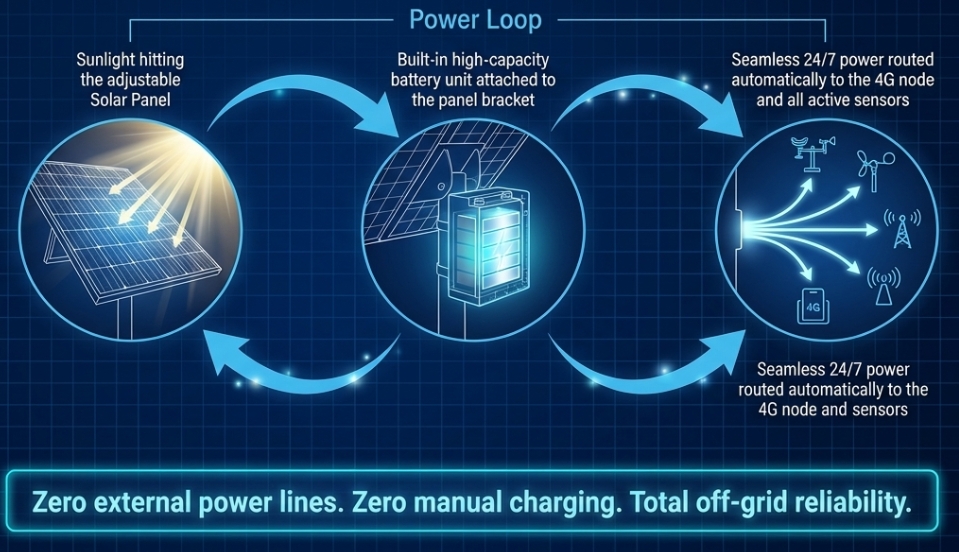
The system is engineered for off-grid autonomy using a high-efficiency solar panel. This unit includes a built-in battery and an automatic charging controller, ensuring a consistent power supply to the transmission modules via a dedicated heavy-duty charging cable.
Deep-Dive: Soil Health and Environmental Sensor Matrix
The system’s modularity allows for the integration of various soil and foliage sensors. By deploying multiple probes at different intervals, the hub supports multi-depth soil profile analysis, which is critical for understanding water infiltration and nutrient leaching.
| Sensor Type | Parameters Measured | Application Benefit |
|---|---|---|
| Multi-Parameter Soil Sensor | Moisture, Temperature, Electrical Conductivity (EC) | Optimizes irrigation schedules and monitors soil salinity for root health. |
| Soil Gas Sensors | CO2, Oxygen (O2) levels | Assesses soil aeration and microbial activity to prevent anaerobic conditions. |
| Chemical Sensors | Soil pH | Informs precise fertilizer application and real-time pH balancing. |
| Leaf Sensors | Leaf Temperature and Humidity | Detects early signs of transpiration stress and potential disease outbreaks. |
Engineering Excellence: Structural Durability & Installation
In our engineering tests, we found that using standardized stainless steel ensures anti-crash durability and system stability in high-wind environments. The physical infrastructure of the Honde Technology system is built on a 3-meter standpole, which is intelligently split into a top and bottom section. This split-pole design is a logistical advantage, significantly reducing shipping dimensions and handling difficulty without compromising structural integrity once the sections are secured via high-strength screws.
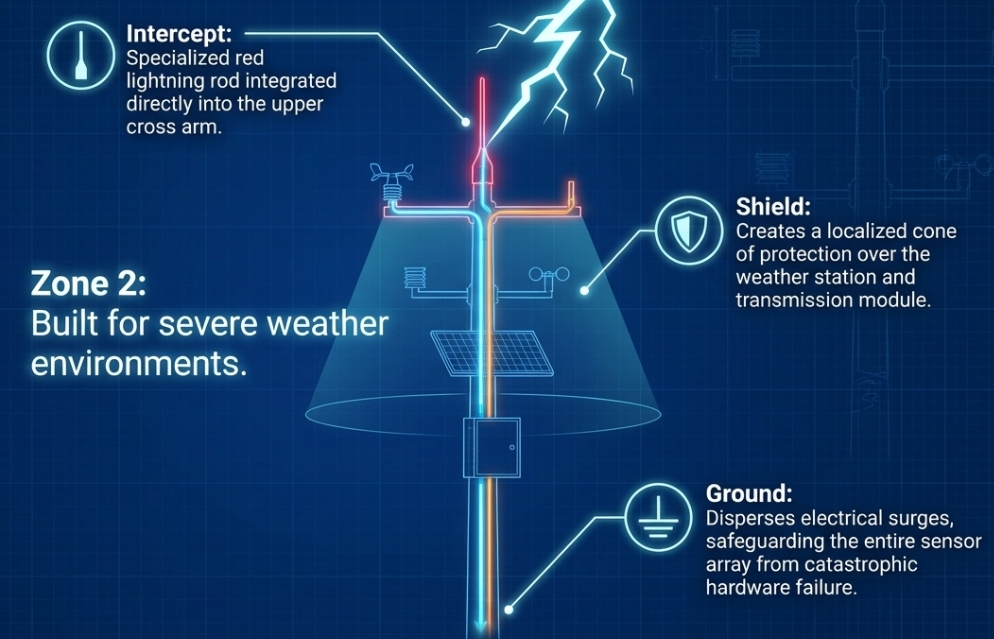
The installation utilizes a versatile, tool-friendly clamp-based method for mounting the solar panels, sensor cross-arms, and the weather station itself. For system longevity, a professional-grade Lightning Rod is integrated at the highest point of the cross-arm. This protects the sensitive ultrasonic sensors and wireless electronics from electrical surges during storm events—a common point of failure in cheaper, ungrounded systems.
Data Interoperability and Software Integration
For developers and system integrators, this hardware is designed to be vendor-agnostic. The wireless module supports data transmission in MQTT (JSON) or HDX formats, ensuring seamless integration into any third-party agricultural management platform or custom API.
For users requiring an out-of-the-box solution, Honde Technology provides proprietary PC and mobile software. This ecosystem allows farm managers to visualize real-time data and historical trends directly from the field via any standard web browser or mobile application.
Architect’s Perspective: Mitigating Deployment Pitfalls
A significant hurdle in deploying precision weather stations is the logistical cost of physical infrastructure. Because the 3-meter standpole is constructed from heavy, standardized steel, international shipping costs can occasionally exceed the value of the pole itself.
As an insider tip, we recommend evaluating the cost-effectiveness of sourcing the standpole locally. If you choose this route, it is vital to match the specific screw-fix dimensions and clamp diameters used by Honde Technology to ensure the solar panels and sensor cross-arms mount securely. We provide detailed technical drawings to facilitate this local sourcing strategy.
Conclusion and Commercial Call-to-Action
Honde Technology Co., Ltd. provides a rugged, high-precision solution for modern agriculture that bridges the gap between atmospheric monitoring and soil science. By integrating 11-parameter weather sensing with multi-factor soil analysis, growers can make data-driven decisions that increase efficiency and sustainability.
Technical Deployment Checklist
Before finalizing your system configuration, use this checklist to ensure site readiness:
Signal Audit: Confirm 4G or Wi-Fi signal strength at the specific installation coordinates.
Parameter Selection: Define the 11 custom parameters for the compact station (e.g., adding rainfall or PM2.5).
Soil Matrix Mapping: Verify the soil sensor types (pH, EC, O2, etc.) required for your specific crop variety.
Power Budgeting: Evaluate solar orientation and potential shading to ensure the automatic charging controller maintains battery levels year-round.
Logistics Planning: Determine if local standpole sourcing is required to optimize project ROI.
Post time: Apr-09-2026