

Have you ever wondered where the precise daily weather forecast data comes from? In the desolate mountains, remote oceans and even the distant Antarctica, who is silently recording the breath of the wind and the steps of the rain? The answers are hidden in one unremarkable white box after another – they are the “unsung heroes” of modern meteorological observation: Automatic Weather stations (AWS).
What is an automatic weather station?
Imagine a weather recorder who works all year round without a break, regardless of wind or rain. The automatic weather station is precisely such an existence: it is an intelligent system integrating sensors, data acquisition and communication devices, capable of automatically and continuously collecting key meteorological data such as temperature, humidity, air pressure, wind speed and direction, precipitation and sunshine, and transmitting them in real time to the data center through wireless networks.
Unlike traditional weather stations that rely on manual timed recording, the core advantages of automatic weather stations lie in their “unmanned operation” and “real-time performance”. Whether it is the alpine snowfield at midnight or the coastal areas ravaged by typhoons, it can work stably, filling the spatiotemporal gap that is difficult for humans to continuously observe.
Unveiling Its “Five Internal Organs and Six Viscera
A typical automatic weather station is like a technological guardian with acute senses:
Sensory system (sensor array) : High-precision sensors are its “senses”. Temperature/humidity sensors are usually placed in radiation-proof louvered boxes. The anemometer stands high up. The rain gauge accurately captures every millimeter of precipitation. The pressure sensor is waiting in the box. Some advanced sites are also equipped with visibility meters, snow depth sensors, soil temperature and humidity probes, etc.
The brain and Heart (Data Acquisition and Power Supply) : The data collector is the core “brain”, responsible for processing sensor signals and storing data. In areas where the power grid cannot reach, solar panels, in combination with battery packs, form its self-sufficient “heart power supply system”.
The nervous system (communication unit) : Data collected via GPRS/4G/5G, satellite or radio is sent in real time to the central server of the meteorological department like neural signals, becoming the capillaries of the global meteorological data network.
How does it quietly support modern society?
The value of an automatic weather station goes far beyond the number in generating weather forecasts:
Precision agriculture: Micro weather stations in farmlands monitor temperature and humidity in real time. Combined with soil data, they guide irrigation and fertilization, helping to save water and increase efficiency, and deal with sudden frost or hot and dry winds.
2. Frontline of disaster prevention and mitigation: Automatic stations deployed in mountainous areas and along rivers are the “sharpshooters” of mountain flood and debris flow early warning systems. They sent back data in the first instance during the rainstorm, buying precious time for the evacuation of people.
3. Empowering green Energy: Wind farms and photovoltaic power stations rely on meteorological data to optimize their operation. The precise prediction of wind speed and irradiance is directly related to power grid dispatching and energy efficiency.
4. Guarding the lifeline: Automatic stations around the airport closely monitor low-altitude wind shear and runway icing. The stations along the expressway can issue fog and ice warnings in a timely manner.
5. The Eye of Scientific Research: From the Qinghai-Xizang Plateau to tropical rainforests, scientific research automatic stations have been monitoring the fragile changes in the Earth’s ecosystem for a long time, accumulating irreplaceable first-hand data for climate change research.
The future is here: smarter and more integrated
With the penetration of Internet of Things and artificial intelligence technologies, automatic weather stations are becoming increasingly “intelligent”. Edge computing enables sites to initially analyze data and only transmit critical information. AI algorithms help identify and correct sensor errors; High-density and low-cost micro-meteorological sensor networks are deeply integrated with smart cities. In the future, there may be a “meteorological micro-station” every few blocks, providing us with “ultra-refined” weather services at the hundred-meter and minut-level levels.
Conclusion
The next time you check the weather forecast on your phone or receive a timely disaster warning, you might as well think of those “weather sentinels” all over the world. They stand in silence, using data as their language, continuously telling the story of the Earth’s atmosphere and silently safeguarding our production and life. The automatic weather station, this seemingly low-key technological device, is a vivid footnote to how humans use technology to understand nature and coexist harmoniously with it.
Extended thinking: When meteorological data has become so readily available, how can we better utilize it to address the frequent challenges of extreme weather? Perhaps, everyone could become a part of this intelligent observation network.
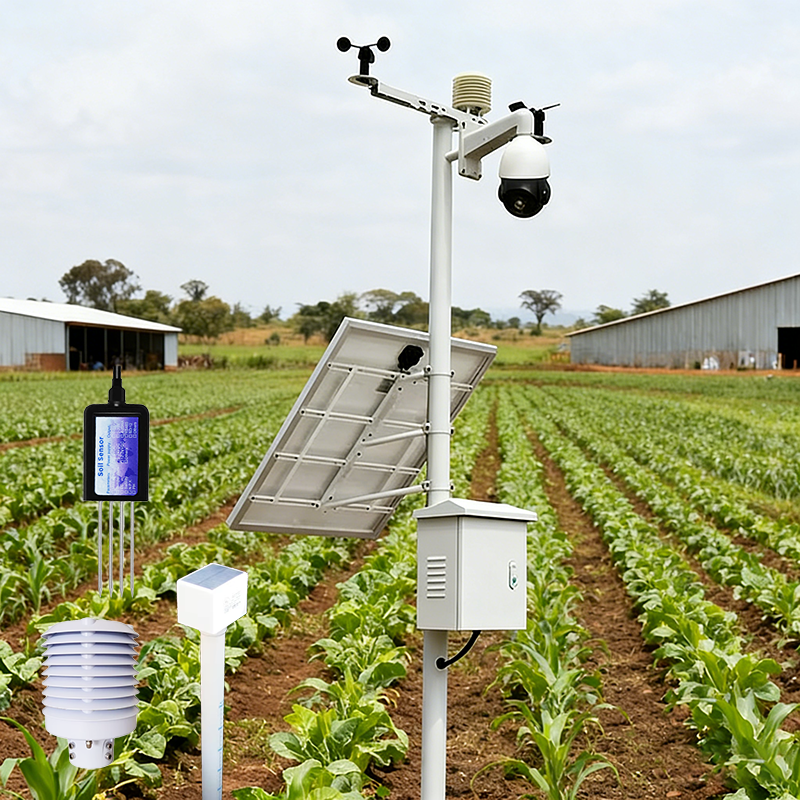
For more weather station information, please contact Honde Technology Co., LTD.
WhatsApp: +86-15210548582
Email: info@hondetech.com
Company website: www.hondetechco.com
Post time: Dec-26-2025