

Introduction: Accurate solar radiation data plays a key role.
To correctly measure the amount of solar radiation needed for different reasons such as renewable energy, weather forecasting, and atmospheric research. To get reliable results, we need to take out different parts of the sunlight that gets to the ground. The article talks about a complete system designed for precise, automated tracking and measuring of the sun. It gives all kinds of information by measuring direct and scattered sunshine separately, which is useful for people who study this and use it.
1. Meet the Sun Tracker System
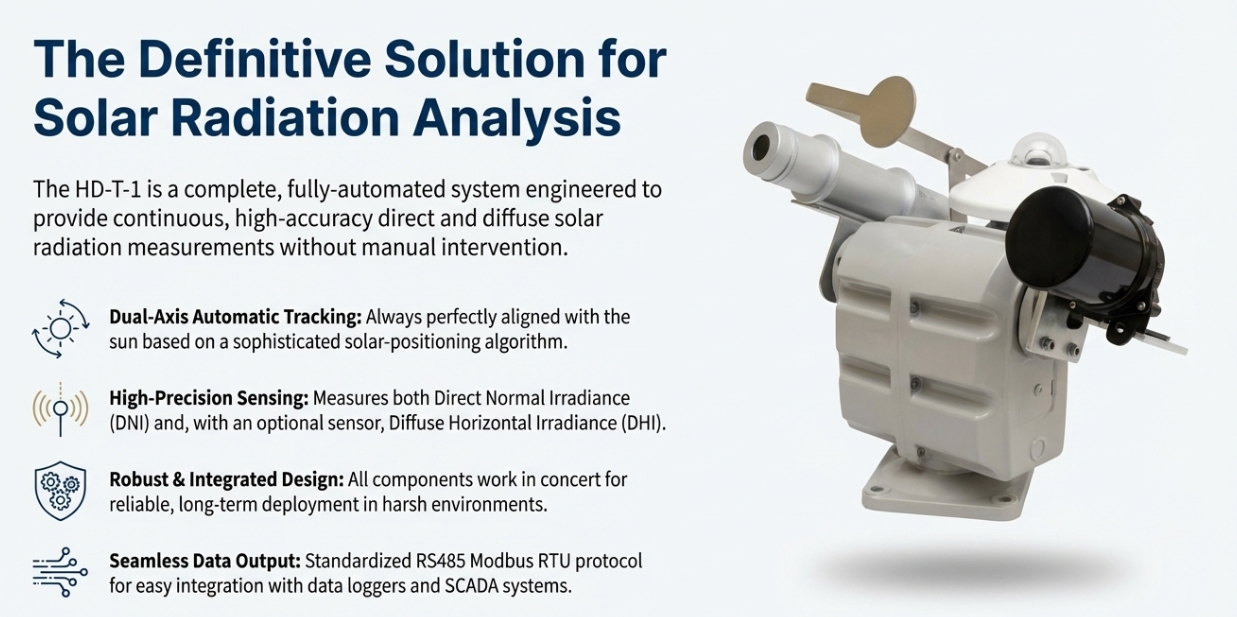
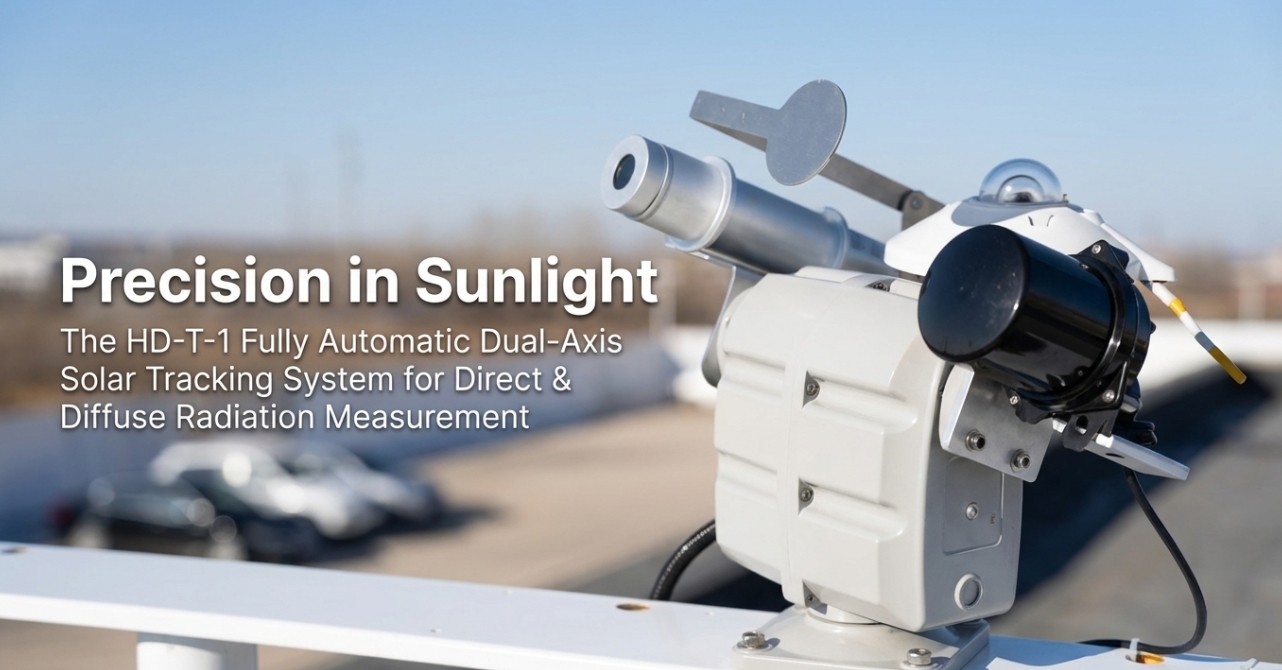
A full-automatic dual-axis tracker equipped with sensors that can detect both direct and scattered sunlight.
2. Core Functionality: How does it work?
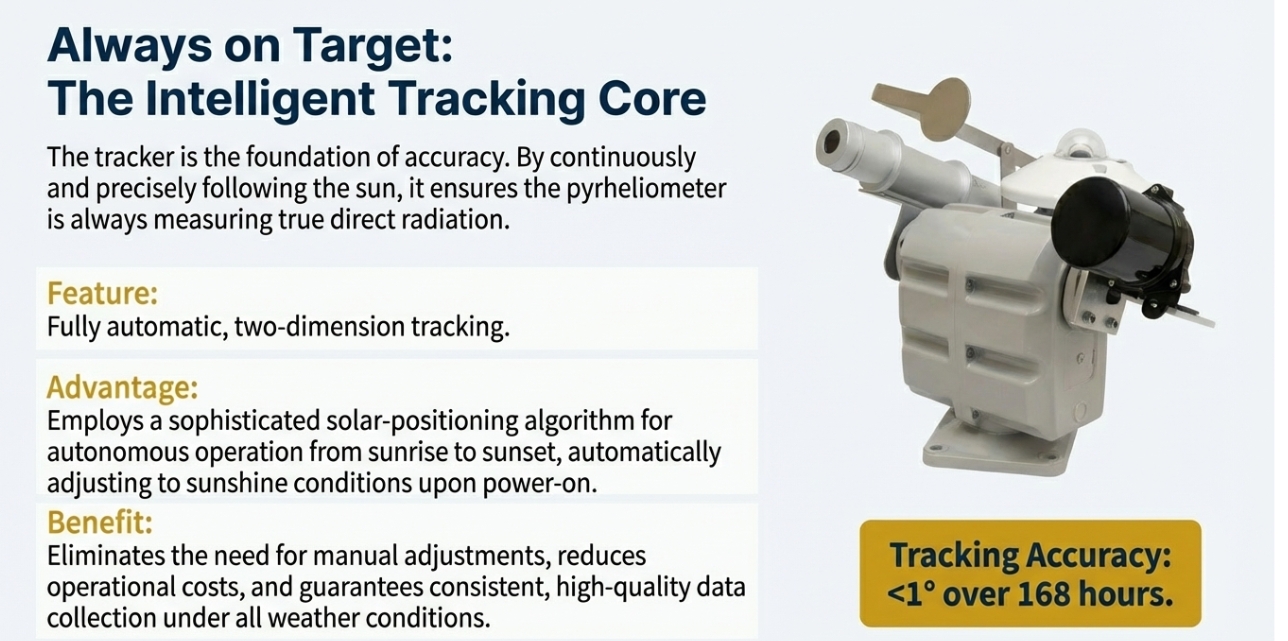
The system works on a simple but powerful concept: the tracker will move itself so that it always points towards where the sun is throughout the day. Such precise tracking is necessary for the direct radiation meter, or light tube, to accurately gauge direct sunlight. Direct radiation is the radiation that comes from the sun’s surface plus a tiny ring of the sky around it. The sensor has a thermopile sensing element that gets this radiation and makes an electromotive force, or voltage, that goes up when the solar radiation gets stronger.
3. Main features and parts
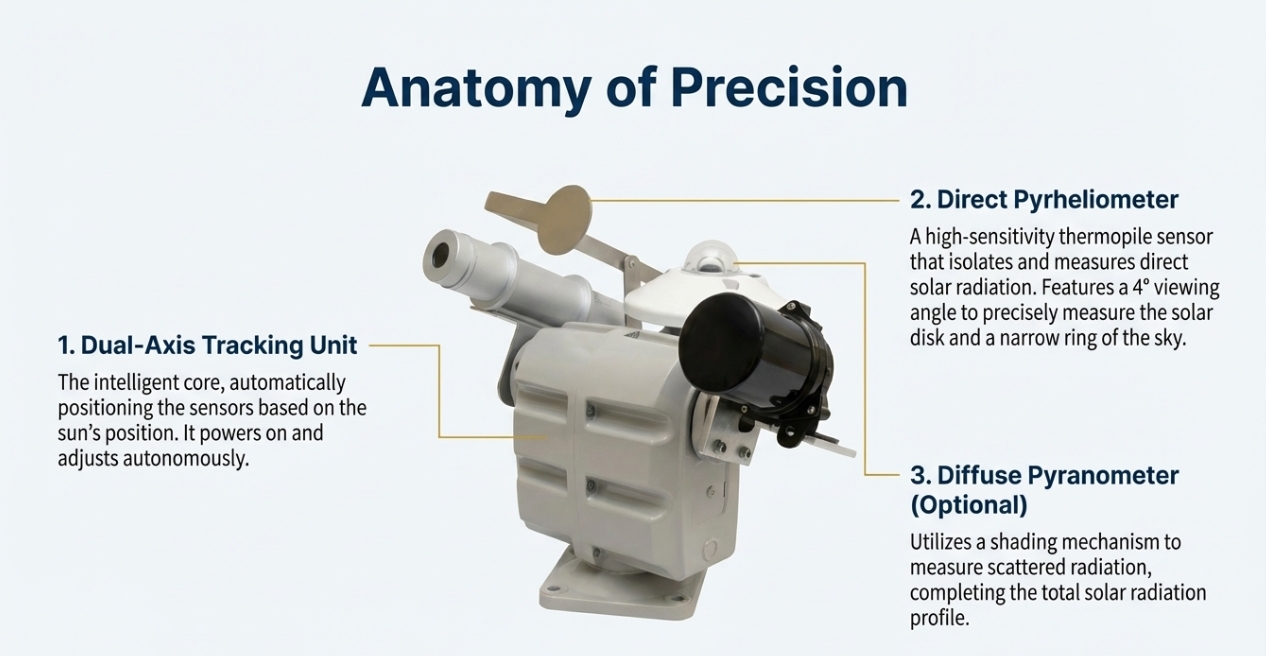
3.1 High precision automatic tracking
It has a 2D, dual-axis tracking system which tracks the sun as it moves across the sky. It will automatically adjust its position according to the amount of sunshine available so that the direct radiation sensor is always directly facing the sun. Advanced control systems ensure that the tracking error stays within ±1° for accurate direct radiation data.
3.2 Advanced Radiation Sensors
System gets all radiation info using two special sensors. Direct radiation meter is inside a light tube having 7 inner light bars to avoid reflections, with a JGS 3 quartz glass window letting radiation with wavelengths between 0.27 and 3.2 µm pass through. An internal desiccant is included to stop internal condensation from damaging the readings. There is also a separate scattered radiation sensor which has a shading part that stops the sun’s direct rays from reaching it so that it can only measure the scattered, or diffuse, radiation coming from the rest of the sky.
3.3. Integrated and sturdy design
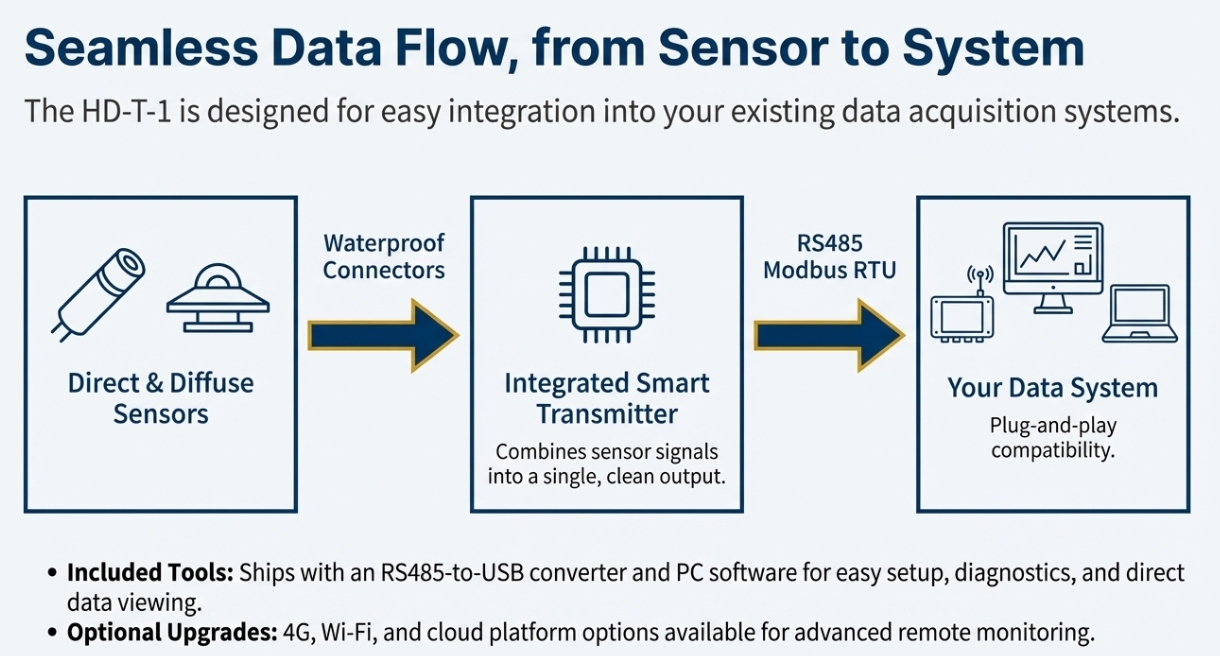
Direct and scattered radiation sensor is all in one smart transmitter, so everything is simple. It takes the natural analog signals from the sensors and converts them into one type of digital output through this clever transmitter. The system gives out just one RS485 output (Modbus protocol) along a 20-meter-long wire, making it simpler to gather and link the info. It has waterproof connectors that work well over a broad temperature range (-45℃ to +45℃), so it can keep working even when things get rough.
3.4 Simplified data connectivity and access
Data access is simple and easy to use. The system comes with an RS485 to USB converter, which makes it easy to connect to a PC. Software that connects Modbus to show real-time data on direct and scattered radiation. If you want remote monitoring for your app, the system can have additional parts known as wireless modules, including GPS, 4G, and Wi-Fi. They allow you to view the information from afar through a website or phone app.
4. Technical Specifications at a Glance
| Parameter | Value |
| Measuring Range | 0~2000W/m² |
| Tracking Accuracy | ±1° |
| Accuracy of measurement | <5% (working table) <2% (standard table) |
| Signal Output | RS485 (Modbus Protocol) |
| Power Supply | DC12V |
| Working Environment | -45℃~+45℃ |
| Time Constant | ≤15S (99%) |
| Annual Stability | ±1% |
5. Primary Applications
It’s a good system with high precision that covers all kinds of info, so it can handle many hard tasks well.
Solar energy research: Evaluating the performance and efficiency of photovoltaic power plants.
Meteorology and Climatology: To provide essential info for predicting the weather and simulating climate change.
Atmospheric Science: A thorough examination of what the atmosphere is made up of and how it moves.
Materials and Agriculture Science: Assessing the impact of sunlight on materials and assisting crops in growing better.
6. Installation and Maintenance Essentials
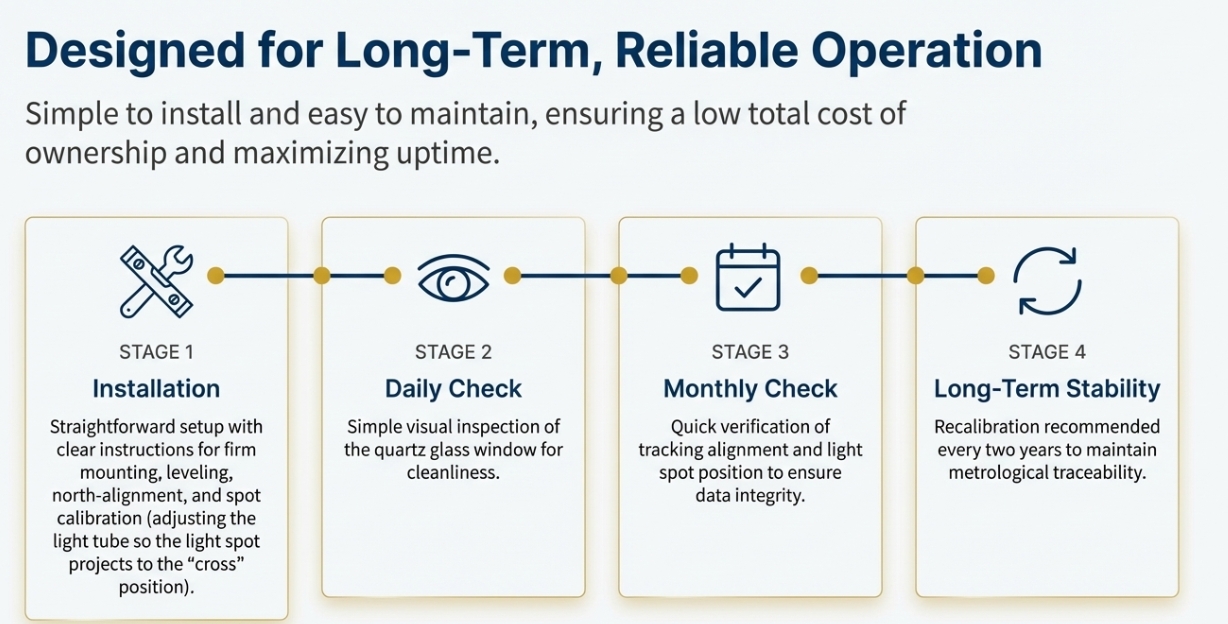
To get the best results, put the device somewhere there aren’t any buildings or trees that might block the sensor’s view with their shadows. Stand must be firm and even. It is a precise tool, so treat it with care. Routine maintenance is required to preserve the integrity of the data; clean the quartz glass window on the light tube from dust or water once a month and check the tracking alignment every month to make sure the image of the sun is centered.
Conclusion: Your answer for solar data.
This system gets rid of usual mistakes by taking away the difficult task of observing how the sun moves through the sky and combining the amount of direct and indirect sunlight into one large group. It provides the key information that scientists require to verify whether solar power plants function properly, produce better weather images, and gain a deeper understanding of the atmosphere surrounding us. Robust design, accurate engineering, easy data out – that’s what people depend on for good solar info.
Want to know more about how this system could work for your own data gathering? Contact us for more details.
For more sensor information, please contact Honde Technology Co., LTD.
WhatsApp: +86-15210548582
Email: info@hondetech.com
Company website: www.hondetechco.com
Post time: Dec-30-2025