

In the global marketplace, water quality monitoring equipment is becoming a hot procurement item. Among these, the COD (Chemical Oxygen Demand) sensor is a critical tool for assessing organic water pollution and is frequently searched for by buyers worldwide. Popular keywords include:“COD sensor water quality” 、”Online COD monitor”、”Industrial COD sensor”、”Portable COD detector”、”Wastewater COD analyzer”Behind these searches lies the urgent need from manufacturing, environmental protection, and water management sectors for efficient water quality management. This article will analyze how to choose the right COD sensor, combining product cases and application scenarios.
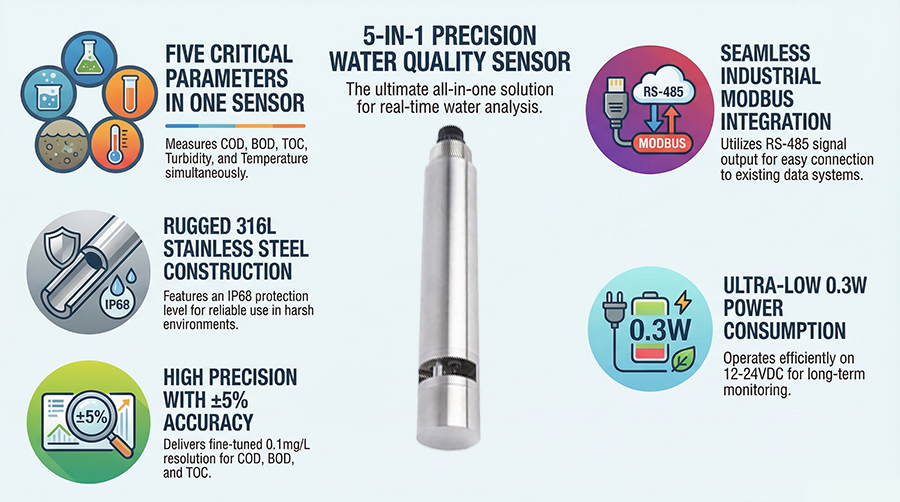
1.Smart COD Sensor in Food Wastewater Treatment
A Southeast Asian food processing plant generated high-organic wastewater daily, requiring real-time COD monitoring to comply with discharge standards. Traditional lab testing took over 24 hours, causing control delays. After installing an online UV-method COD sensor, the plant achieved:
Real-time Data Synchronization: COD values updated every 5 minutes with remote monitoring via a cloud platform.
Automatic Alert System: Triggers alarms when COD exceeds limits, enabling timely process adjustments.
Cost Reduction: Eliminated manual testing fees and avoided non-compliance penalties.
Result: Wastewater treatment efficiency improved by 30%, and annual compliance costs decreased by 25%.
2.Why International Buyers Prefer It?
Fast & Accurate: Utilizes UV absorption method, providing measurements in just 10 seconds with <5% error.
Strong Anti-Interference: Corrosion-resistant materials suitable for industrial wastewater, rivers, seawater, and various environments.
Smart IoT Integration: Supports 4G/Bluetooth data transmission, compatible with PLC and cloud platforms
Low-Maintenance Design: Self-cleaning electrodes, IP68 waterproof rating, ideal for long-term outdoor use.
Multi-Scenario Adaptability: Offers lab-portable, pipeline-installed, buoy-mounted, and other models.
3.Application Scenarios & Industry Solutions
| Industry | Scenario | Solution |
|---|---|---|
| Environmental Monitoring | Real-time river/lake water quality monitoring | Solar-powered buoy sensors with remote data reporting |
| Industrial Wastewater | Discharge from electroplating, pharmaceutical, textile plants | Pipeline-integrated sensors linked to control systems |
| Aquaculture | Organic waste monitoring in breeding ponds | Portable sensors with mobile app trend analysis |
| Laboratory Research | Water sample analysis | High-precision portable devices with one-click reporting |
4.International Market Trends & Purchasing Tips
As global environmental regulations tighten (e.g., EU WFD standards), demand for COD sensors continues to grow. Buyers should consider:
Certifications: Compliance with CE, RoHS standards.
Localized Services: Whether suppliers offer technical support and spare parts inventory.
Data Compliance: Ability to integrate with local regulatory platforms.
5.Conclusion: Technology Enables a Sustainable Future
Water quality COD sensors have evolved from simple tools into core components of smart environmental protection. Whether for industrial upgrading or ecological conservation, accurate and reliable data is reshaping decision-making processes.
Tags:
#Water Quality Monitoring #COD Sensor #Smart Water #Wastewater Treatment #IoT
Engagement Question:
What challenges have you faced in water quality monitoring? Share your needs in to receive an industry solutions guide!
For more water sensor information,
please contact Honde Technology Co., LTD.
WhatsApp: +86-15210548582
Email: info@hondetech.com
Company website: www.hondetechco.com
Post time: Feb-03-2026