

In 2026, the essence of agricultural competition has evolved into a “data competition.” With increasing global climate volatility, the era of relying on experience-based farming is fading. As a leading supplier in the industry, Honde Technology Co., Ltd. is committed to helping farmers transition from “relying on the weather” to “data-driven decision-making” through high-precision agricultural weather monitoring systems.
This article will provide an in-depth analysis of the technological trends, key selection points, and practical application value of agricultural weather stations in 2026.
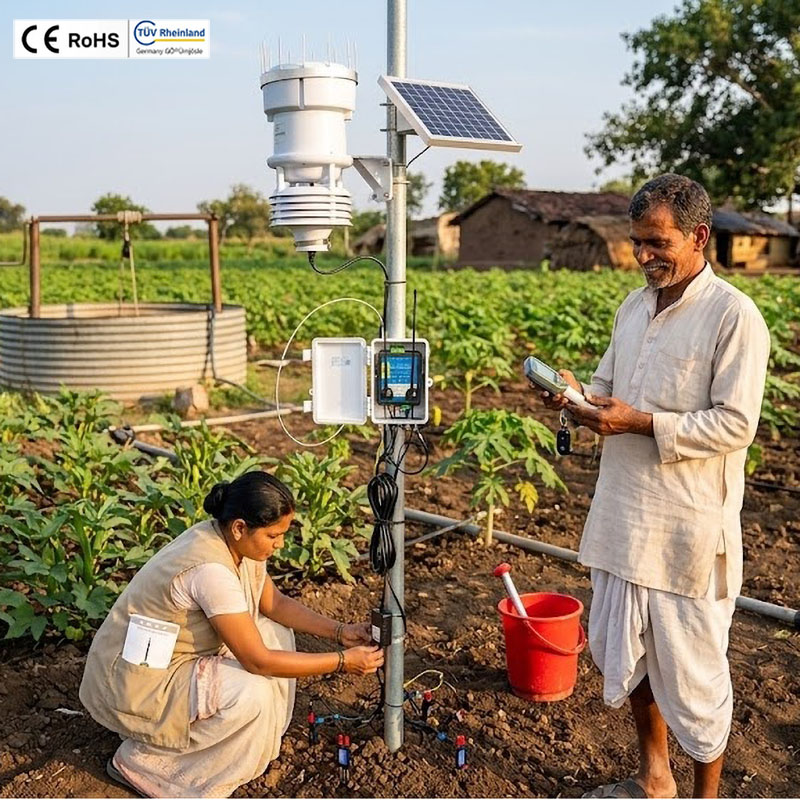
Three Core Trends in Agricultural Weather Stations in 2026
High-Density Internet of Things (IoT) Integration
Agricultural weather stations in 2026 have completely broken through the limitations of “single-point monitoring.” Through 4G, Wi-Fi, LoRa, and LoRaWAN, weather stations can seamlessly integrate with farms’ automatic irrigation systems and drone spraying systems. This “end-to-end” integration allows meteorological data to be directly converted into production instructions, significantly reducing manual intervention.
Miniaturization and Modularization of Equipment
To adapt to the needs of fragmented farmland and facility agriculture (such as smart greenhouses), miniature weather stations have become mainstream. Honde Technology’s modular weather stations support flexible sensor plug-and-play functionality, allowing users to customize monitoring dimensions according to crop needs (such as humidity monitoring in vineyards or wind speed requirements in orchards).
Precision of Extreme Weather Warnings
Affected by global climate change, farms have reached unprecedented levels of demand for disaster prevention and mitigation. The 2026 system emphasizes “minute-level” short-term forecasting capabilities, providing longer emergency response times for hail, frost, or heavy precipitation, minimizing asset losses.
Agricultural Weather Station Selection Guide: Core Configuration and Evaluation Indicators
Choosing a high-performance agricultural weather system requires focusing on the following three dimensions:
Core Sensor Matrix
A professional 2026 weather station should possess the following high-precision sensors:
Communication and Endurance
Practical Value: How Does Precise Data Translate into Real Economic Benefits?
Why Choose Honde Technology Co., Ltd.?
As a leading global provider of agricultural environmental monitoring solutions, Honde Technology offers not only hardware but also complete growth solutions:
Frequently Asked Questions (FAQ)
Consult us now for your precise growth plan
If you’re looking to boost farm output and mitigate risk in 2026, contact our team of experts:
Website: www.hondetechco.com
Email: info@hondetech.com
Post time: Apr-27-2026