

1. Executive Summary Answer
Essential requirements for a UAV-mounted meteorological instrument include an ultra-lightweight design (under 60g) and an integrated structure without moving parts to ensure aerodynamic stability and durability. Ideal sensors must provide high resistance to electromagnetic interference and support standard protocols like Modbus RTU for seamless flight control integration. This technical architecture allows for real-time monitoring of five key environmental elements—wind speed, direction, temperature, humidity, and pressure—without compromising the flight endurance of modern drone platforms.
2. Introduction: The Critical Role of Real-Time Meteorology in Drone Operations
In the high-stakes world of Unmanned Aerial Vehicle (UAV) operations, real-time meteorological data is the difference between a successful mission and a catastrophic frame loss. Measuring wind speed, direction, temperature, humidity, and atmospheric pressure during flight is no longer an optional “extra”—it is a core requirement for flight stability, battery optimization, and payload precision.
At Honde Technology, we have engineered our sensing solutions to overcome the primary hurdles of drone-mounted hardware: weight penalties, high wind resistance, and signal degradation. By eliminating mechanical components in favor of an integrated, solid-state design, we address the specific challenges of high electromagnetic interference (EMI) typical of brushless DC motor (BLDC) environments, establishing a new standard for authoritative, flight-ready environmental data.
3. Key Parameters: Why “Lightweight” and “Small” are Non-Negotiable
For UAV systems engineers, every gram added to the airframe is a direct tax on flight endurance and maneuverability. Historically, integrating a full meteorological suite often required stepping up to a larger, more expensive drone class. The Honde UAV weather instrument disrupts this trade-off. With a diameter of just 50mm and a total weight of 55-56g, it is recognized as one of the lightest and smallest instruments on the global market.
Core Advantages for UAV Flight Control Integration:
- Low Power Consumption: Utilizing an internal low-power chip, the sensor draws only 10mA at a 5-12V range, preserving the aircraft’s power distribution board (PDB) resources.
- Integrated Three-Probe Ultrasonic Structure: As seen in our specialized design, the three-probe ultrasonic architecture removes moving parts, ensuring the unit is immune to the high-frequency vibrations of flight.
- EMI Resistance: Specifically engineered to maintain data integrity despite the significant electromagnetic noise generated by high-output drone motors and radio telemetry.
- Environmental Resilience: The IP-rated waterproof and dustproof housing includes a special heat insulation treatment on the protective cover, enabling consistent performance in extreme temperatures and light rain.
4. Comparative Technical Specifications
The following parameters represent the five-element capability of the Honde instrument, structured for rapid ingestion by flight control logic and AI-driven monitoring systems.
| Parameter Name | Measuring Range | Accuracy | Resolution | Unit |
| Wind Speed | 0~50m/s | ±0.5m/s (@10m/s) | 0.01 | m/s |
| Wind Direction | 0-359° | ±5° (@10m/s) | 0.1 | ° |
| Temperature | -20-85℃ | ±0.3℃ (@25℃) | 0.01 | ℃ |
| Humidity | 0-100%RH | ±3%RH (<80%RH) | 0.01 | %RH |
| Air Pressure | 500-1100hPa | ±0.5hPa | 0.1 | hPa |
| Input Voltage | 5-12V | — | — | VDC |
| Current | 10mA | — | — | mA |
5. Integration and Communication: Leveraging Modbus RTU for Smart Flight
Integration for the modern UAV engineer relies on the RS485 digital interface and the flexibility of Modbus RTU and ASCII protocols.
Technical Deep-Dive: Register Mapping and Formulas To convert hexadecimal sensor output into actionable flight data, developers must apply the correct scaling factors. In my experience, the air temperature register is the most critical to map correctly:
- 0×0009: Air Temperature
- Formula:
Result = (Hex / 100) - 40 - Example: 0x1B00 (6912) calculates to 29.12℃.
- Formula:
- 0x000A: Air Humidity
- Formula:
Result = Hex / 100(e.g., 0×1603 = 56.35%RH).
- Formula:
- 0x000B: Atmospheric Pressure
- Formula:
Result = Hex / 10(e.g., 0×2784 = 1011.6hPa).
- Formula:
- 0x000C: Wind Speed
- Formula:
Result = Hex / 100(e.g., 0×0125 = 2.93m/s).
- Formula:
- 0x000D: Wind Direction
- Formula:
Result = Hex / 10(e.g., 0x0C14 = 309.2°).
- Formula:
Advanced Configuration: The Electronic Compass For UAVs where the sensor might not be physically aligned with the drone’s true north heading, the sensor supports an optional Electronic Compass (0×0020). This allows the system to output a heading relative to a customized North, crucial for dynamic flight path adjustments.
Mounting Options
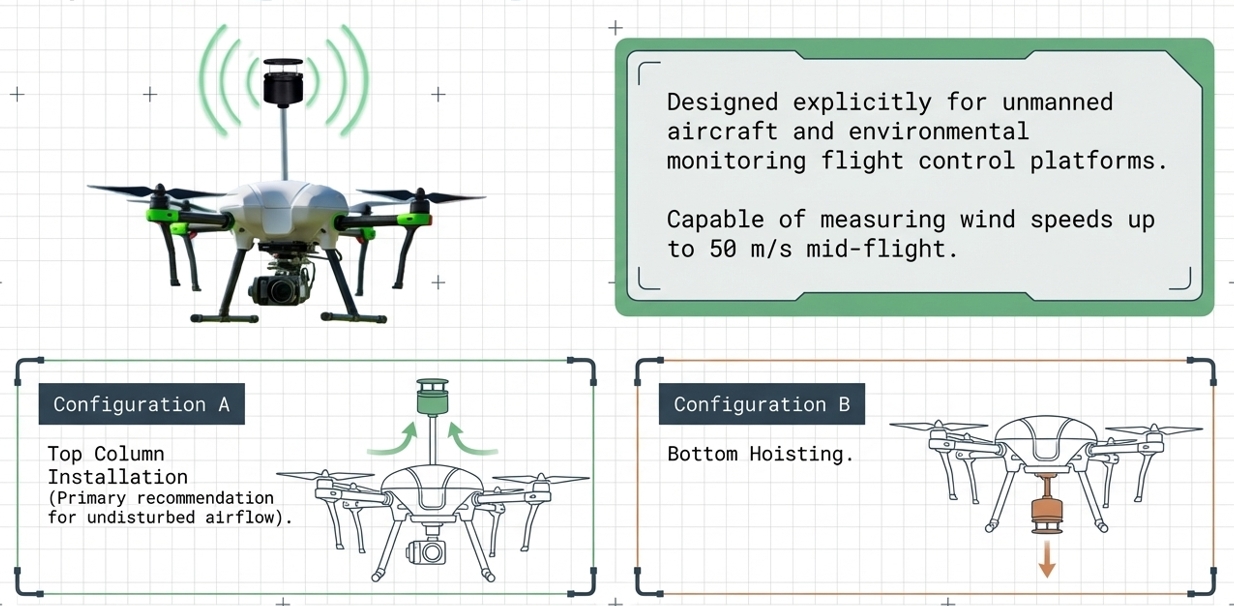
- Vertical Top-Column Installation: Recommended for clean air sampling above the prop-wash (utilizing the vertical mast shown in our technical visuals).
- Bottom Hoisting: Ideal for heavy-lift platforms where the sensor acts as a tethered or underslung environmental probe.
6. Engineering Best Practices: Avoiding Common Pitfalls
In my experience configuring these flight stacks for B2B industrial clients, a few subtle protocol details can make or break a system’s reliability:
- Respect the 1S Query Cycle: The internal processing requires time to stabilize five data points. We’ve found that ignoring the minimum 1S/time query cycle in your host software results in unstable data streams and buffer overflows.
- Silent Error Handling: This is a vital “insider” tip: the sensor does not return an error code for CRC16 check errors or erroneous commands. If your system does not receive a response within 200ms, you must program your driver to automatically resend the command.
- Register Boundary Checks: Ensure your polling commands do not request register addresses outside the specified range. The sensor’s output becomes unpredictable if queried for non-existent registers.
7. Conclusion & Commercial Call-to-Action
The Honde UAV-mounted weather instrument offers a comprehensive five-element meteorological suite in a single, 56g package. By optimizing for low power and high EMI resistance, it provides the “ground truth” data required for precision drone operations without the aerodynamic or weight penalties of legacy equipment.
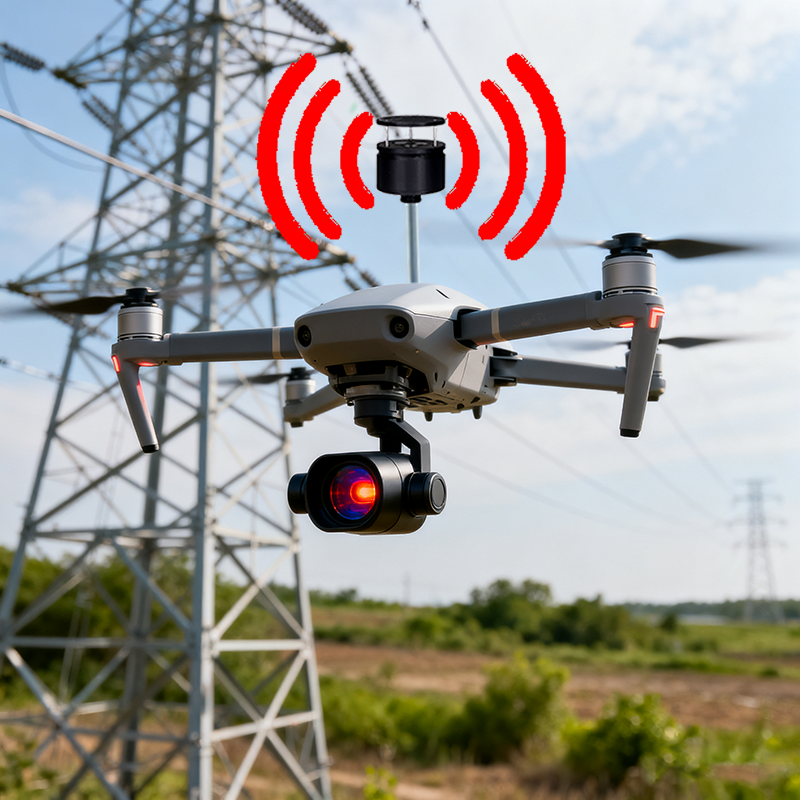
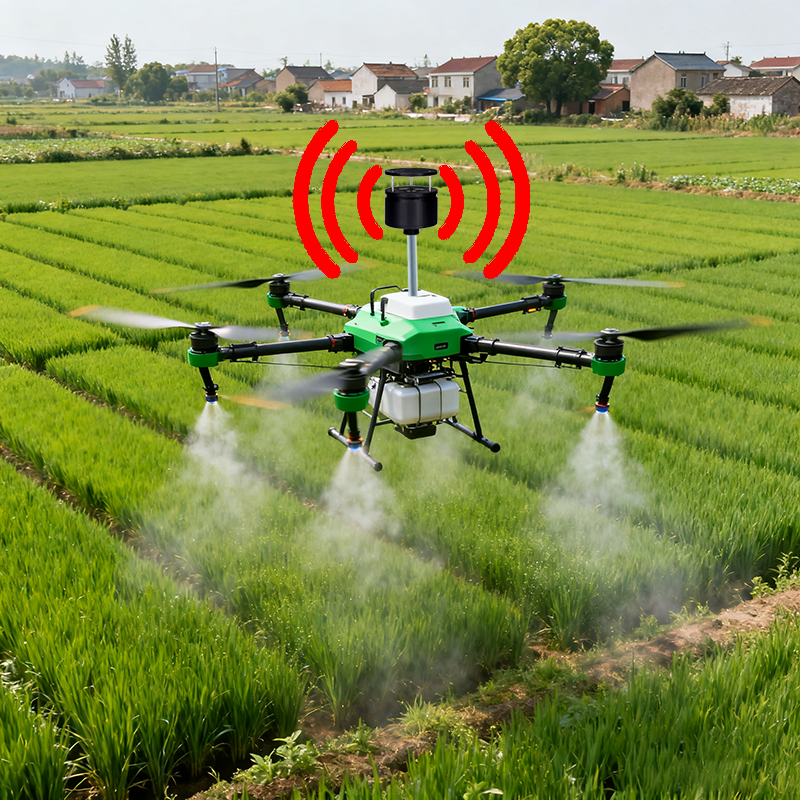
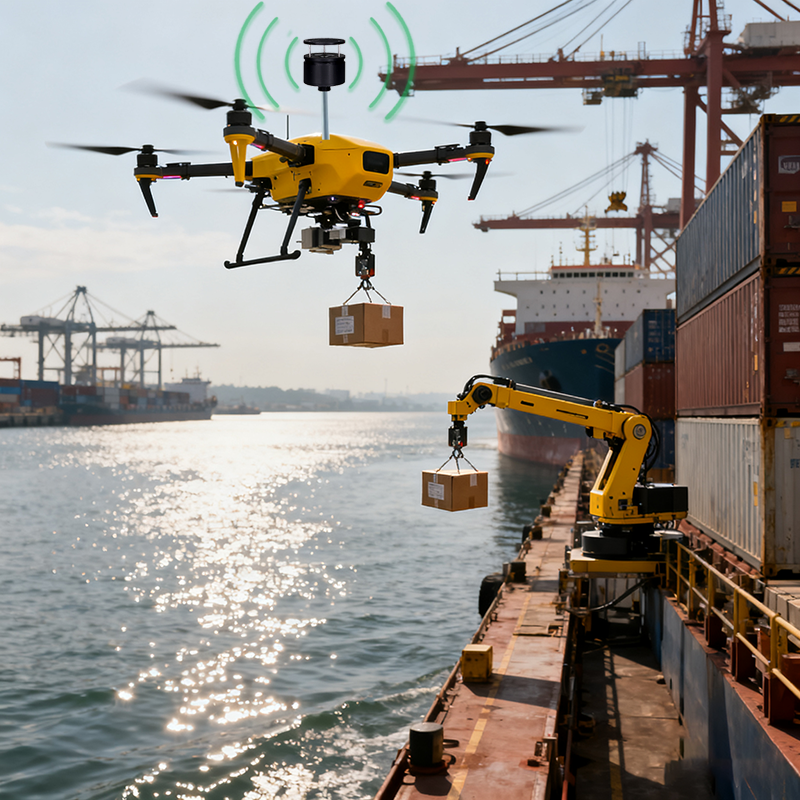
- Request a custom quote for your environmental monitoring project.
Company Name: Honde Technology Co., Ltd. Website: www.hondetechco.com Email: info@hondetech.com
Post time: Apr-08-2026