

1.The Paradigm Shift from Passive Detection to Active Prediction
When gas sensors evolve beyond their traditional role as mere gas leak detectors to become the “nerve endings” of a city’s respiratory system, a silent safety revolution is underway. The London Underground case is just the tip of the iceberg—from industrial plants to smart homes, and from real-time gas monitoring to medical diagnostics, next-generation gas sensing technology is fundamentally reshaping how we coexist with invisible threats. Particularly with the proliferation of smart home air quality sensors and industrial portable gas detectors, public awareness of environmental safety has reached new heights.
2.The Technological Core: Nanomaterials, AI, and the Rise of Specialized Sensors
The breakthrough advancements in the latest gas sensors stem from the fusion of two key technologies:
Diversified Sensing Materials and Devices: Sensor arrays composed of materials like graphene and metal-organic frameworks can simultaneously detect dozens of gases at parts-per-billion (ppb) levels. This has driven the refined development of specialized devices, such as methane sensors for the energy industry, multi-gas detectors for industrial safety, and air quality monitors for consumers. Their sensitivity has improved over a thousandfold compared to traditional sensors.
Edge AI and IoT: Each sensor node is equipped with a micro AI chip capable of localized analysis of gas composition patterns. Through IoT air pollution monitoring networks, data is aggregated, enabling a leap from isolated alarms triggered by portable gas detectors to regionalized real-time gas monitoring and intelligent analytics.
In the London Underground system, a network of 384 nodes—comprising CO2 sensors, VOC sensors, and other specialized sensors—generates an environmental “odor fingerprint” every 2 seconds. The AI model, trained on vast datasets, accurately identifies the unique gas evolution signature characteristic of an incipient fire.
3.Global Application Landscape: A Multi-Scenario Revolution from Homes to Industries
Industrial and Public Safety: Chemical plants in Germany employ multi-gas detector systems integrated with methane sensors and VOC sensors to monitor pipeline micro-leaks, shifting early warning times from minutes to hours in advance.
Smart Homes and Buildings: Smart home air quality sensors are becoming a new standard, providing real-time gas monitoring for CO₂, VOCs, PM2.5, and linking with ventilation systems to ensure healthy indoor environments.
Environmental Monitoring and Personal Protection: Singapore has deployed a network of micro-sensors for IoT air pollution monitoring across the island, while field personnel rely on high-precision portable gas detectors for safety clearance checks.
Agriculture and Energy: Greenhouses in Japan use ethylene sensors to control fruit ripening, and the natural gas industry widely deploys methane sensors for pipeline inspection and leak prevention.
Ethics, Challenges, and the Future: Integration and Intelligence
As real-time gas monitoring networks become increasingly dense—ranging from indoor air quality sensors to city-wide monitoring stations—new challenges emerge regarding data privacy, algorithmic transparency, and device standardization. Over the next five years, gas sensing technology is expected to evolve towards multimodal fusion and predictive networks. Gas leak detectors will no longer merely sound alarms but will also be able to identify leak sources, model dispersion, and provide emergency recommendations. Smart home air quality sensors will deeply integrate with household appliances to automate air purification. Data from portable gas detectors and fixed multi-gas detectors will seamlessly integrate into unified IoT air pollution monitoring cloud platforms, enabling comprehensive safety awareness.
4.Conclusion: Making the Invisible World Visible and Actionable
The advancement of gas sensing technology is, at its core, an extension of human perception. When the sensor network in the London Underground perceived danger 26 minutes early, it did more than prevent an incident; it heralded an era where we can coexist more intelligently with hidden risks. From specialized methane sensors to household air quality monitors, from on-site inspections with portable gas detectors to macro-level IoT air pollution monitoring, this technological network is weaving an invisible yet multi-layered safety barrier, making the imperceptible world of gases visible, understandable, and controllable.
This article has been optimized for search engines with core keywords including: gas leak detector, air quality monitor, indoor air quality sensor, CO2 sensor, VOC sensor, portable gas detector, IoT air pollution monitoring, smart home air quality sensor, multi-gas detector, methane sensor, real-time gas monitoring. It combines breaking news with in-depth analysis, making it suitable for dissemination and inclusion across various platforms.
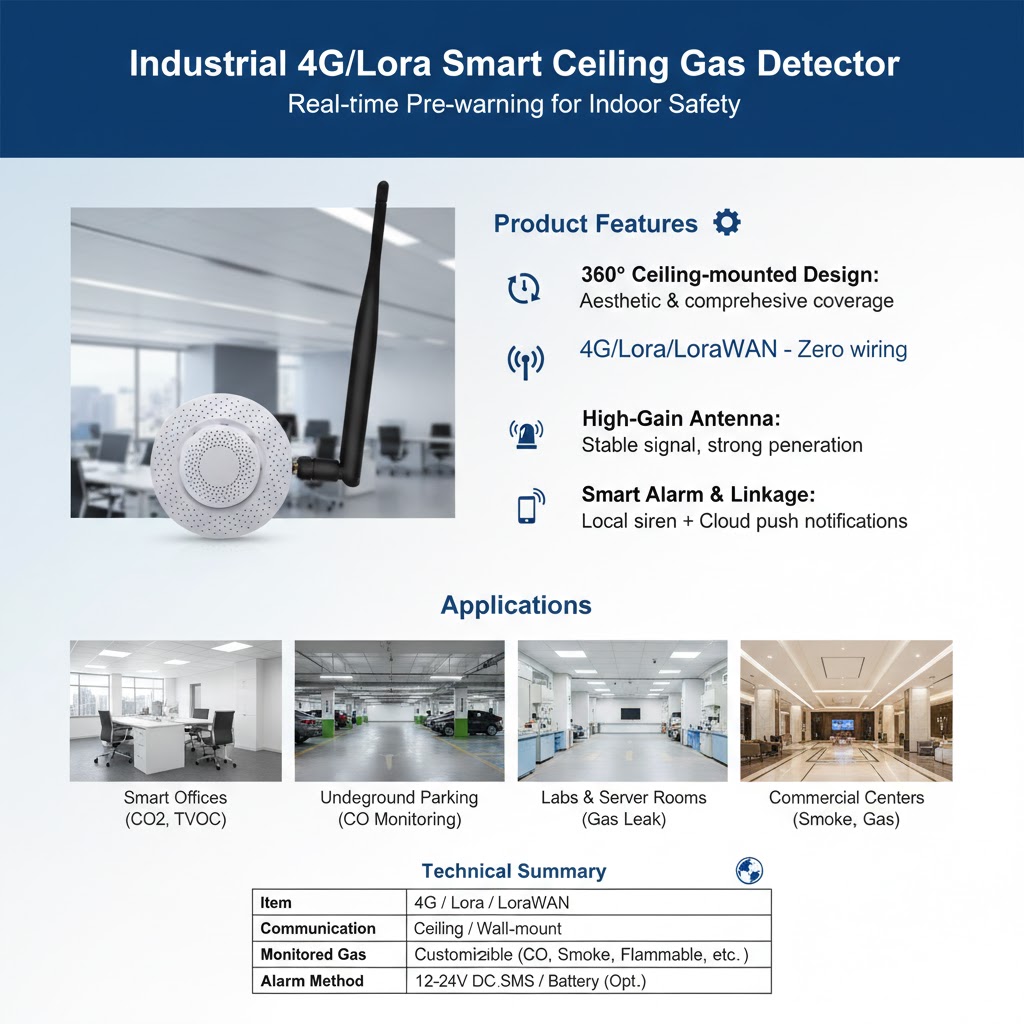
please contact Honde Technology Co., LTD.
WhatsApp: +86-15210548582
Email: info@hondetech.com
Company website: www.hondetechco.com
Post time: Jan-14-2026