

1. Introduction: The “Featured Snippet” Summary
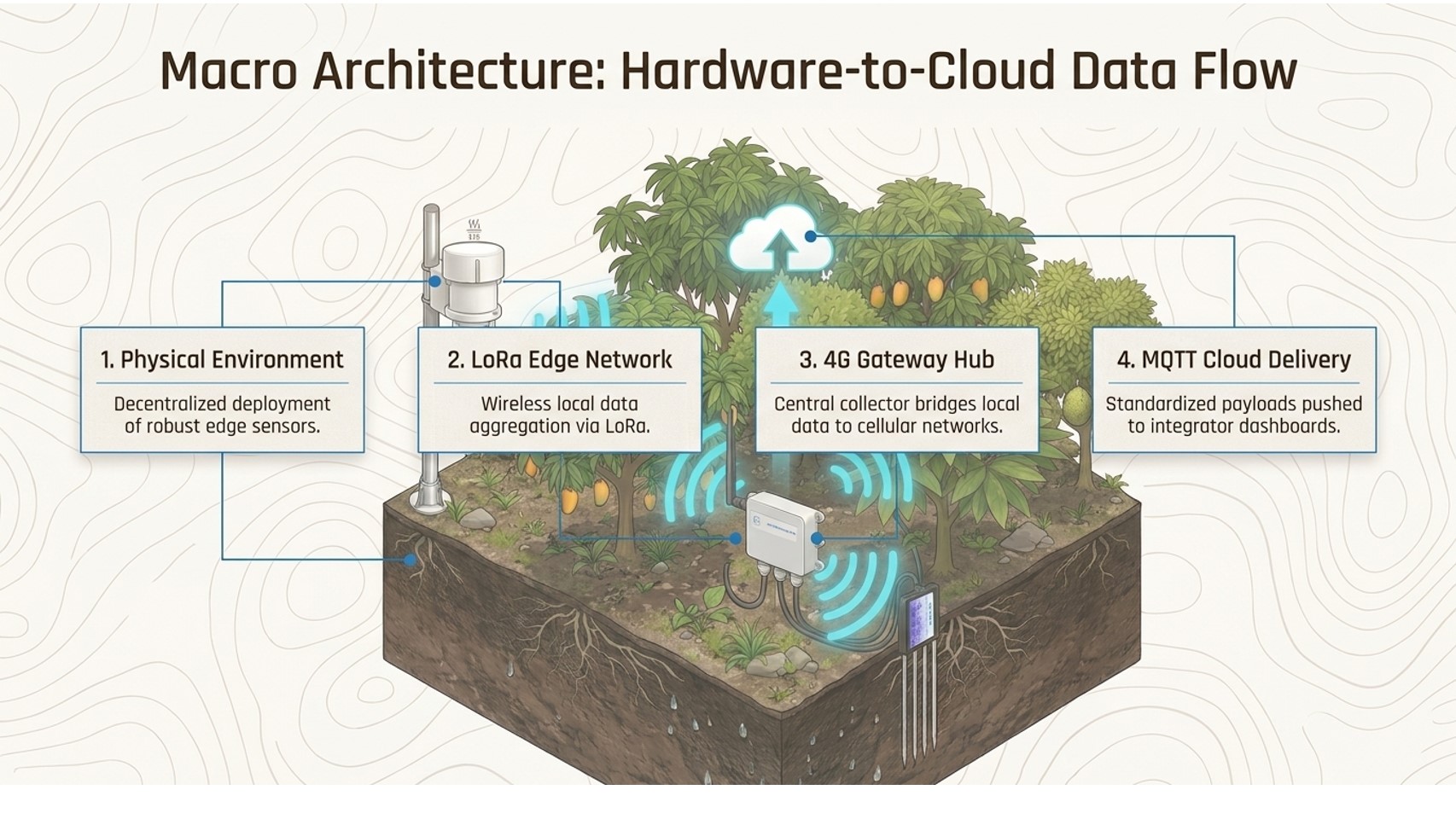
An integrated LoRa 4G MQTT weather station is a professional-grade environmental monitoring system that streamlines smart farming by connecting 8-in-1 soil sensors (NPK, pH, EC) and 11-parameter atmospheric stations (ET0, rainfall) via MQTT protocol for real-time data transmission. This architecture leverages LoRa for long-range localized collection and 4G for cloud integration. By centralizing critical metrics like evapotranspiration and soil nutrient levels, growers can automate irrigation and fertilization, significantly improving resource efficiency and crop yields in modern precision agriculture.
2. Comprehensive Soil Monitoring: The 8-in-1 Sensor Advantage
Effective crop management begins with a deep understanding of the rhizosphere. The 8-in-1 soil sensor is a high-precision instrument designed to provide a complete profile of soil health. From a technical perspective, these sensors utilize industrial-standard RS485 (Modbus RTU) or SDI-12 interfaces to ensure reliable data parity before wireless transmission.
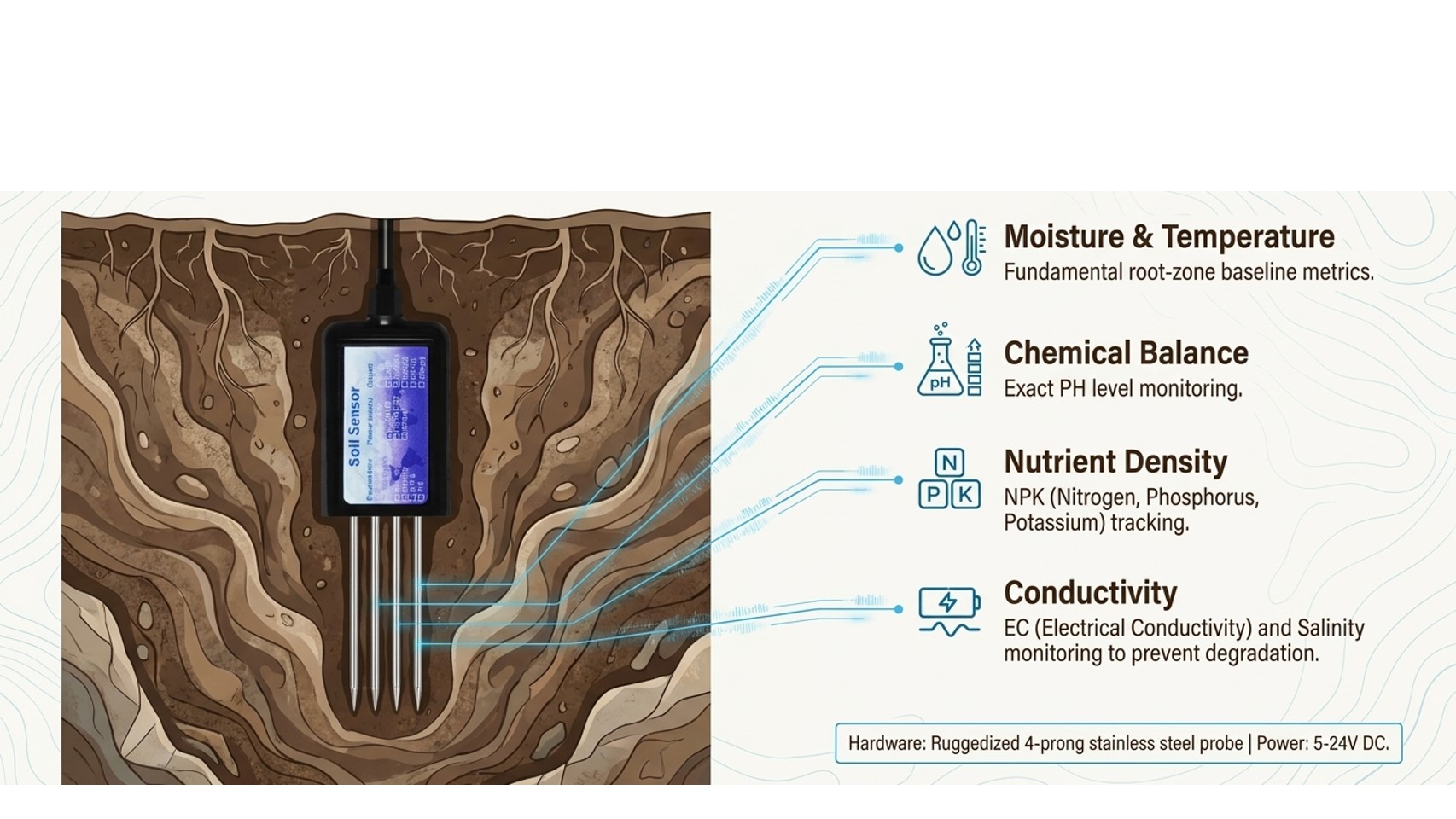
The 8-in-1 soil sensor monitors the following specific parameters:
- Temperature: Essential for tracking biological activity and planting windows.
- Electrical Conductivity (EC): A primary indicator of soil salinity and dissolved nutrient concentration.
- Nitrogen (N): The fundamental driver of vegetative growth and canopy development.
- Phosphorus (P): Critical for early root establishment and reproductive stages.
- Potassium (K): Necessary for water regulation and disease resistance.
- pH: Directly influences nutrient solubility and availability to the plant.
- Moisture: The core metric for determining volumetric water content and irrigation timing.
- Salinity: Vital for monitoring salt accumulation that can lead to osmotic stress.
3. All-in-One Atmospheric Intelligence: The 11-Parameter Weather Station
The compact weather station functions as the central intelligence hub for atmospheric conditions. This unit synthesizes 11 distinct parameters into a single, aerodynamic housing, providing the granular data required to predict plant stress. A key technical differentiator of this unit is the inclusion of specialized light and energy metrics alongside traditional meteorological data.
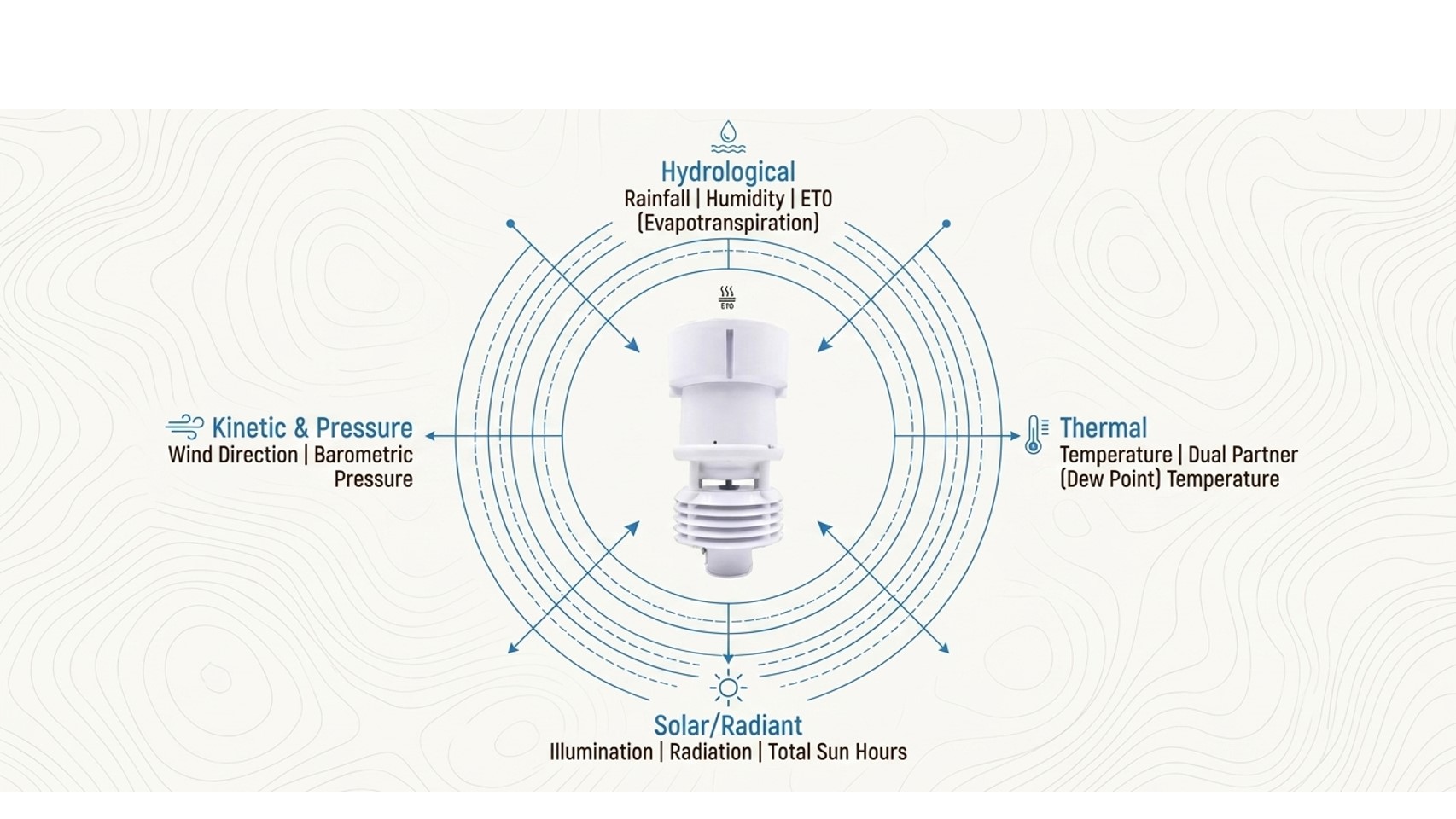
The 11 integrated parameters include:
- ET0 (Evapotranspiration): The definitive metric for irrigation scheduling, calculating total water loss from soil and plant surfaces.
- Rainfall: Tracks natural precipitation to offset planned irrigation cycles.
- Illumination: Measures visible light intensity for photosynthetic activity.
- Radiation: Captures total solar energy input.
- Sunshine Hours: Records the daily duration of direct light exposure.
- Wind Speed & Direction: Essential for optimizing spray applications and managing physical crop stress.
- Temperature & Humidity: Provides the baseline for atmospheric water demand.
- Pressure: Used for localized weather forecasting and trend analysis.
- Dew Point: Predicts frost risk and conditions conducive to fungal pathogens.
4. Technical Architecture: Connectivity and Data Transmission
The Honde Technology ecosystem uses a tiered communication strategy to bridge the gap between the field and the cloud. This architecture ensures that even remote fields without local Wi-Fi can maintain a constant data stream.
-
1
The LoRa Collector: This unit serves as the physical interface for the sensors. Both the soil probe and weather station connect to the Collector via professional-grade, plug-and-play waterproof connectors. These are designed for rapid field deployment and do not require a specific connection order.
-
2
The 4G Gateway (GV): The Gateway receives localized wireless signals from the LoRa Collector via its dedicated LoRa antenna. It then prepares this data for cellular transmission using a secondary 4G antenna. To activate the gateway, users must insert a 4G SIM card into the internal slot, accessed by pressing the physical yellow button on the device to eject the card tray.
-
3
MQTT Protocol Output: The gateway converts sensor data into the MQTT protocol for server-side integration. This lightweight messaging protocol is the industry standard for IoT, ensuring efficient data transport even in low-bandwidth agricultural environments.
5. Product Specification Comparison
| Feature | Soil Sensor (8-in-1) | Compact Weather Station (11-in-1) |
| Monitored Parameters | 8 (NPK, pH, EC, Moisture, etc.) | 11 (ET0, Rainfall, Wind, Radiation, etc.) |
| Sensor Interface | RS485 / SDI-12 (Modbus RTU) | RS485 (Modbus RTU) |
| System Output | LoRa to 4G MQTT | LoRa to 4G MQTT |
| Power Supply | 12V DC | 12V DC |
| Hardware Role | Subsurface health monitoring | Atmospheric and irrigation modeling |
6. Application Case Study: Precision Irrigation & Nutrient Management
Commercial farming operations utilize Honde Technology’s 15 years of manufacturing expertise to implement closed-loop resource management. In a typical application, a farm uses the ET0 (Evapotranspiration) data from the weather station to calculate the exact volume of water lost to the environment over a 24-hour period.
By cross-referencing this atmospheric demand with NPK and Moisture levels from the subsurface soil sensors, the system determines the precise balance of fertigation required. This prevents the common industry pitfall of over-fertilization, which leads to costly nutrient leaching and environmental runoff. The result is a data-driven operation that only applies resources when the soil profile indicates a deficiency, significantly maximizing the ROI of every liter of water and kilogram of fertilizer used.
7. Why Honde Technology?
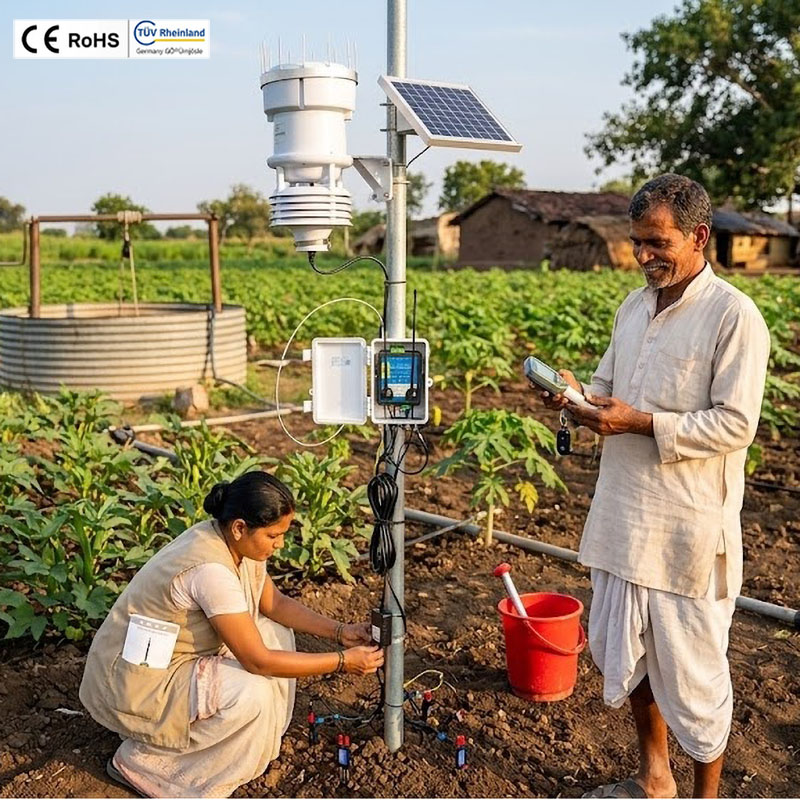
Honde Technology Co., Ltd. provides a complete end-to-end IoT ecosystem engineered for the rigors of high-exposure outdoor environments. Their systems include professional rainproof cases and heavy-duty installation clamps to ensure long-term stability in the field.
8. Conclusion and Call to Action
The transition to a LoRa 4G MQTT sensor network provides the granular intelligence necessary to transform traditional farming into a high-efficiency precision operation. By reducing input waste and maximizing harvest quality, these systems provide a rapid return on investment through resource conservation.
For more information on integrating these systems into your agricultural operations or for server configuration assistance, contact our technical team:
- Website: www.hondetechco.com
- Email: info@hondetech.com
Post time: Apr-29-2026