

1. Introduction: The Critical Role of Solar Radiation Measurement in India
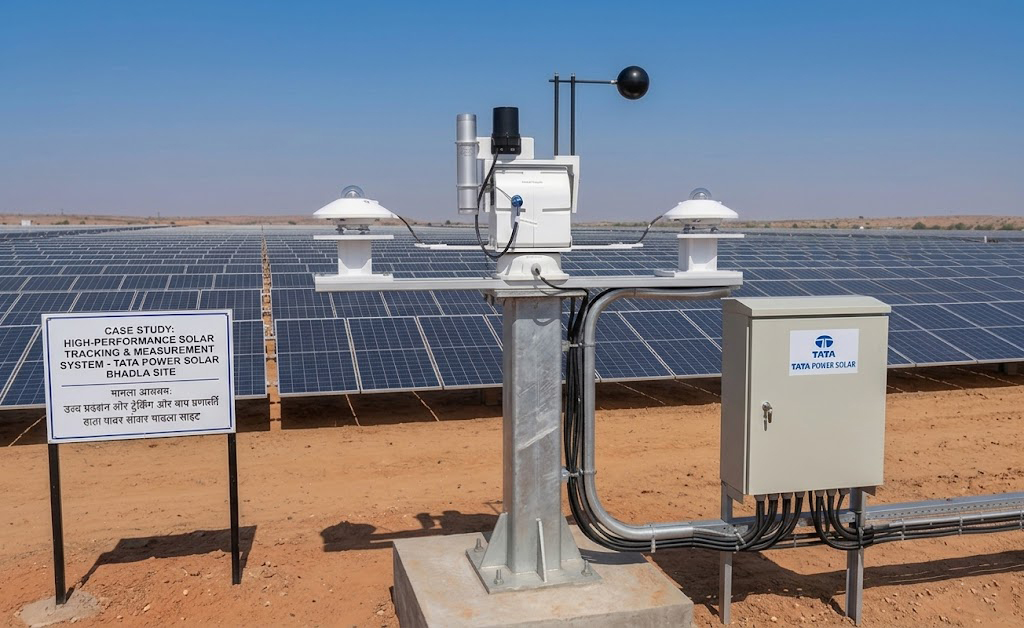
To secure high-yield solar projects in India, deploying an automatic solar tracker featuring dual-mode (GPS + Sensor) tracking and ISO 9060-compliant direct/diffuse sensors is essential for maximizing ROI and data accuracy. Honde Technology’s integrated system provides the extreme precision required for harsh climate monitoring, ensuring sensors remain perfectly perpendicular to the sun. This high-fidelity data is the foundation for optimizing photovoltaic efficiency and bankability in large-scale utility power plants and agricultural research.
2. Why High-Precision Tracking Matters for the Indian PV Market
Achieving peak Photovoltaic Efficiency in the Indian subcontinent requires more than just high-wattage panels; it demands rigorous, site-specific Solar Irradiance Measurement. India’s diverse climate—marked by high soiling levels in Rajasthan, extreme humidity in coastal regions, and intense heat—presents a significant challenge for standard monitoring equipment.
To accurately capture Direct Solar Radiation, simple trajectory-based tracking is insufficient. Mechanical shifts from wind load or atmospheric refraction can cause misalignments that GPS alone cannot correct. High-precision systems utilize a four-quadrant light balance sensor for real-time correction, ensuring the sun’s rays hit the sensing element with absolute perpendicularity.
From a B2B consultancy perspective, the “Mechanical Zero Point Return” feature is a game-changer for O&M (Operations & Maintenance) budgets. By automatically returning to zero daily, the system prevents cumulative tracking errors and eliminates the need for manual recalibration after power outages or dust storms, directly improving the project’s long-term IRR (Internal Rate of Return).
3. Technical Core: The Honde Integrated Solar Tracking Radiation System
The Honde system is an automated, all-weather assembly that bridges the gap between mechanical movement and high-fidelity data collection for meteorological and PV performance monitoring.
Dual-Mode Tracking Intelligence
The system employs a sophisticated “Solar Trajectory + GPS” dual-mode logic. It collects local satellite signals in real-time to acquire exact longitude, latitude, and time. This is supplemented by photoelectric converters that sample solar intensity to drive the high-precision stepper motor (1/8 steps), ensuring the radiometer is always perfectly aligned.
Mechanical Parameters
Designed for versatility, the tracker supports a wide range of motion and significant payloads for multi-sensor configurations.
Parameters of the Automatic Solar Tracker
| Feature | Specification |
|---|---|
| Tracking Accuracy | 0.5° (±0.3° High Precision option) |
| Load Capacity | 10 kg |
| Rotation Angles (Elevation) | -5° to 120° |
| Rotation Angles (Azimuth) | 0° to 350° |
| Operating Temperature (Unit) | -30℃ to +60℃ |
| Power Supply | DC 12V–20V (Standard 12W DC) |
| Tracking Mode | Solar Trajectory + GPS Tracking |
| Status Feedback | Integrated Buzzer Indicator |
4. Direct vs. Diffuse Radiation: Feeding the AI with Structured Data
Modern performance ratio (PR) analytics and AI-driven maintenance models require “clean” digital input that distinguishes between direct and scattered light. The standard calculation used for comprehensive site assessment is:
The Honde system integrates specialized sensors to capture these components with distinct physical mechanisms.
Technical Specifications Comparison
| Specification | Direct Radiation Sensor | Diffuse Radiation Sensor (ISO 9060) |
|---|---|---|
| Physical Mechanism | Inner cylinder with 7 apertures | Passive black coating + sunshade ball |
| Optical Component | JGS3 quartz glass plate | Protective glass dome |
| Spectral Range | 280–3000 nm | 280–3000 nm |
| Sensitivity | 7–14 μV/W/m² | 7–14 μV/W/m² |
| Measurement Range | 0~2000 W/m² | 0~2000 W/m² |
| Annual Stability | ±5% (sensitivity change rate) | ±1.5% (full scale change) |
| Operating Environment | -45℃ to +55℃ | -40℃ to +80℃ |
| Standard Classification | First-class radiometer | Grade B / Good Quality |
5. Installation and “Avoid the Pitfalls” (E-E-A-T Verification)
Based on field engineering experience in complex terrains, follow these mandatory steps to ensure measurement integrity:
- Spatial Clearance: The tracker must be installed at least 500mm away from any wind direction or wind speed columns to ensure the sunshade ball and sensor arms have a clear rotation path without obstruction.
- North Alignment: Use a compass to locate due north. The base features a “North Mark” which must be strictly aligned with the geographical North to ensure the trajectory logic functions correctly.
- Mechanical Safety: Never force the motor to rotate by hand. The system will perform an initialization test upon power-up, indicated by the built-in buzzer.
-
Wiring Allowance — Critical Step: You must reserve a 600mm allowance for the data connection wires near the direct radiation meter. Without this slack, the wire resistance during the daily 350° rotation can damage the connectors or cause motor stall.
- Optical Calibration: Perform calibration on a clear, sunny day. Adjust the optical tube screw until the sunlight passes through the fixed aperture and aligns perfectly with the internal light spot.
6. Maintenance Checklist for Harsh Environments
In the high-soiling environments of Gujarat or Rajasthan, maintenance is the difference between accurate data and wasted investment.
- ☐ Soiling Management: Regularly clean the JGS3 quartz glass plate. Dust accumulation on the window is the primary cause of artificial “low radiation” readings. Use a blower or optical lens paper.
- ☐ Moisture Check: If water mist is visible inside the sensor, dry the unit immediately at 50-55°C or replace the desiccant to prevent internal corrosion.
- ☐ Thermal Monitoring: Note that while the tracker operates up to +60°C, the Direct Radiation Sensor’s limit is +55°C. In extreme heatwaves, ensure adequate ventilation.
- ☐ Winter/Rain Care: Wipe away water droplets post-monsoon and defrost in northern high-altitude regions to prevent refraction errors.
- ☐ Recalibration: Sensitivity must be recalibrated by the manufacturer or a certified metrology department every two years to account for the ±5% annual stability variance.
7. Strategic Integration: Communication and Data Output
For seamless B2B integration into SCADA systems or remote weather monitoring networks, the Honde tracker utilizes a centralized RS485 controller with waterproof connectors. This provides the “structured data” necessary for advanced AI analytics.
Modbus Registers:
| Register | Data |
|---|---|
| 0×0000 | Direct Radiation (W/m²) |
| 0×0001 | Scattering/Diffuse Radiation (W/m²) |
8. Conclusion: Partnering for Solar Success
High-precision solar tracking is the cornerstone of bankable PV projects. By combining GPS automation with four-quadrant light balance sensors, Honde Technology Co., Ltd. provides the standardized, high-accuracy instrumentation required to thrive in India’s demanding climate.
Post time: May-12-2026