

Summary
Choosing the correct ISO 9060 pyranometer is one of the most important decisions for obtaining accurate solar irradiance data. Whether your project involves photovoltaic (PV) power generation, meteorological observation, climate research, smart agriculture, or environmental monitoring, selecting the appropriate Class A, Class B, or Class C pyranometer directly affects measurement accuracy and long-term system performance.
This guide explains the ISO 9060 classification, compares different pyranometer classes, discusses key specifications, and shares practical engineering experience from Honde Technology Co., Ltd., helping engineers, EPC contractors, distributors, and system integrators choose the right solar radiation sensor for their applications.
Why ISO 9060 Classification Matters for Solar Radiation Measurement
Solar radiation is the primary energy source driving photovoltaic systems and environmental processes. Even small measurement errors may result in:
- ✕ Reduced PV performance analysis accuracy
- ✕ Incorrect energy yield calculations
- ✕ Poor weather forecasting
- ✕ Inaccurate evapotranspiration (ET) estimation
- ✕ Unreliable climate monitoring data
ISO 9060 is the internationally recognized standard for classifying pyranometers based on their measurement performance. Higher-class sensors provide:
What Is an ISO 9060 Pyranometer?
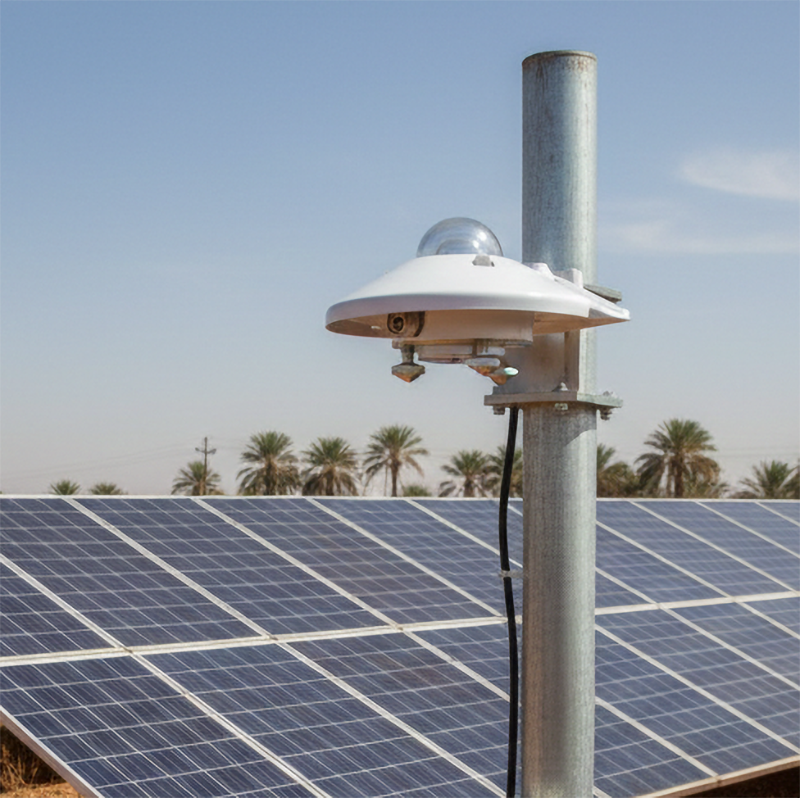
An ISO 9060 pyranometer measures Global Solar Radiation (Global Horizontal Irradiance, GHI) over a wavelength range of approximately 285–3000 nm.
Output Signal Options:
- RS485 Modbus RTU
- SDI-12
- 4-20mA
- 0-5V / 0-10V
- Wireless IoT gateways
Typical Applications:
- Solar power plants & Meteorology
- Agricultural weather stations
- Environmental monitoring systems
- Scientific research & Smart cities
ISO 9060 Class A vs Class B vs Class C
| Feature | Class A | Class B | Class C |
|---|---|---|---|
| Measurement Accuracy | Excellent | Very Good | Good |
| Long-Term Stability | Highest | High | Standard |
| Response Time | Fastest | Fast | Standard |
| Temperature Dependence | Lowest | Low | Moderate |
| Cost | Highest | Medium | Economical |
Recommendation:
- Class A – Scientific research, national meteorological stations, reference calibration.
- Class B – Commercial solar farms, utility PV projects, professional monitoring.
- Class C – Agriculture, IoT weather stations, environmental monitoring, cost-sensitive projects.
Key Specifications to Evaluate Before Buying a Pyranometer
1. Measurement Range
0–2000 W/m² with high linearity and wide spectral response ensures reliable measurements under various weather conditions.
2. Spectral Response
Typical wavelength: 285–3000 nm. This range covers nearly all usable solar energy reaching Earth’s surface.
3. Directional Response
Premium ISO 9060 sensors provide excellent cosine response to ensure reliable data during sunrise and sunset.
4. Temperature Stability
Operating range: -40°C to +80°C. Low temperature dependence minimizes seasonal measurement errors.
5. Weather Resistance
Outdoor solar radiation sensors should provide UV-resistant housing, waterproof enclosure, corrosion resistance, and anti-aging materials for long service life in coastal or desert environments.
Common Applications of ISO 9060 Pyranometers
Solar Power Plants
Monitor GHI, Calculate Performance Ratio (PR), evaluate inverter efficiency and verify production.
Meteorological Monitoring
Combine with wind, temp, and rain sensors for complete weather dataset and forecasting.
Smart Agriculture
Monitor photosynthesis, crop growth, irrigation scheduling, and ET calculation.
Environmental Monitoring
Climate observation, air quality studies, and renewable energy assessment.
Engineering Experience: Common Mistakes Buyers Make
Based on 15 years of experience, our team has identified these common pitfalls:
Why Choose Honde ISO 9060 Pyranometers?
Specializing in environmental monitoring and IoT sensor manufacturing since 2011.
- ISO 9060 compliant design
- RS485 Modbus RTU / SDI-12
- Wireless: LoRa, LoRaWAN, WiFi, 4G, NB-IoT
- Cloud platform & MQTT/JSON API support
- CE & RoHS compliant
- Used in over 70 countries
- OEM & ODM customization
- High stability & Wide operating temperature
Industry Recommendation Guide
| Industry | Recommended Class | Primary Purpose |
|---|---|---|
| Utility Solar Farm | Class A / B | Energy Performance Monitoring |
| Meteorological Bureau | Class A | Climate Observation |
| Smart Agriculture | Class C | Crop Monitoring |
| IoT Weather Station | Class C | Real-Time Monitoring |
Frequently Asked Questions
What is the difference between Class A, B and C pyranometers?
Class A provides the highest measurement accuracy, Class B offers an excellent balance between performance and cost, while Class C is ideal for general commercial monitoring applications.
Can pyranometers be connected to IoT platforms?
Yes. Modern pyranometers support RS485 Modbus and can connect through LoRaWAN, WiFi, 4G, Ethernet gateways, MQTT, or cloud platforms.
How often should a pyranometer be calibrated?
Most professional users recommend recalibration every 1–2 years, depending on environmental conditions and project requirements.
Conclusion
Selecting the correct ISO 9060 Class A, B, or C pyranometer depends on your project’s accuracy requirements, budget, and operating environment. Choosing a reliable manufacturer with proven engineering experience ensures accurate solar radiation data throughout the system’s lifecycle.
Get Expert Support for Your Solar Monitoring Project
Our engineering team can help you select the most suitable ISO 9060 pyranometer.
Contact us today to:
- Request a free technical consultation
- Download product datasheets
- Receive a customized quotation
- Discuss OEM & ODM cooperation
- Build a complete solar monitoring solution
Post time: Jul-20-2026