

1.Introduction: The Hidden Cost of Solar Soiling
In the high-stakes world of utility-scale solar, what you can’t see can hurt your bottom line. As the global energy landscape shifts toward solar as a primary renewable pillar, the industry is confronting the “invisible leak” of environmental soiling. Dust, pollutants, and particulate matter do more than just obscure surfaces; they significantly degrade photoelectric conversion efficiency and light transmittance. For modern plant operators, the challenge is no longer just “to clean,” but to determine exactly when to clean. Scientific dust monitoring is the essential bridge between excessive operational expenditure (OPEX) and realized power output.
2.Understanding the Impact: How Dust Affects Your ROI
Dust accumulation is a complex technical threat that directly impacts a plant’s Return on Investment (ROI). Relying on empirical visual assessments is a “cost of ignorance” that leads to direct financial leaks. The technical consequences of soiling manifest in three critical areas:
3.Product Profile: The HD-SPDMT-01 Dust Monitoring Sensor
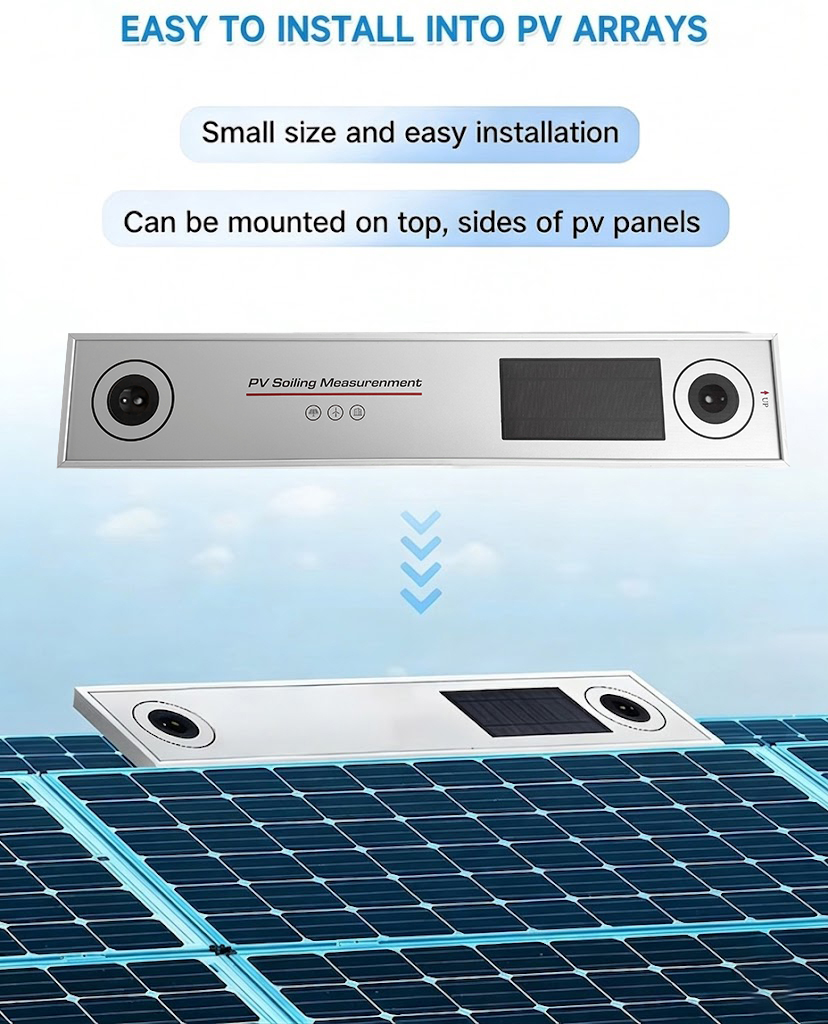
The HD-SPDMT-01 is a high-precision solution designed to transition O&M from guesswork to data-driven science. Installed directly on the PV panel frame, it measures both Transmission Loss (TL) and the Soiling Ratio (SR) caused by pollutants on the glass. By quantifying exactly how much sunlight is blocked from reaching the cells, it provides the granular data required for advanced performance modeling. Crucially, the HD-SPDMT-01 complies with the IEC 61724-1 specification, meeting the rigorous standards for multiple pollution monitoring points in utility-scale installations.
4.Key Technical Advantages and Innovations
The HD-SPDMT-01 outperforms traditional dual radiation meter methods through several engineering breakthroughs:
All-Weather, 24/7 Monitoring with UV Stability
Interference Filtering via Multi-Frequency Modulation
Granular Multi-Probe Data
Integrated Tilt Feedback and GPS Positioning
Temperature Compensation and Low Maintenance
5.Seamless System Integration & Data Sharing
The HD-SPDMT-01 is engineered for rapid deployment within existing infrastructures. It utilizes the RS485 Modbus-RTU protocol, ensuring seamless integration into any SCADA (Supervisory Control And Data Acquisition) system.
To further reduce construction costs and simplify on-site wiring, the sensor offers an optional connection for an external back-temperature sensor. By collecting temperature data locally and reporting it through the dust monitoring system’s RS485 link, operators can significantly shorten line lengths and reduce material costs during the construction phase.
6.Technical Specifications Overview
The following table highlights the performance indicators that define the HD-SPDMT-01 as an industry leader:
| Parameter | Specification / Value |
| Pollution Ratio (SR) Range | 50% ~ 100% |
| Accuracy (90%–100%) | ±1% + 1% FS (Full Scale) of reading |
| Accuracy (80%–90%) | ±3% |
| Accuracy (50%–80%) | ±5% (via internal precision algorithm) |
| Operating Voltage | DC 12V (Range: 9V ~ 30V) |
| Operating Temperature | -40℃ ~ +60℃ |
| Stability | Better than 1% FS per year |
| Protection Level | IP65 |
| Power Consumption | < 2.5W @ DC12V |
| Dimensions / Weight | 900mm x 170mm x 42mm / 3.5kg |
| Communication | RS485 Modbus-RTU |
7.Practical Application: Optimizing the Cleaning Cycle
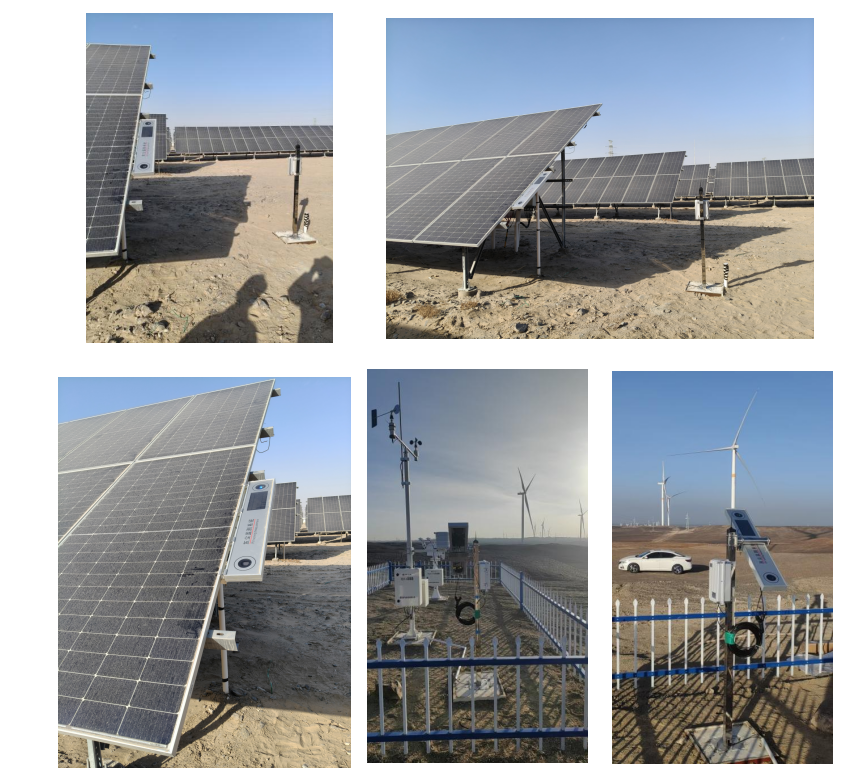
The transition from “empirical guessing” to “scientific protocol” is where the HD-SPDMT-01 delivers its highest ROI. The workflow is streamlined:
8.Conclusion: Future-Proofing Your Solar Investment
In an increasingly competitive global market, the precision of your O&M strategy determines the longevity and profitability of your solar assets. High-precision tools like the HD-SPDMT-01 provide the 24/7 visibility required to eliminate “invisible” power losses and optimize operational costs.
For more sensor information, please contact Honde Technology Co., LTD.
WhatsApp:+86-15210548582Email:info@hondetech.comWebsite:www.hondetechco.com
Post time: May-08-2026