

1. Introduction to Solar Radiation Sensing
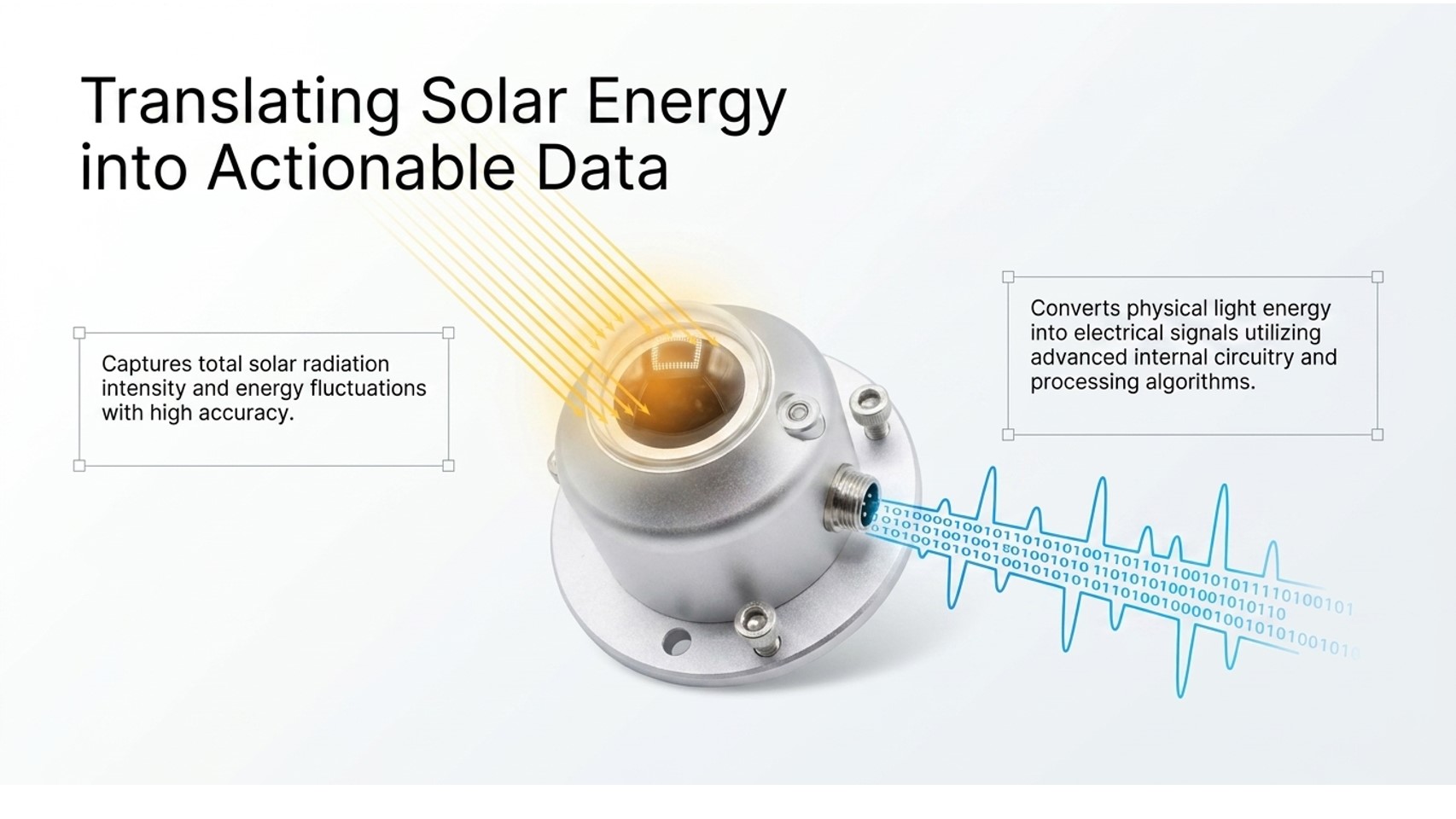
In the fields of meteorology and renewable energy, measuring solar irradiance with precision is non-negotiable. This high-precision sensor is engineered to monitor total (global) solar radiation—the sum of both direct and diffuse radiation received from the hemispherical sky overhead.
As a Class C device, this sensor serves as a critical bridge between physical light energy and actionable environmental data. By converting solar energy into a stable electrical signal through a high-sensitivity sensing element, it provides the accuracy required for complex climate modeling and industrial efficiency audits. Whether integrated into a stationary weather network or a portable monitoring kit, this sensor delivers the spectral range and long-term stability expected by environmental professionals.
2. Robust Design and Industrial Build Quality
The sensor’s architecture is a testament to industrial durability, designed to maintain measurement fidelity in the harshest outdoor environments.
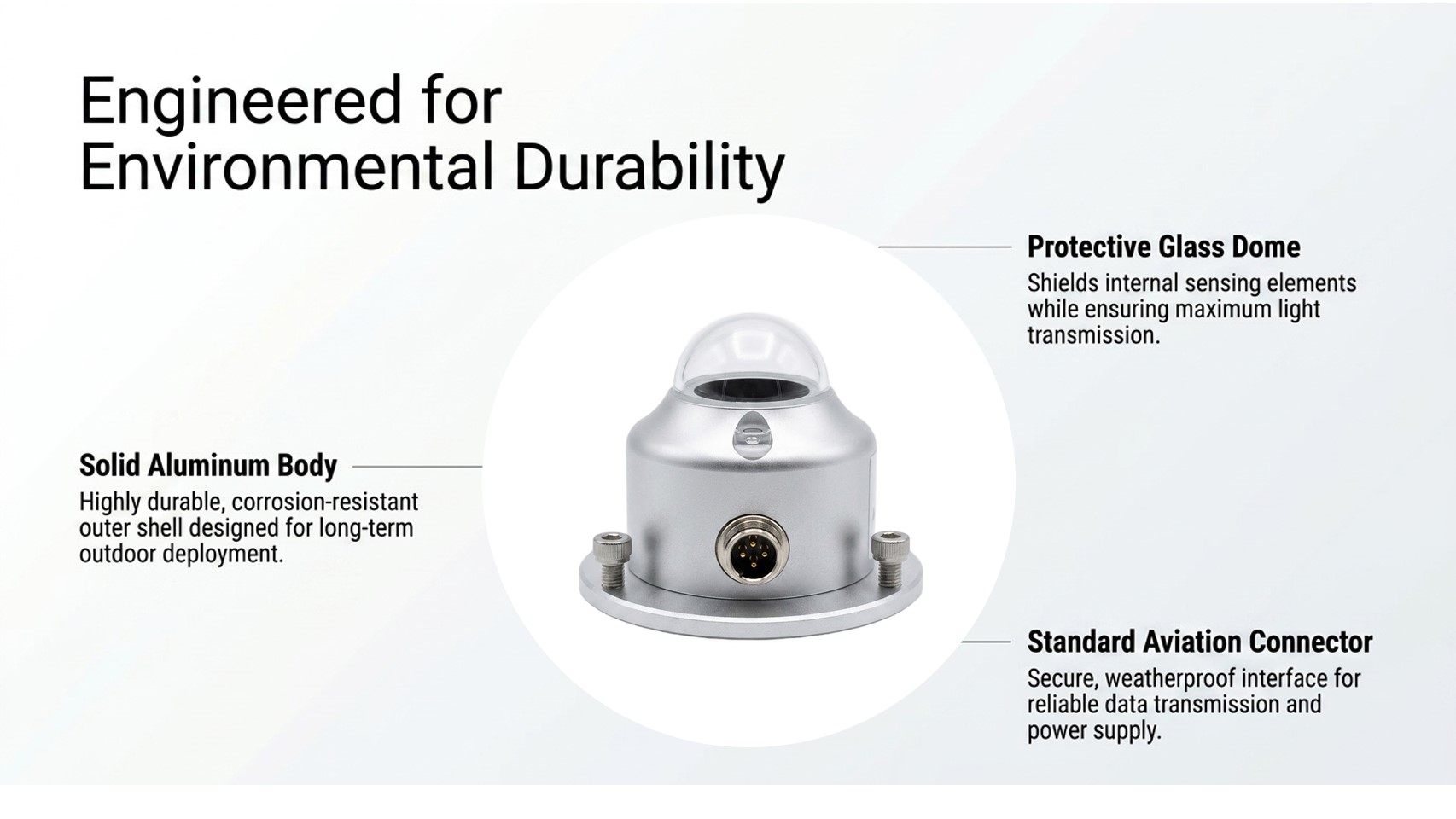
- Premium Material Construction: The housing is meticulously crafted from high-grade aluminum, offering superior corrosion resistance and thermal stability compared to plastic alternatives.
- Precision Optical Protection: A high-transmittance glass dome protects the sensing element. This dome is specifically designed to ensure a full hemispherical field of view while minimizing spectral distortion and protecting against environmental contaminants.
- Rugged Connectivity: The unit features an integrated aviation-style plug (visible in secondary interfaces), ensuring a weatherproof, vibration-resistant connection that is essential for long-term field deployment.
- Ultra-Compact Form Factor: With a sleek, palm-sized silver housing, the sensor offers a minimal footprint. This makes it an ideal solution for mounting on portable weather stations or within the crowded confines of photovoltaic (PV) array frames.
3. Advanced Connectivity and Data Transmission
To meet the demands of modern IoT and SCADA integration, the sensor supports a versatile range of communication protocols and hardware interfaces.
Technical Interface & Communication Specifications
| Standard Wired Features | Wireless Integration Options |
| RS485 Serial Output | GPRS Cellular Module |
| Modbus-RTU Protocol Support | 4G LTE Connectivity |
| Wired Communication Interface | High-Speed Wi-Fi Capability |
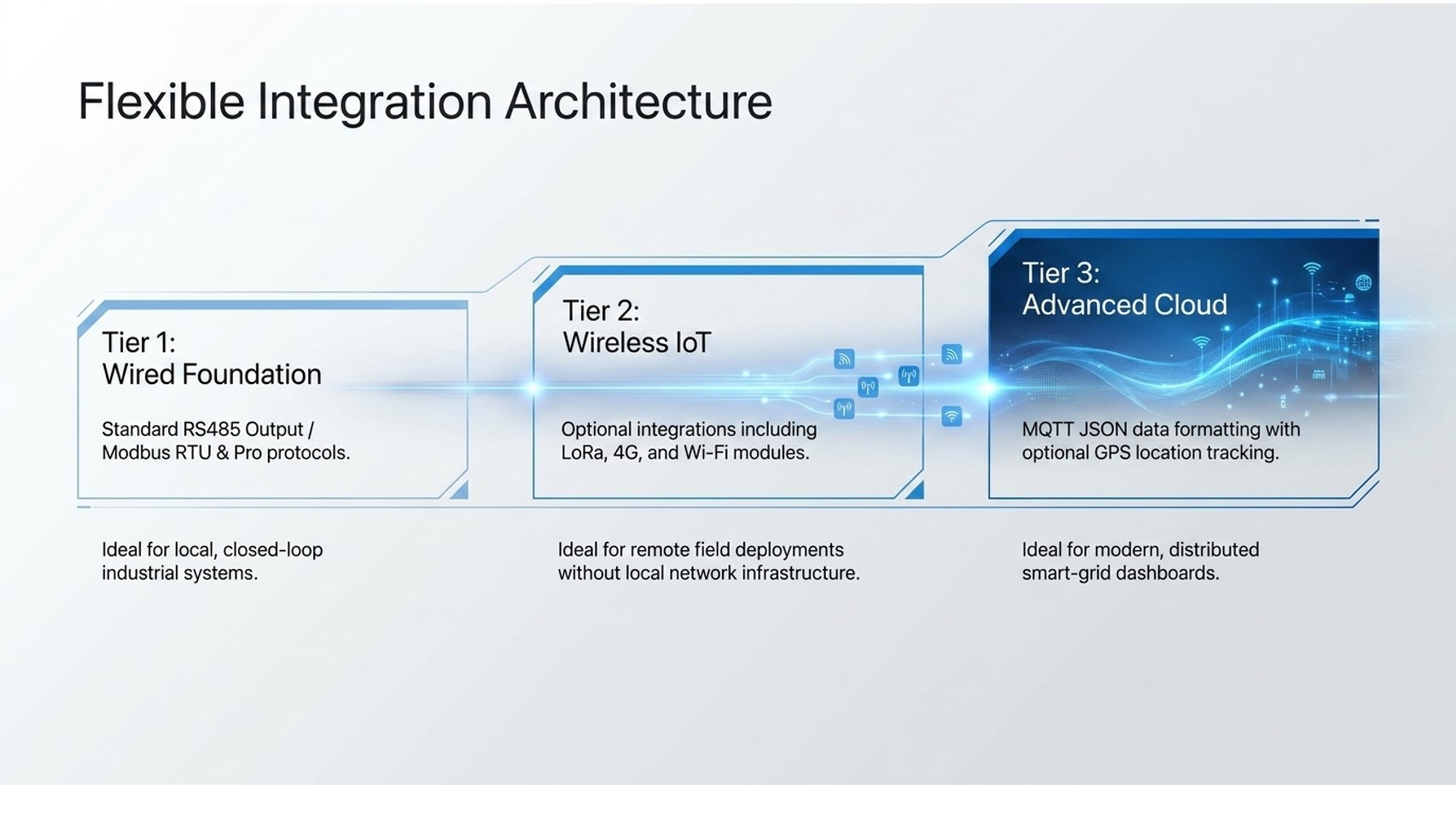
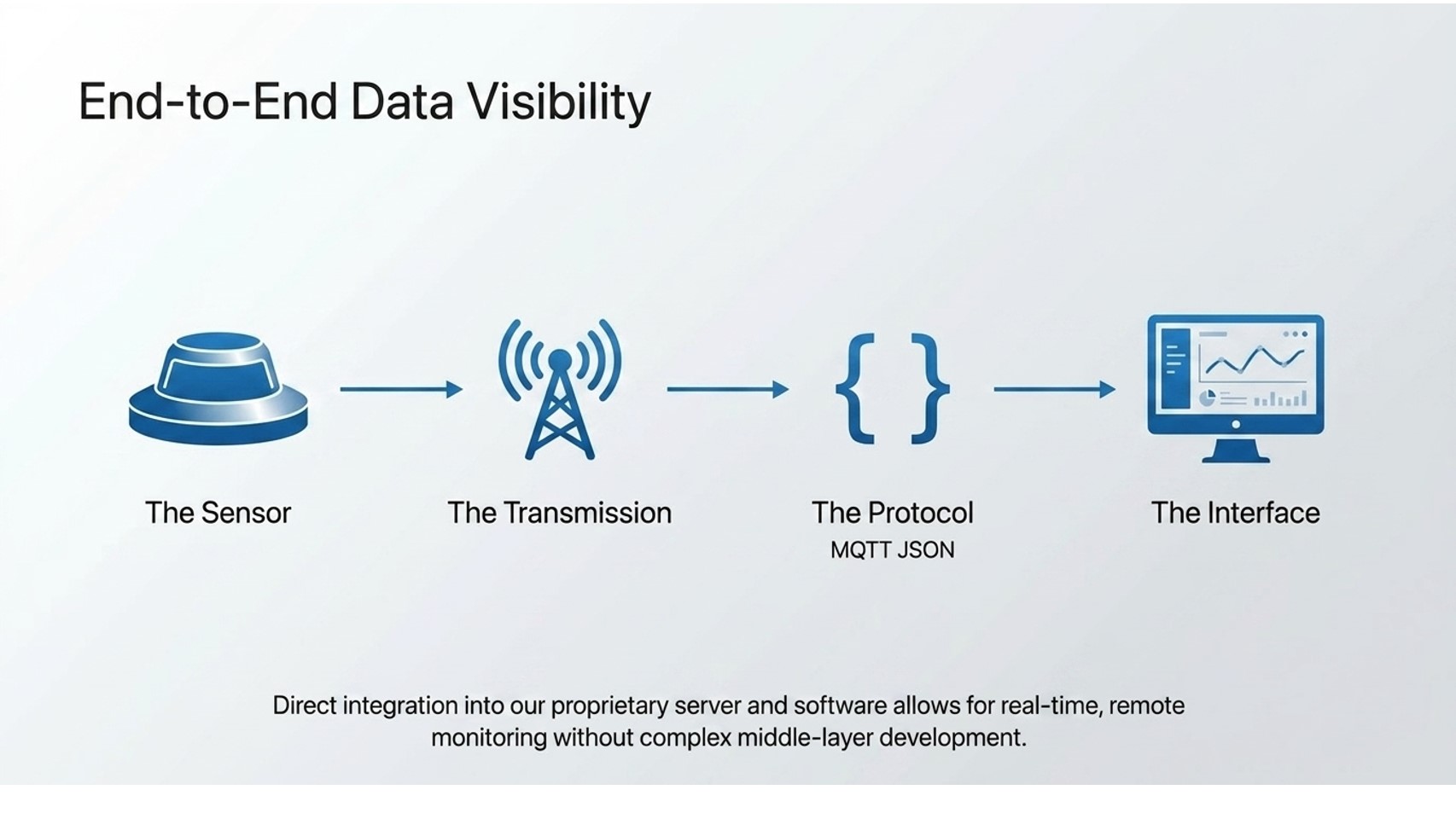
Beyond hardware, the system natively supports MQTT and JSON data formats. This compatibility facilitates seamless integration with the Honde proprietary cloud platform and software, as well as third-party servers. Users can access real-time data visualization and historical analytics immediately upon deployment.
4. Simplified Installation and Rapid Leveling
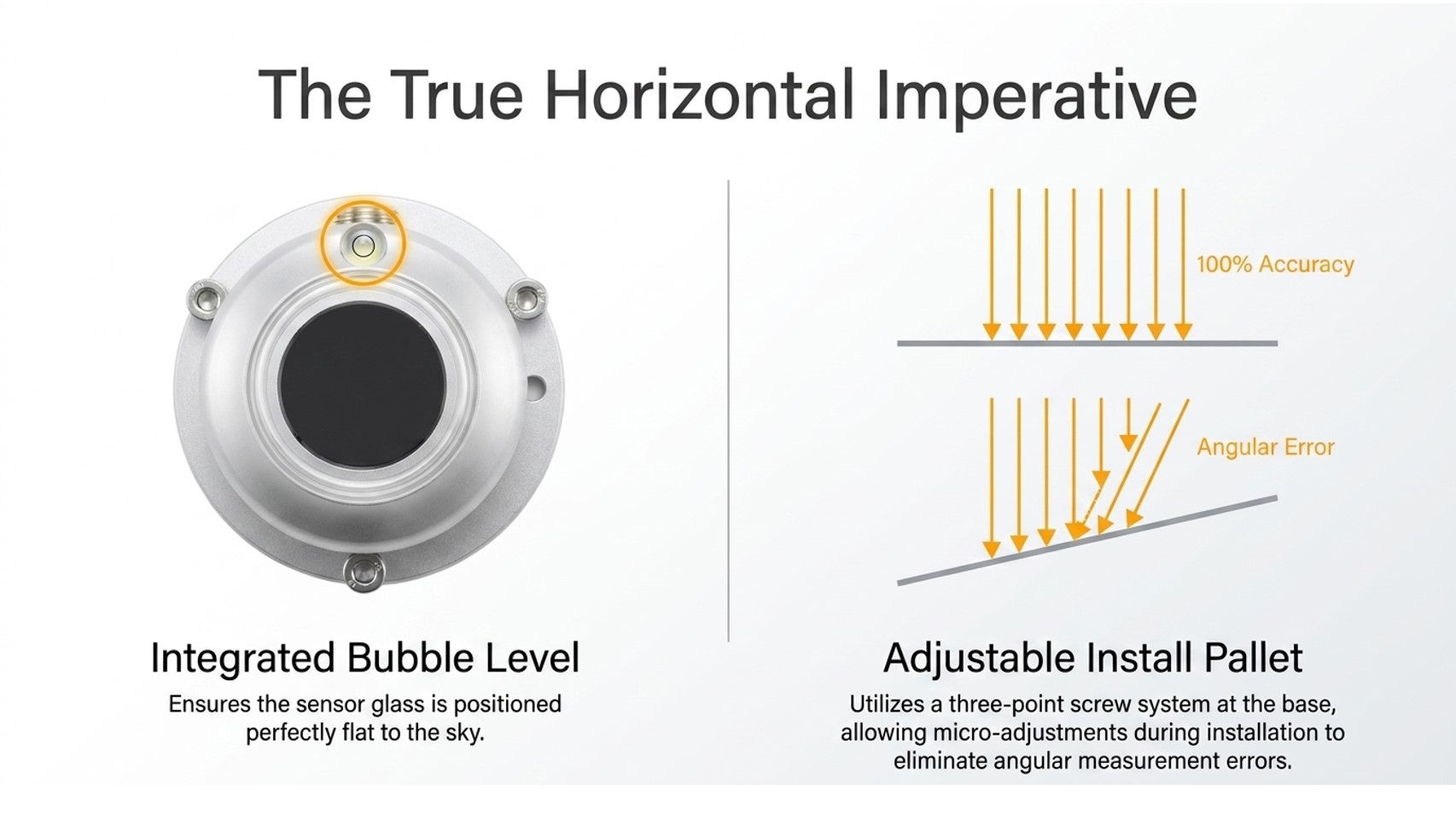
Accurate radiation measurement is highly dependent on the sensor’s orientation relative to the horizon. Our design synthesizes professional accuracy with ease of setup:
-
1Strict Horizontal Orientation: The sensor is optimized for horizontal mounting, a prerequisite for capturing standardized global radiation data.
-
2Integrated Leveling System: A built-in circular bubble level (spirit level) is embedded directly into the sensor housing, allowing for instantaneous visual verification of the mounting angle.
-
3Adjustable Base Pallet: The unit is mounted on a specialized installation pallet equipped with precision adjustment screws. This allows technicians to achieve perfect leveling during field setup without the need for specialized external tools, significantly reducing labor costs and deployment time.
5. Versatile Application Scenarios
This sensor is a foundational component for data-driven decision-making across several critical sectors:
6. Expert Consultation and Contact Details
Our team of specialists is available to assist with custom system integrations, technical specifications, or large-scale project inquiries to ensure your monitoring network meets the highest standards of accuracy.
For more weather station information, please contact Honde Technology Co., LTD.
Post time: Apr-30-2026