

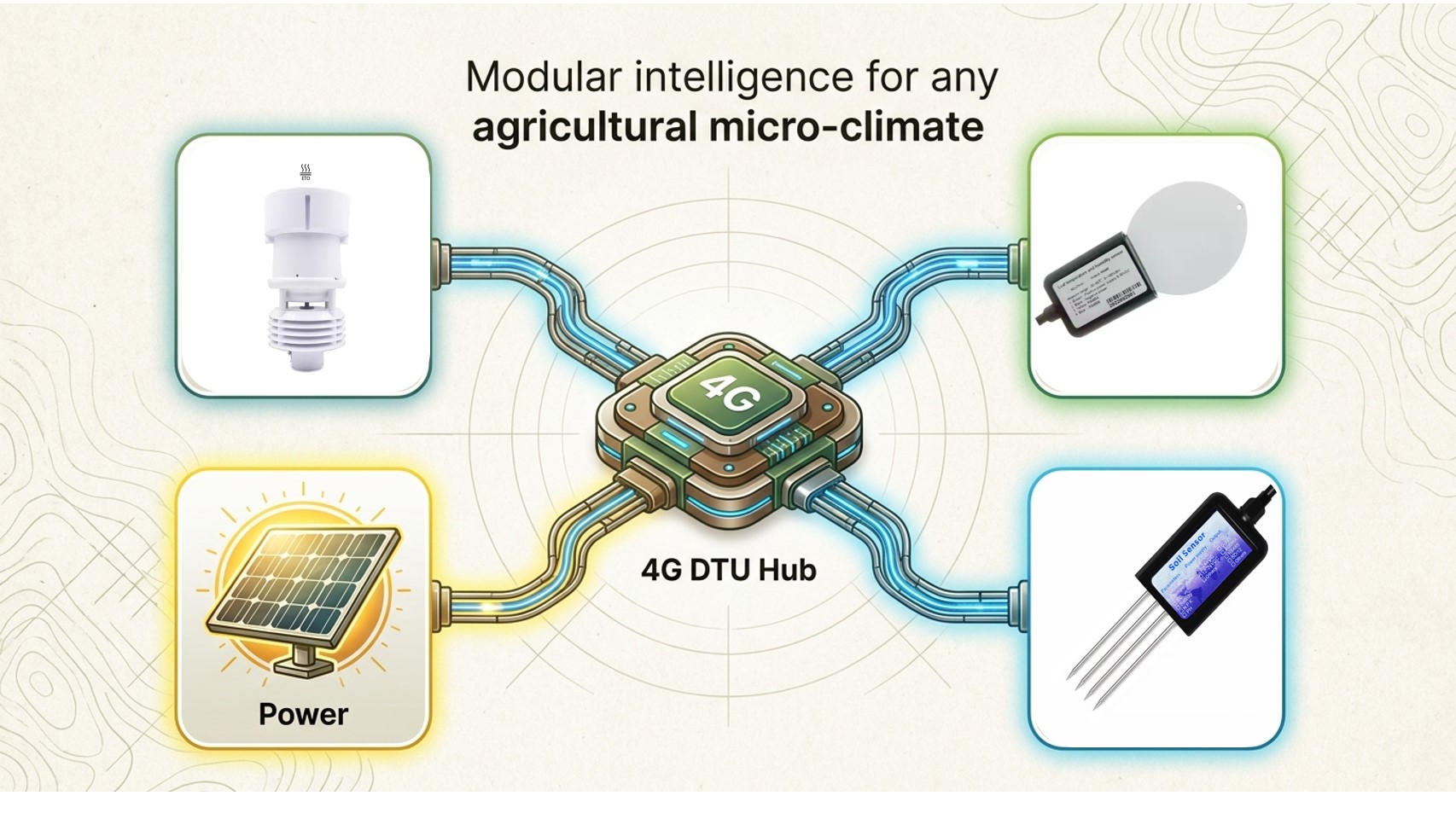
Integrated 4G agriculture weather stations optimize crop yields by combining 11-parameter atmospheric monitoring with multi-layer soil sensing (moisture, temperature, EC) via a high-speed 4G DTU. This system delivers real-time subterranean and climatic data to web-based platforms, enabling data-driven decision-making. By consolidating environmental telemetry into a single, remote-accessible loop, growers ensure 2026-ready precision management and hardware reliability across diverse agricultural landscapes, future-proofing operations against the sunsetting of legacy 2G and 3G networks.
Why Multi-Parameter Sensing is Essential for Precision Agriculture
In the current landscape of AgTech, monitoring atmospheric conditions in isolation is no longer sufficient for high-yield operations. High-precision farming requires a “dual-layer” telemetry approach that synchronizes the environment above the ground with conditions in the root zone. By integrating a compact 11-parameter weather station with specialized leaf temperature/humidity sensors and subterranean soil potential sensors, growers can correlate external weather events—such as heat spikes or sudden humidity drops—with direct plant stress and soil nutrient availability.
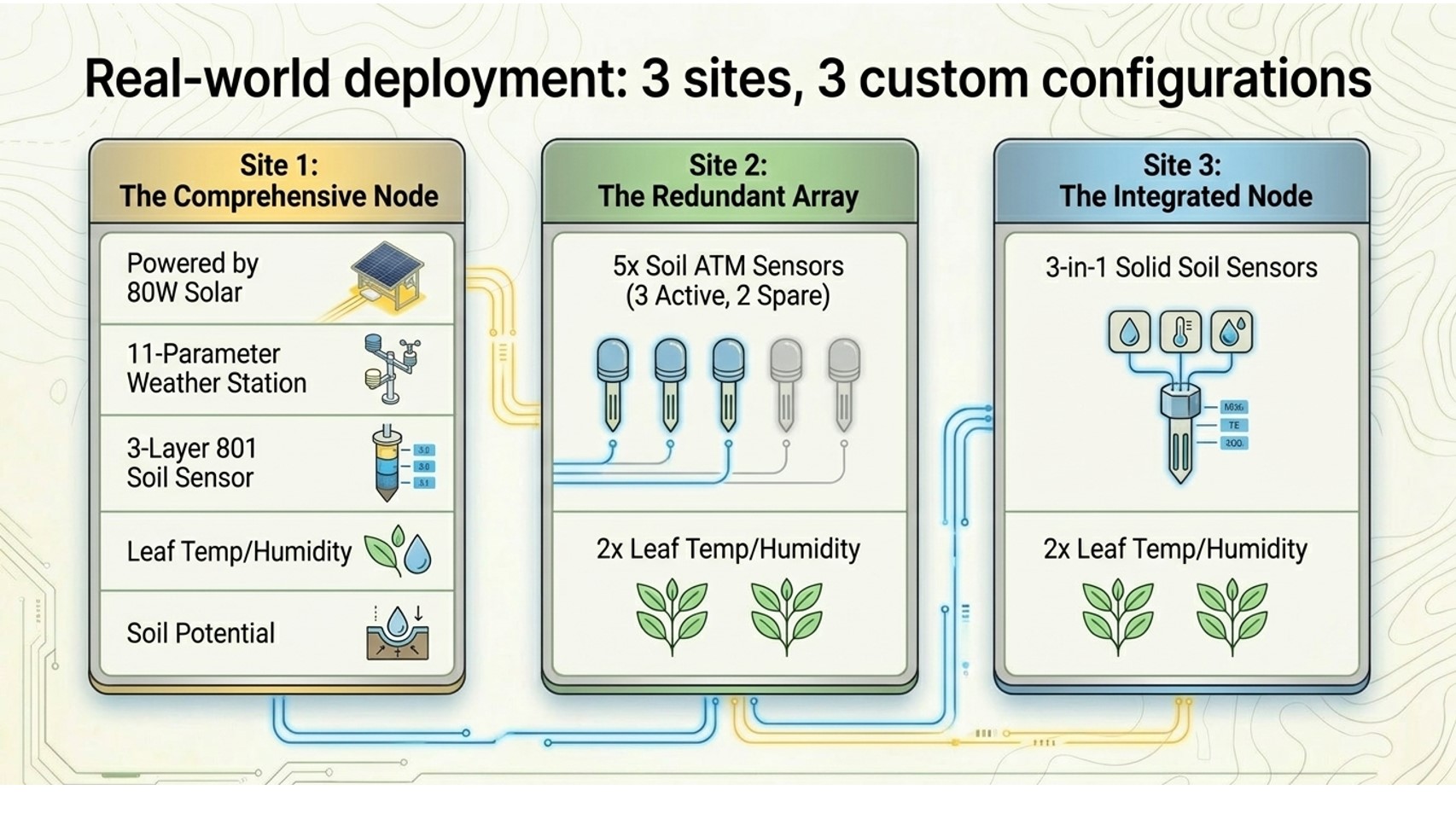
The utility of these systems lies in their modularity. Depending on the specific requirements of the field, we typically deploy three primary configurations:
Technical Specifications
| Component Category | Details & Parameters | Hardware Included |
|---|---|---|
| Atmospheric Monitoring | 11-parameter data (Temp, Humidity, Pressure, Wind, etc.) compliant with IEC Standard protocols. | Compact weather station with data integrity anti-bird notch. |
| Soil Sensing Suite | Three-layer 801 sensors (Moisture, Temp, EC), Soil ATM sensors, Soil Potential, and Soil OG. | Multi-layer probes and specialized subterranean sensor arrays. |
| Plant Physiology | Real-time tracking of leaf-surface micro-climates. | Leaf temperature and leaf humidity sensors. |
| Connectivity & Logging | 4G Wireless DTU (Data Transfer Unit) acting as a central Data Logger. | 4G Wireless module with SIM slot, RS485/USB computer interface. |
| Power & Mounting | Solar-primary system with grid-backup compatibility. | 60W and 80W solar panels, installation clamps, and power adapters. |
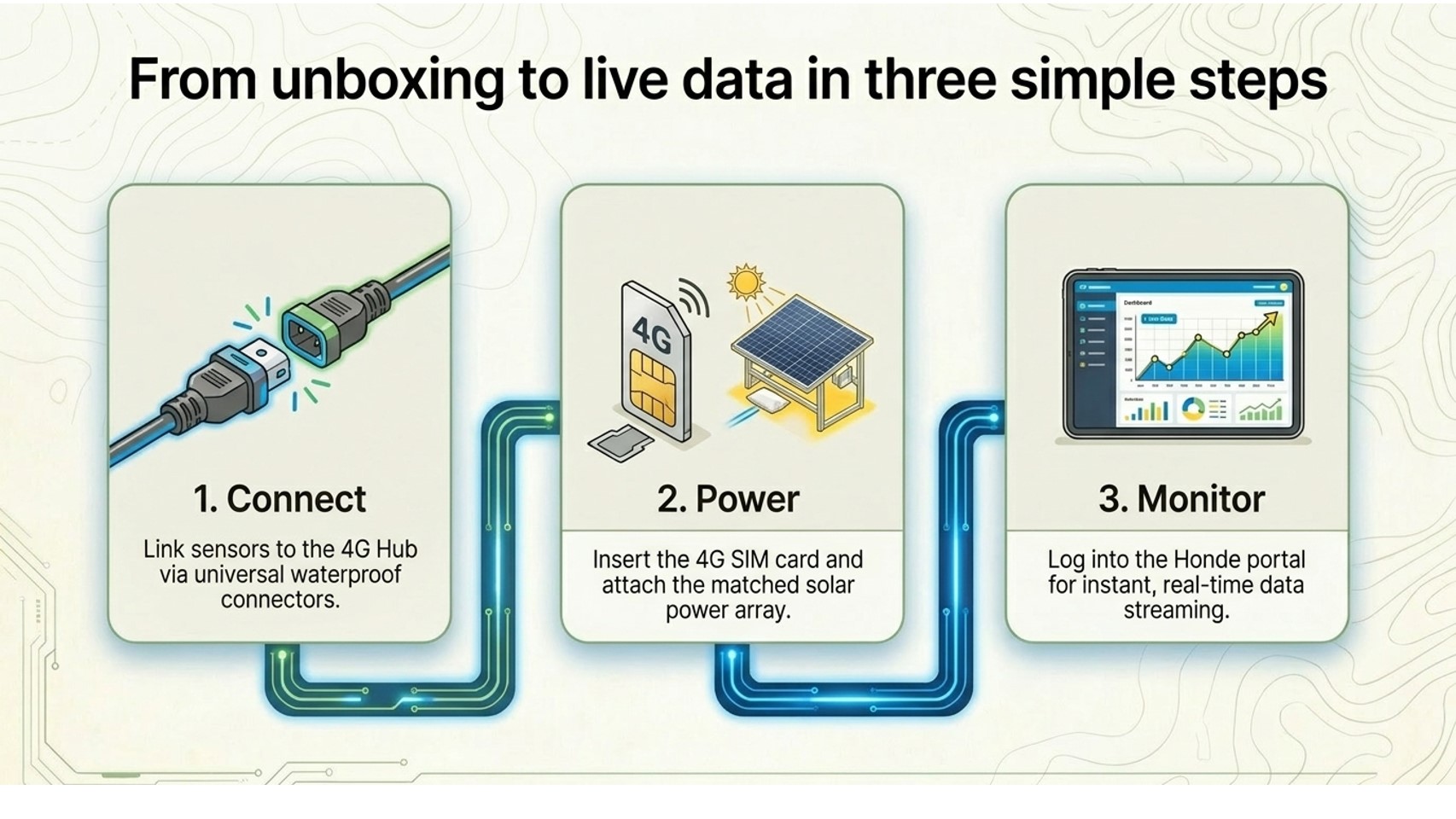
In our experience deploying IoT hardware in remote agricultural environments, the difference between a successful long-term deployment and a mid-season failure often comes down to the initial commissioning. Here are the critical technical considerations for a seamless setup:
The Critical Address Requirement
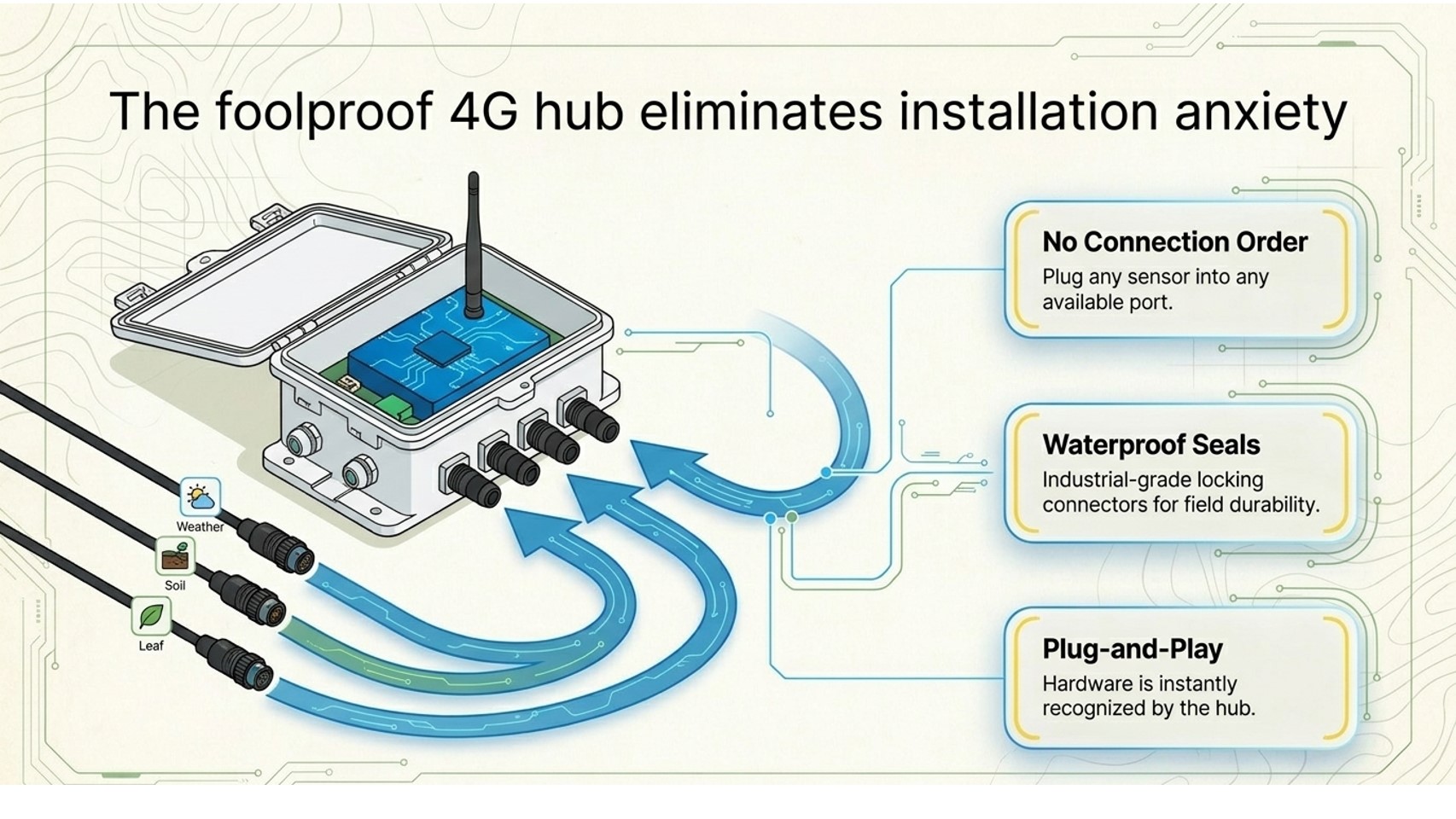
Within a single 4G DTU (wireless module), every connected sensor must be assigned a unique digital address (e.g., 1, 3, 2, 4, 5). This prevents data collisions. While the hardware features standardized waterproof connectors that allow you to plug any sensor into any port in any order, the software logic is strict.
Physical Installation Safeguards
To ensure the integrity of the data being fed to your dashboard:
Remove the Red Protective Covers: Each soil sensor probe is shipped with a red cover. This must be removed before burial to allow the sensors to achieve direct contact with the soil medium. Failing to do this is a common cause of “flatline” data during commissioning.
Leverage the Anti-Bird Notch: The 11-parameter station includes an anti-bird notch. This is not a mere aesthetic choice; it prevents avian interference with sensors, significantly reducing maintenance overhead and ensuring the integrity of wind and precipitation data.
Maintain a Spare Parts Strategy: High-reliability operations should maintain on-site spares of cables and sensors. Our kits include spare cables and replacement sensors to ensure zero downtime during the critical growing season.
Real-Time Data Management via 4G Server and Software
The integration of 4G telemetry eliminates the need for manual data collection or local logging. The workflow for establishing a live data stream is streamlined for field efficiency:
Selecting the Right Solar Configuration
Reliable uptime depends on matching your power budget to your sensor load. Based on the power consumption of different configurations, we advise the following:
Each solar kit includes dedicated cabling and heavy-duty installation clamps to ensure the panels remain secure and optimally angled in high-exposure field environments.
Conclusion & Business Action
Honde Technology Co., Ltd. provides a complete hardware-to-software loop, transforming complex environmental telemetry into actionable business intelligence. Whether you are managing soil potential in a high-value vineyard or monitoring atmospheric humidity in a commercial orchard, our integrated 4G solutions offer the durability, precision, and connectivity required for the 2026 agricultural landscape.
- Company Name: Honde Technology Co., Ltd.
- Website: www.hondetechco.com
- Email: info@hondetech.com
Post time: Apr-28-2026