

A professional LoRaWAN environmental monitoring sensor should provide long-distance wireless communication, low power consumption, accurate data acquisition, and seamless integration with IoT platforms. For smart agriculture, industrial monitoring, greenhouse management, and remote environmental applications, choosing a sensor with multiple communication options such as LoRa, LoRaWAN, 4G, WiFi, GPRS, and RS485 Modbus RTU can significantly improve system reliability.
Honde Technology provides advanced wireless IoT monitoring solutions that help global customers collect real-time environmental data and build intelligent monitoring networks.
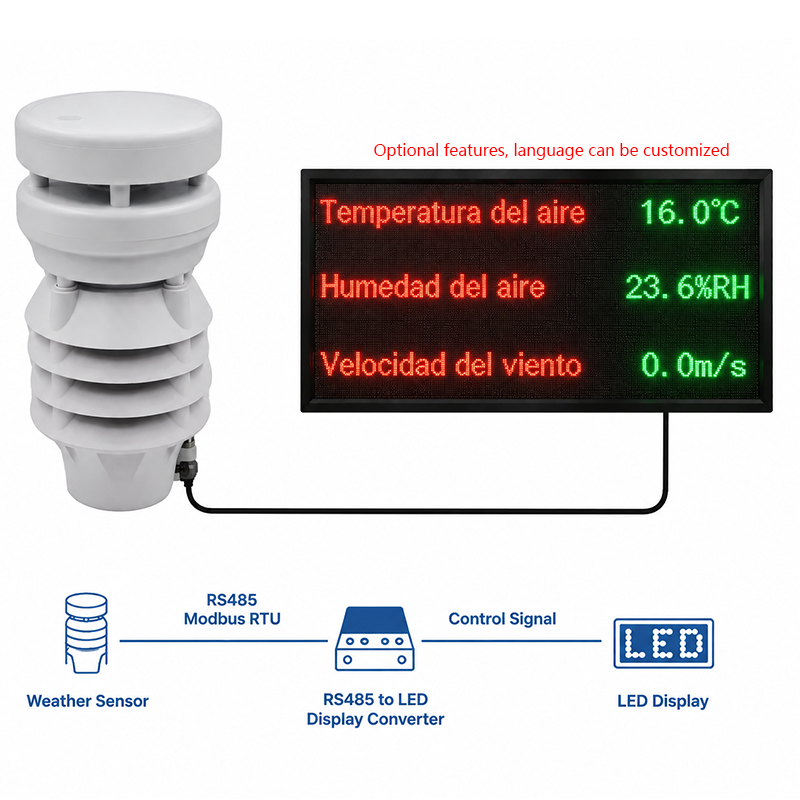
What Is A LoRaWAN Environmental Monitoring Sensor?
A LoRaWAN environmental monitoring sensor is an IoT device designed to collect environmental parameters and transmit data wirelessly over long distances.
Unlike traditional wired monitoring systems, wireless sensors reduce installation costs and allow deployment in remote locations where cables are difficult or expensive to install.
A complete IoT monitoring system usually includes:
- Environmental sensors
- Wireless communication module
- Data logger or gateway
- Cloud platform
- Monitoring software
The collected data can be uploaded to cloud servers through MQTT, HTTP, or customized communication protocols.
Why Choose Multi-Communication IoT Sensors For Remote Monitoring?
Different application environments require different communication technologies.
Comparison Of Wireless Communication Methods
| Communication | Transmission Distance | Main Advantages | Typical Applications |
|---|---|---|---|
| LoRa | Long Range | Low power consumption | Farms, forests, remote areas |
| LoRaWAN | Long Range Network | Multi-node connection | Smart agriculture networks |
| 4G | Wide Coverage | No gateway limitation | Remote monitoring |
| WiFi | High Speed | Easy network access | Greenhouses, buildings |
| GPRS | Stable Coverage | Mature technology | Industrial monitoring |
| RS485 Modbus | Reliable Wired Communication | Easy PLC integration | Factories and automation |
A multi-interface sensor allows engineers to select the best communication method according to project requirements.
Key Features Of Honde LoRa LoRaWAN 4G WiFi Environmental Monitoring Sensor
1. Multiple Wireless Communication Options
The biggest advantage of modern IoT sensors is communication flexibility.
Honde wireless monitoring sensors support:
- LoRa / LoRaWAN
- GPRS
- 4G
- WiFi
- RS485 Modbus RTU
This enables integration with different IoT infrastructures worldwide.
For example:
- Large farms can use LoRaWAN networks.
- Remote areas can use 4G communication.
- Industrial systems can connect through RS485 Modbus.
2. Real-Time Remote Data Monitoring
Traditional inspection requires workers to visit measurement locations manually.
Wireless environmental sensors solve this problem by providing:
- Real-time monitoring
- Remote data transmission
- Automatic data recording
- Alarm notification
Users can monitor environmental changes anytime through:
- Cloud platform
- PC software
- Mobile application
- Local display systems
Applications Of Wireless Environmental Monitoring Sensors
Smart Agriculture And Precision Farming
Agriculture requires accurate environmental information to improve productivity.
Wireless sensors can monitor:
- Air temperature
- Humidity
- Soil conditions
- Weather parameters
- Greenhouse environment
Farmers can use collected data for:
- Smart irrigation
- Crop growth analysis
- Disease prevention
- Water saving management
Greenhouse Climate Control
Greenhouse environments need precise monitoring.
IoT sensors help maintain:
| Parameter | Benefit |
|---|---|
| Temperature | Prevent heat stress |
| Humidity | Reduce disease risk |
| CO₂ | Improve plant photosynthesis |
| Light | Optimize plant growth |
Industrial Environmental Monitoring
Factories and industrial sites require continuous monitoring.
Applications include:
- Equipment rooms
- Warehouses
- Laboratories
- Production areas
Wireless monitoring reduces wiring complexity and improves maintenance efficiency.
How To Select The Right IoT Data Logger Sensor?
Before purchasing an environmental monitoring sensor, buyers should consider the following factors:
1. Communication Compatibility
Check whether the sensor supports your existing network:
- LoRaWAN frequency
- 4G bands
- WiFi connection
- RS485 protocol
A communication mismatch can increase project costs.
2. Sensor Accuracy And Stability
Professional applications require:
- Stable measurement
- Long-term operation
- Calibration support
Avoid choosing sensors only based on price.
3. Outdoor Protection Capability
For outdoor applications, protection is critical.
Important factors include:
| Feature | Importance |
|---|---|
| Waterproof Design | Protect electronics |
| Dust Resistance | Improve reliability |
| Low Power Design | Extend operation time |
| Industrial Housing | Support harsh environments |
Why Global Customers Choose Honde Technology Wireless IoT Solutions
15+ Years Of Sensor Manufacturing Experience
Honde Technology Co., Ltd. focuses on research, development, manufacturing, and global supply of smart environmental monitoring equipment.
Our solutions are widely applied in:
- Smart agriculture
- Weather monitoring
- Water environment monitoring
- Renewable energy
- Smart cities
- Industrial IoT projects
With professional R&D capability and OEM/ODM support, Honde helps customers develop customized monitoring solutions.
Technical Specification Overview
| Item | Specification |
|---|---|
| Product Type | Wireless IoT Environmental Monitoring Sensor |
| Communication | LoRa / LoRaWAN / 4G / GPRS / WiFi / RS485 |
| Protocol | Modbus RTU / MQTT / JSON |
| Application | Agriculture Industrial Environmental Monitoring |
| Data Transmission | Cloud Server Supported |
| Installation | Outdoor / Indoor Deployment |
| Customization | OEM ODM Available |
Common Mistakes When Buying Wireless Monitoring Sensors
Mistake 1: Choosing Only By Price
Low-cost sensors may have:
- Poor communication stability
- Limited service life
- Difficult maintenance
Mistake 2: Ignoring Network Environment
Different regions have different requirements:
- LoRa frequency bands
- Cellular networks
- Local IoT platforms
Always confirm compatibility before purchasing.
Mistake 3: Selecting Sensors Without Expansion Capability
Future projects may require additional sensors.
A scalable IoT platform allows:
- More sensor nodes
- More monitoring points
- More application scenarios
Frequently Asked Questions (FAQ)
Q1 What is a LoRaWAN environmental sensor?
A LoRaWAN environmental sensor is an IoT device that collects environmental data and transmits it through LoRaWAN wireless networks for remote monitoring.
Q2 Can LoRa sensors connect to cloud platforms?
Yes. LoRaWAN, 4G, and WiFi communication solutions can upload collected data to cloud platforms through IoT gateways.
Q3 What industries use wireless monitoring sensors?
- Agriculture
- Greenhouses
- Industrial facilities
- Environmental monitoring
- Smart cities
Q4 Does Honde provide OEM customization?
Yes. Honde Technology supports OEM and ODM services for global distributors and project customers.
Conclusion: Build A Smarter IoT Monitoring System With Honde Technology
Selecting the right LoRaWAN environmental monitoring sensor is essential for building reliable and scalable IoT solutions. With multiple communication options, industrial reliability, and flexible customization capability, Honde Technology helps businesses worldwide achieve smarter environmental monitoring.
Get Your Customized IoT Monitoring Solution Today
Post time: Aug-04-2026