

Selecting a professional-grade wind sensor requires prioritizing material durability and connectivity flexibility. Honde Technology’s 2-in-1 sensor features ASA engineering plastic for superior UV resistance and a 10-year outdoor lifespan. It supports versatile wireless protocols including LoRaWAN, 4G, WiFi, and GPRS for seamless cloud integration via MQTT. These units provide high-accuracy, real-time monitoring for solar farms, construction safety, and smart cities, ensuring critical data is accessible via web dashboards or APIs for industrial optimization.
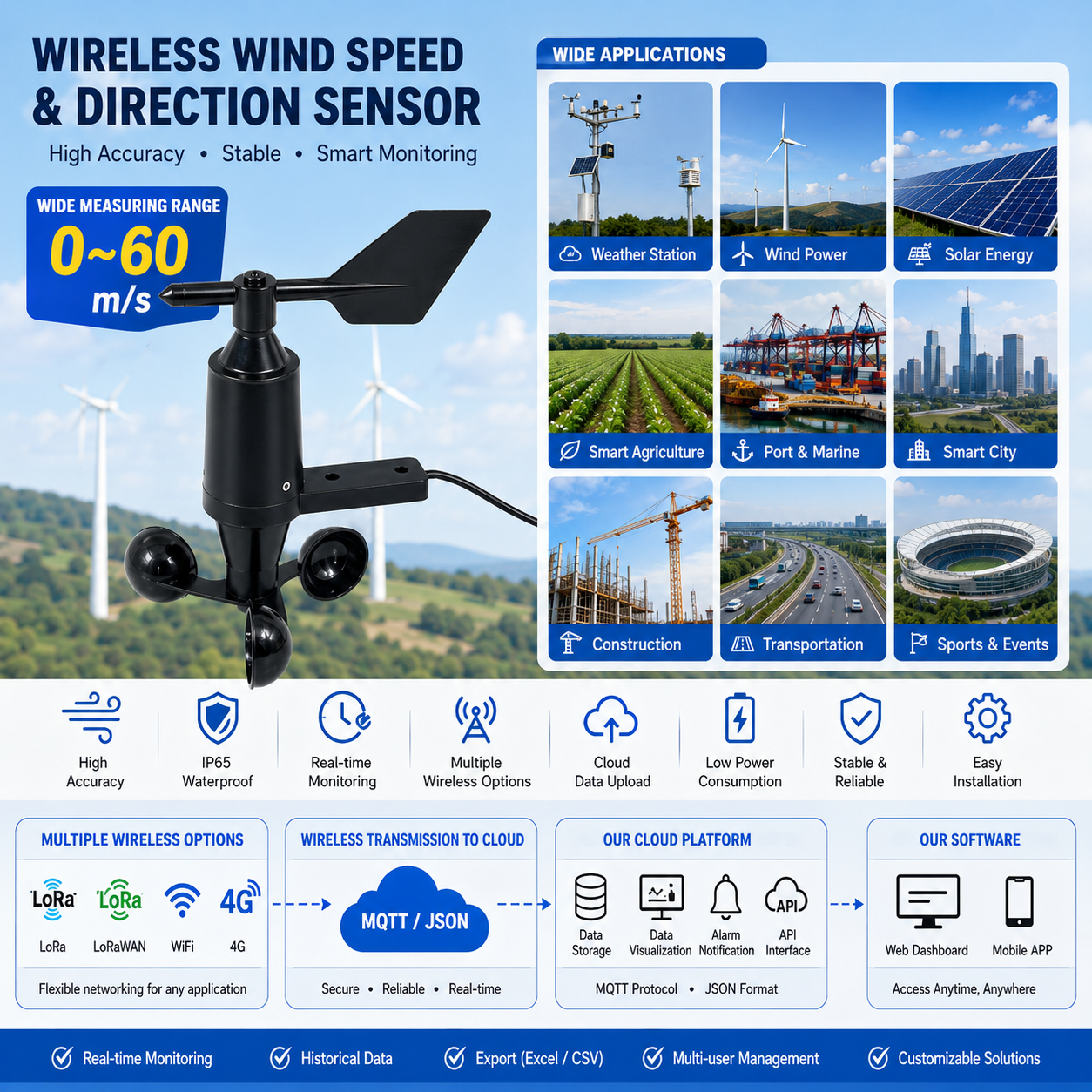
In my years of sourcing sensors for remote industrial sites, the most frequent failure point isn’t the software—it’s the housing. Most entry-level sensors utilize ABS plastic, which suffers from rapid UV degradation, becoming brittle and cracking within 24 months of intense solar exposure. Honde Technology addresses this by utilizing ASA (Acrylonitrile Styrene Acrylate) engineering plastic.
From a procurement perspective, the choice of ASA is a direct investment in lowering the Total Cost of Ownership (TCO). While the initial unit cost may be marginally higher than consumer-grade ABS, the ROI is found in avoiding “truck rolls.” A single maintenance trip to a remote solar farm or offshore port to replace a failed sensor can cost five times the price of the hardware itself. With a 10-year outdoor lifespan, ASA-housed sensors ensure your data stream remains uninterrupted and your maintenance budget remains intact.
| Parameter | Specification / Value |
|---|---|
| Measuring Range | 0 ~ 60 m/s |
| Housing Material | ASA Engineering Plastic (Superior Anti-UV) |
| Protection Level | IP65 Waterproof |
| Output Options | RS485 (Base), LoRa, LoRaWAN, WiFi, 4G, GPRS |
| Total Height | 245mm |
| Body Height | 210mm |
| Width (Mounting Arm) | 130mm |
| Anemometer Diameter | 135mm (Optimized for low startup threshold) |
| Bearings | High-quality industrial bearings for stable rotation |
| Power Profile | Low Power Consumption for remote battery/solar use |
| Service Life | 10+ Years (Outdoor) |
As an IoT architect, I look for “plug-and-play” compatibility with existing SCADA and ERP systems. The Honde system follows a sophisticated, low-power data transmission path designed for industrial reliability:
- Multiple Wireless Options: The sensor integrates with various wireless modules including LoRa/LoRaWAN for long-range/low-power needs, or 4G/GPRS and WiFi for high-bandwidth urban infrastructure.
- Standardized Transmission: Data is uploaded via MQTT / JSON formats. This ensures a secure, real-time handshake between the hardware and the server.
- Comprehensive Cloud Platform: Unlike basic read-outs, the Honde platform provides:
- Data Visualization: Real-time monitoring via Web Dashboard and Mobile APP.
- Alarm Notifications: Immediate alerts when wind speeds exceed safety thresholds.
- API Interface: Critical for developers to pull sensor data directly into custom enterprise software.
Strategic wind data is a “force multiplier” for safety and efficiency in these key sectors:
- Solar Energy (PV Efficiency): High-accuracy sensors provide the trigger for “stowing trackers”—moving solar panels to a horizontal, aerodynamic position during high-wind events to prevent catastrophic structural failure.
- Construction Safety: Provides real-time wind speed alerts to tower crane operators, ensuring compliance with safety regulations and preventing tip-over accidents.
- Port & Marine: Monitoring wind shear to ensure safe container loading and vessel docking in high-risk coastal environments.
- Smart Agriculture: Assisting in precision irrigation and protecting greenhouse structures from wind damage.
- Other Sectors: Wind Power assessment, Weather Stations, Smart City infrastructure, and Transportation safety.
Use this checklist to ensure your supplier meets the E-E-A-T (Experience, Expertise, Authoritativeness, Trustworthiness) requirements for industrial projects:
- [ ] Mechanical Integrity: Does the sensor use a 135mm anemometer diameter and industrial bearings to ensure a low startup threshold?
- [ ] Environmental Certification: Is the unit IP65 rated and housed in UV-stabilized ASA plastic?
- [ ] System Integration: Does the provider offer API documentation and support for MQTT/JSON?
- [ ] Compliance Reporting: Can the software export historical data in Excel/CSV formats for safety audits?
- [ ] Scalability: Does the supplier, such as Honde Technology Co., Ltd., offer multi-user management and customizable software solutions?
Selecting the right wind sensor requires a balance of material science and technical interoperability. By prioritizing ASA plastic and versatile wireless protocols, you ensure your IoT deployment is resilient, scalable, and provides a clear ROI.
Honde Technology Co., Ltd. is a leader in industrial weather monitoring solutions, providing the hardware and software necessary for the most demanding environments.
- Website: www.hondetechco.com
- Email: info@hondetech.com
For custom project quotes or detailed technical specification sheets, contact our engineering team today.
Post time: Jun-09-2026